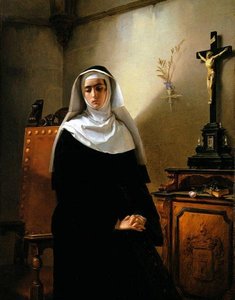
Portrét Giuseppe Molteni

7 nejslavnějších obrazů autora Giuseppe Molteni, výběr z galerie

Aktualizováno listopad 2026 · seřazeno podle našeho skóre popularity (vyhledávání, návštěvy a objednávky u každého díla) · 7 děl umělce Giuseppe Molteni v našem katalogu

Stručně řečeno

Z všech originálů, které Giuseppe Molteni zanechal, je nejslavnější Paolo Toschi (1835), který se nachází ve sbírce Museo Glauco Lombardi, Parma. Hned za ním následují Portrait of Giuseppe Candiani (1832) a La Signora di Monza (1847). Náš katalog obsahuje 7 děl umělce Giuseppe Molteni; galerie si zachovala 7 děl, která obdivuje celý svět, přičemž každé je znázorněno s datem vzniku, názevem muzea a jeho příběhem.

1800 – 1867, Affori Nejvíce děl: Museo Glauco Lombardi

10 nejlepších obrazů umělce Giuseppe Molteni: výběr galerie

1
Paolo Toschi (1835) od Giuseppe Molteni

Paolo Toschi

1835 · Charcoal · Museo Glauco Lombardi, Parma

This portrait of engraver Paolo Toschi is a significant work by the painter Giuseppe Molteni. Created about 1840, the piece offers a quiet study of a man deeply embedded in the artistic circles of his time. Molteni captures the likeness of Toschi with a focus on the character and presence of the subject, moving beyond a mere likeness to suggest the quiet dignity of a professional craftsman.

2
Portrait of Giuseppe Candiani (1832) od Giuseppe Molteni

Portrait of Giuseppe Candiani

1832 · Oil On Canvas · Ospedale di Busto Arsizio picture gallery, Busto Arsizio

In the Portrait of Giuseppe Candiani by Giuseppe Molteni, an elderly man sits caught in a moment of profound stillness. The composition is a medium close-up, framing the subject from the waist up as he leans into his task. Positioned slightly off-center, the man’s posture creates a sense of quiet introspection, drawing the viewer into his private world of thought. He has grey hair and keeps his gaze fixed downward,…

3
La Signora di Monza (1847) od Giuseppe Molteni

La Signora di Monza

1847 · Oil On Canvas · Musei Civici di Pavia, Pavia

In this historical genre work, titled La Signora di Monza, we encounter a profound study of character painted by Giuseppe Molteni. Created about 1847, the piece moves beyond simple portraiture to engage with the literary traditions of the mid-nineteenth century. The artist, Giuseppe Molteni, was a significant figure in Milanese art, known for his ability to bridge the gap between the simplicity of the Biedermeier style and a more dramatic,…

7
The Confession od Giuseppe Molteni

The Confession

· Fondazione Cariplo, Milán

The history of this painting began in 1838, when it was purchased by Ferdinand I of Austria for the Belvedere in Vienna. As a result of the financial problems besetting the Habsburgs, it was then decided to sell the work together with other Italian paintings from the collection, which were auctioned at the Galleria Scopinich, Milan, in 1928. It was exhibited at the Esposizione Nazionale di Belle Arti di Brera…

Motivy, které zaujaly Giuseppe Molteni

Čtyři témata, která se v těchto originálech nejčastěji objevují, z nichž každé má svůj nejlepší příklad.

Muzea, v nichž jsou vystavena originálna umělce Giuseppe Molteni

5 muzea, v nichž je umístěno nejvíce obrazů z této stránky.

Muzeum Město Díla autora Giuseppe Molteni Obrazy z tohoto seznamu
Museo Glauco Lombardi, ParmaMuseo Glauco Lombardi Parma 1 Paolo Toschi
Ospedale di Busto Arsizio picture gallery, Busto ArsizioOspedale di Busto Arsizio picture gallery Busto Arsizio 1 Portrait of Giuseppe Candiani
Musei Civici di Pavia, PaviaMusei Civici di Pavia Pavia 1 La Signora di Monza
Národní muzeum ve Varšavě, VaršavaNárodní muzeum ve Varšavě Varšava 1 Portrait of Zofia Potocka née Branicka
Fondazione Cariplo, MilánFondazione Cariplo Milán 1 The Confession

Giuseppe Molteni rok po roce: originální díla, která definují každou éru

Od 1832 do 1847, Giuseppe Molteni tvořil po dobu 16 let: tato výběrová kolekce sleduje tuto dlouhou kariéru rok po roce prostřednictvím jeho nejlepších originálů.

Díla podle roku

Vyberte rok a prohlédněte si originály.

Otázky sběratelů o obrazech umělce Giuseppe Molteni

Kterým dílem je Giuseppe Molteni nejznámější?Odhalit odpověď

Paolo Toschi (1835), Museo Glauco Lombardi, Parma. Následují Portrait of Giuseppe Candiani (1832) a La Signora di Monza (1847).

Kolik let bylo Giuseppe Molteni, když bylo vytvořeno dílo Paolo Toschi?Odhalit odpověď

35 let: dílo Paolo Toschi pochází z roku 1835 a Giuseppe Molteni se narodil/a v roce 1800.

Kolik obrazů zanechal(a) Giuseppe Molteni?Odhalit odpověď

Náš katalog obsahuje 7 děl umělce Giuseppe Molteni z let 1832 až 1847.

Ve kterých muzeích jsou vystavena díla mistrovská umělce Giuseppe Molteni?Odhalit odpověď

Většinou v Museo Glauco Lombardi (Parma), Ospedale di Busto Arsizio picture gallery (Busto Arsizio) a Musei Civici di Pavia (Pavia). V tabulce muzeí výše jsou vypsány všechny.

Jaká jsou první a poslední slavná originální díla umělce Giuseppe Molteni?Odhalit odpověď

Na této stránce je nejstarší dílo z Portrait of Giuseppe Candiani (1832) a nejnovější z La Signora di Monza (1847).

Kterou techniku používal(a) Giuseppe Molteni nejčastěji?Odhalit odpověď

Oil On Canvas, u 2 z 7 děl na této stránce.

Giuseppe Molteni: život a dílo

Giuseppe Molteni (1800-1867): Bridging Biedermeier and Milanese Splendor

Giuseppe Molteni (Affori, Milan, 1800 – Milan, 1867) was an Italian painter whose career spanned from the mid-nineteenth century, establishing him as a prominent figure in Milanese art history. Forced to abandon his formal studies at the Brera Academy due to financial constraints—a common predicament for aspiring artists of the era—Molteni redirected his talents towards the meticulous restoration of ancient paintings under the tutelage of Giuseppe Guizzardi in Bologna. This formative experience instilled within him a profound appreciation for craftsmanship and detail, shaping his artistic sensibilities. Returning to Milan, he swiftly ascended the ranks of Milanese art circles, becoming one of the most sought-after restorers of his time and earning commissions from prestigious institutions like the Louvre and the British Museum. Simultaneously, Molteni cultivated an independent artistic practice, producing captivating paintings that showcased both technical mastery and stylistic innovation.

Early Years & Restoration Training

Molteni’s initial foray into art wasn't through easel painting but rather through painstaking conservation work. Studying under Guizzardi honed his skills in pigment analysis, varnish removal, and surface consolidation—techniques crucial for preserving cultural heritage. This dedication to restoration not only provided him with a livelihood but also instilled within him an understanding of artistic materials and processes that would later inform his own compositions. The influence of Guizzardi’s meticulous approach is evident in Molteni's subsequent paintings, where he achieved remarkable realism through careful observation and skillful brushwork.

Portraiture & Milanese Style

Molteni quickly gained renown for his portraiture style, characterized by an unprecedented level of realism and opulent settings. Unlike the prevailing Biedermeier aesthetic—which favored understated elegance—Molteni embraced a bold approach, depicting subjects in richly embroidered costumes and elaborate interiors that captured the grandeur of Milanese aristocratic life. His success directly challenged the artistic dominance of Francesco Hayez, establishing him as a leading voice in Milanese painting and securing his place among Italy’s most celebrated portraitists. The meticulous detail with which he rendered fabrics, jewelry, and architectural elements demonstrated an exceptional command of technique and contributed to the distinctive visual language of his era.

Genre Painting & Viennese Influence

Moving beyond portraiture in the mid-1830s, Molteni embarked on a prolific exploration of genre painting—scenes depicting everyday life—a trend that resonated deeply with the public and critics alike. His canvases captured moments of domestic tranquility, social gatherings, and urban landscapes with remarkable sensitivity and accuracy. Notably, his time spent at the Viennese court in 1837 exposed him to the stylistic precepts of Johann Friedrich Overbeck and fostered a friendship with fellow painter Friedrich von Amerling—influences that subtly enriched Molteni’s artistic vision.

Later Career & Legacy

Molteni's involvement with the Brera exhibitions waned in the 1850s, culminating in his appointment as curator of the academy’s gallery in 1854 and marking a cessation of his painting activity. However, Molteni’s contribution to Italian art history remains indelible. His pioneering approach to portraiture—combining realism with theatrical grandeur—established him as a pivotal figure in bridging the gap between Biedermeier simplicity and Romantic exuberance. Furthermore, his meticulous genre paintings offer invaluable insights into Victorian Milanese society and continue to inspire admiration for their artistic merit. Giuseppe Molteni’s legacy endures as a testament to the transformative power of observation, dedication to craftmanship, and an unwavering commitment to capturing the beauty and complexity of human experience.