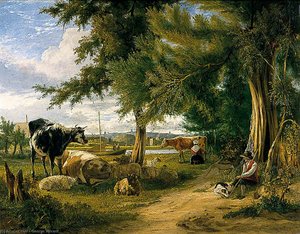
Portrét George Vincent

46 nejslavnějších obrazů autora George Vincent, výběr z galerie

Aktualizováno říjen 2026 · seřazeno podle našeho skóre popularity (vyhledávání, návštěvy a objednávky u každého díla) · 46 děl umělce George Vincent v našem katalogu

Stručně řečeno

Z všech originálů, které George Vincent zanechal, je nejslavnější A View of Cheddar Gorge (1820), který se nachází ve sbírce Yale Center for British Art, New Haven. Hned za ním následují A Harbor Scene in the Isle of Wight, Looking Towards the Needle (1824) a A View of Thames Street, Windsor (1828). Náš katalog obsahuje 46 děl umělce George Vincent; galerie si zachovala 46 děl, která obdivuje celý svět, přičemž každé je znázorněno s datem vzniku, názevem muzea a jeho příběhem.

1796 – 1832, Norwich Romanticism Nejvíce děl: Yale Center for British Art

10 nejlepších obrazů umělce George Vincent: výběr galerie

Výběr umělce George Vincent pokračuje, od 11 do 46

Slavná díla George Vincent podle jednotlivých období

Motivy, které zaujaly George Vincent

Čtyři témata, která se v těchto originálech nejčastěji objevují, z nichž každé má svůj nejlepší příklad.

Muzea, v nichž jsou vystavena originálna umělce George Vincent

5 muzea, v nichž je umístěno nejvíce obrazů z této stránky.

Muzeum Město Díla autora George Vincent Obrazy z tohoto seznamu
Yale Center for British Art, New HavenYale Center for British Art New Haven 3 A View of Cheddar Gorge, A Harbor Scene in the Isle of Wight, Looking Towards the Needle, A View of Thames Street, Windsor
Fitzwilliam MuseumFitzwilliam Museum 2 Loch etive, argyllshire, View In The Highlands
Felbrigg Hall, NorwichFelbrigg Hall Norwich 1 River Scene with Boats
Birmingham Museum and Art Gallery, BirminghamBirmingham Museum and Art Gallery Birmingham 1 Landscape, Cattle Crossing a Stream
TyntesfieldTyntesfield 1 Fishing Boats in a Harbour

George Vincent rok po roce: originální díla, která definují každou éru

Ani necelých deset let, od 1820 do 1828, obdarilo svět v tomto výběru každým datovaným originálem od George Vincent: zde jej najdete, rok po roce.

Díla podle roku

Vyberte rok a prohlédněte si originály.

Otázky sběratelů o obrazech umělce George Vincent

Kterým dílem je George Vincent nejznámější?Odhalit odpověď

A View of Cheddar Gorge (1820), Yale Center for British Art, New Haven. Následují A Harbor Scene in the Isle of Wight, Looking Towards the Needle (1824) a A View of Thames Street, Windsor (1828).

Kolik let bylo George Vincent, když bylo vytvořeno dílo A View of Cheddar Gorge?Odhalit odpověď

24 let: dílo A View of Cheddar Gorge pochází z roku 1820 a George Vincent se narodil/a v roce 1796.

Kterých deset nejslavnějších obrazů má George Vincent?Odhalit odpověď

A View of Cheddar Gorge, A Harbor Scene in the Isle of Wight, Looking Towards the Needle, A View of Thames Street, Windsor, A Harbour Scene in the Isle of Wight, Mousehole heath, norfolk, Loch etive, argyllshire, Lane scene, Castle ashby, northamptonshire, View near Norwich a View near Wroxham, Norfolk. Hodnocení výše uvádí rok a muzeum pro každé z nich.

Kolik obrazů zanechal(a) George Vincent?Odhalit odpověď

Náš katalog obsahuje 46 děl umělce George Vincent z let 1820 až 1828.

Ve kterých muzeích jsou vystavena díla mistrovská umělce George Vincent?Odhalit odpověď

Většinou v Yale Center for British Art (New Haven), Fitzwilliam Museum a Felbrigg Hall (Norwich). V tabulce muzeí výše jsou vypsány všechny.

Jaká jsou první a poslední slavná originální díla umělce George Vincent?Odhalit odpověď

Na této stránce je nejstarší dílo z A View of Cheddar Gorge (1820) a nejnovější z A View of Thames Street, Windsor (1828).

Jaká témata si George Vincent vybíral nejčastěji?Odhalit odpověď

Rural landscape (9), Landscape (9) a Tranquility (5) napříč 46 díly na této stránce.

K kterému uměleckému směru patří George Vincent?Odhalit odpověď

Romanticism a Dutch golden age, podle originálů na této stránce.

Která díla umělce George Vincent jsou vystavena v Yale Center for British Art?Odhalit odpověď

A View of Cheddar Gorge, A Harbor Scene in the Isle of Wight, Looking Towards the Needle a A View of Thames Street, Windsor: muzeum Yale Center for British Art, New Haven má v obsluze 3 děl z této stránky.

George Vincent: život a dílo

A Norfolk Son: The Life and Art of George Vincent

George Vincent, born in Norwich in 1796, remains a compelling figure within the constellation of the Norwich School painters. His story is one interwoven with both artistic promise and personal tragedy, a narrative reflective of the challenges faced by many artists navigating the burgeoning art world of 19th-century England. The son of James Vincent, a weaver specializing in shawls, and Mary Freeman, young George experienced early loss with the passing of an older brother in infancy. This formative experience perhaps instilled within him a sensitivity that would later permeate his evocative landscapes. Educated at Norwich School, he quickly found himself immersed in a vibrant artistic milieu, forging close bonds with Frederick and John Berney Crome – sons of the pivotal John Crome, who would become Vincent’s mentor and profoundly shape his artistic trajectory. This apprenticeship was crucial; it wasn't merely technical instruction but an immersion into the very ethos of the Norwich School, alongside fellow pupils like James Stark. The influence of Dutch landscape masters, a hallmark of Crome’s own aesthetic, began to subtly infuse Vincent’s early work, hinting at the unique blend that would define his style. Vincent’s artistic journey commenced under the watchful eye of John Crome, whose unwavering dedication to capturing the essence of Norfolk instilled in Vincent a similar passion for observation and representation. Together with fellow students like James Stark, Vincent absorbed Crome's techniques – prioritizing atmospheric perspective, meticulous detail, and a profound respect for the natural world. This formative period cemented his commitment to portraying rural England not as mere scenery but as imbued with emotion and character. The Norwich School’s distinctive approach—characterized by a rejection of academic conventions and an embrace of subjective experience—provided Vincent with a framework for artistic expression that would endure throughout his career. He swiftly gained recognition as one of its foremost practitioners, producing canvases that celebrated the beauty of Norfolk's rolling hills, meandering rivers, and dramatic coastlines.

London, Debt, and Disappearance

A significant turning point in Vincent’s life arrived when he relocated to London in 1818, seeking opportunities for patronage and artistic advancement. Initially successful in securing commissions from wealthy clients, Vincent experienced a dramatic downturn as his fortunes waned. A marriage followed by an imprudent investment – purchasing a substantial house—burdened him with mounting debts, plunging him into financial instability and ultimately culminating in imprisonment at the Fleet Prison in 1824. This harrowing ordeal tested Vincent’s resilience but did not extinguish his artistic spirit. Despite facing immense hardship, he persevered, continuing to paint and selling works to alleviate his financial woes. His unwavering dedication to his craft during this period stands as a testament to his inner fortitude and artistic conviction. Upon his release in 1827, Vincent resumed exhibiting with the Norwich Society of Artists, albeit with diminished output—a poignant reflection of the challenges he confronted throughout his life. Rumors circulated concerning alcoholism and personal difficulties, adding layers of complexity to his biography. He vanished from public view around 1832, leaving behind an enigmatic final chapter in his artistic narrative.

Vincent’s Artistic Style: Dutch Influence and Romantic Realism

Vincent's distinctive style emerged from a synthesis of influences—primarily rooted in the traditions of Dutch landscape painting and tempered by the spirit of Romantic idealism. Like Crome and other Norwich School artists, Vincent prioritized capturing the atmosphere and mood of his subjects with remarkable sensitivity. He achieved this through masterful use of color – employing subtle gradations and luminous hues to convey the ethereal quality of twilight landscapes or the dramatic grandeur of coastal vistas—a technique directly inherited from Dutch masters who championed atmospheric perspective. Furthermore, Vincent’s meticulous attention to detail—evident in painstakingly rendered textures and meticulously observed nuances of light—contrasted sharply with the looser brushstrokes favored by some contemporaries. This stylistic duality reflected his profound understanding of artistic principles and underscored his commitment to conveying emotion alongside accurate representation. His canvases are imbued with a palpable sense of tranquility and contemplation, inviting viewers to immerse themselves in the beauty of the Norfolk countryside.

A Lasting Legacy: Vincent’s Place in British Art

George Vincent's contribution to defining the aesthetic of the Norwich School was undeniable—establishing its reputation for authentic and emotionally resonant depictions of Norfolk. He wasn’t merely replicating scenery; he was conveying a feeling, a sense of place, a connection to the land that resonated with contemporary audiences and continues to captivate viewers today. His incorporation of Dutch landscape painting techniques brought a unique perspective to British art, emphasizing realism and atmospheric detail in a way that distinguished him from many of his peers. Vincent’s story serves as a poignant reminder of the precarious existence faced by artists during this era—the constant struggle for patronage, the vulnerability to financial ruin, and the often-tragic consequences of personal demons. He remains an important figure not only for understanding the Norwich School but also for gaining insight into the broader social and artistic context of 19th-century England. His paintings are a testament to his talent, resilience, and enduring love for the landscapes that inspired him—a legacy that continues to enrich our appreciation of British art history.