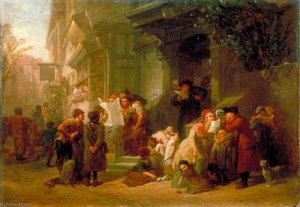
Portrét Frederick Trevelyan Goodall

45 nejslavnějších obrazů autora Frederick Trevelyan Goodall, každý naprosto unikátní

Aktualizováno listopad 2026 · seřazeno podle našeho skóre popularity (vyhledávání, návštěvy a objednávky u každého díla) · 62 děl umělce Frederick Trevelyan Goodall v našem katalogu

Stručně řečeno

The Blind Beggar (1872) je obraz autora Frederick Trevelyan Goodall, který přitahuje nejvíce pohledů; originál se nachází v Towneley Hall Art Gallery - Museum, Burnley. Poté se zrak přesouvá k A Woman and Child (1878) a Poultry (1842). Z 62 děl umělce Frederick Trevelyan Goodall v našem katalogu je těchto 45 těch nejznámějších; každé z nich je unikátním originálem s uvedením roku vzniku, muzea a důvodu jeho nesmrtelnosti.

1822 – 1904 Nejvíce děl: Guildhall Art Gallery

Top 10 obrazů autora Frederick Trevelyan Goodall podle výběru galerie

1
The Blind Beggar (1872) od Frederick Trevelyan Goodall

The Blind Beggar

1872 · Oil · Towneley Hall Art Gallery - Museum, Burnley

In this 1872 oil painting, we find ourselves drawn into a moment of profound human connection. Two men occupy the center of the composition, their presence commanding the viewer's attention amidst a bustling, sun-drenched setting. One man, clearly sightless, rests his hand upon the shoulder of his companion. This gesture is not one of burden, but of a quiet, mutual reliance. The guide moves with purpose, his hand steady, while…

2
A Woman and Child (1878) od Frederick Trevelyan Goodall

A Woman and Child

1878 · Oil On Canvas · Walker Art Gallery, Liverpool

A Woman and Child is an oil painting by Frederick Trevelyan Goodall. The work was created in 1878. This piece measures 47 x 36 cm and is currently held in the collection of the Walker Art Gallery in Liverpool, United Kingdom.

3
Poultry (1842) od Frederick Trevelyan Goodall

Poultry

1842 · Oil

A rooster stands as the central figure, its plumage catching the light against the muted backdrop of a farmyard. Beside it, a chicken rests in the quiet shadow of a shed. The scene is anchored by the heavy presence of a barn, a structure that frames the birds within the geometry of rural life. On the ground, a simple bowl sits near the feet of the poultry, while a bottle…

4
The Village Holiday (after David Wilkie) (1843) od Frederick Trevelyan Goodall

The Village Holiday (after David Wilkie)

1843 · Oil On Canvas

The Village Holiday (after David Wilkie) is an oil on canvas created by Frederick Trevelyan Goodall. This work, dating from about 1843, captures a moment of communal joy, dancing, and village festivities. It reflects the artist's early engagement with the genre traditions of his time.

5
The Tired Soldier Resting at a Roadside Well (1842) od Frederick Trevelyan Goodall

The Tired Soldier Resting at a Roadside Well

1842 · Oil

The Tired Soldier Resting at a Roadside Well is an oil painting by the English painter Frederick Trevelyan Goodall. Executed about 1842, the work belongs to the artist's early period, preceding his later, more famous depictions of Egyptian life and Bedouin customs.

6
Spanish Peasants Retreating from the French Army (1846) od Frederick Trevelyan Goodall

Spanish Peasants Retreating from the French Army

1846 · Oil

The painting titled Spanish Peasants Retreating from the French Army by Frederick Trevelyan Goodall captures a moment of heavy movement. Created about 1846, the work measures 15 x 28 cm. It depicts a group of people in traditional clothing moving away from an approaching force. The scene is a study of flight and the weight of sudden displacement.

7
Cottage Interior (1844) od Frederick Trevelyan Goodall

Cottage Interior

1844 · Oil On Canvas · Fitzwilliamovo muzeum, Cambridge

The oil painting depicts a quiet, rustic interior from the mid-19th century. In the foreground, a woman sits on a wooden bench, her form draped in a long skirt and a blouse. Beside her, a child stands, dressed in a simple garment. The two figures are positioned near one another, with the woman holding a small object, possibly a piece of fruit, in her hands. On the floor, a dog…

8
Merrymaking (1841) od Frederick Trevelyan Goodall

Merrymaking

1841 · Oil On Canvas · Laing Art Gallery, Newcastle upon Tyne

In the large oil on canvas titled Merrymaking, Frederick Trevelyan Goodall captures a lively social gathering that feels as though it is unfolding in the very moment we observe it. Painted about 1841, the scene pulls the viewer into a bustling, sheltered space where a group of at least fifteen individuals has gathered to share a meal and conversation. Under the shade of what appears to be a tent or…

9
A Britanny Wedding (1844) od Frederick Trevelyan Goodall

A Britanny Wedding

1844 · Oil · Wolverhampton Art Gallery, Wolverhampton

A Britanny Wedding is a painting by Frederick Trevelyan Goodall. This work, dating to about 1844, captures a specific moment of communal celebration. The artist, Frederick Trevelyan Goodall, was a prominent British Victorian painter who achieved significant recognition through his detailed depictions of life and his election as a Royal Academician.

10
The Irish Piper (1848) od Frederick Trevelyan Goodall

The Irish Piper

1848 · Oil

The Irish Piper is an oil on canvas work by Frederick Trevelyan Goodall. Created about 1848, this piece captures a moment of communal life in a rustic setting. It reflects the artist's early interest in genre scenes and the depiction of everyday existence within a rural landscape.

Slavná díla umělce Frederick Trevelyan Goodall, čísla 11 až 45

11The Deserter (1855) od Frederick Trevelyan GoodallThe Deserter1855 12Conscription (1851) od Frederick Trevelyan GoodallConscription1851 · Guildhall Art Gallery 13The Tired Gleaners (1855) od Frederick Trevelyan GoodallThe Tired Gleaners1855 · Harris Museum - Art Gallery 14The Village Post Office (1849) od Frederick Trevelyan GoodallThe Village Post Office1849 15The Relief of Lucknow (Jessie's Dream) (1858) od Frederick Trevelyan GoodallThe Relief of Lucknow (Jessie's Dream)1858 16The Sick Child (1856) od Frederick Trevelyan GoodallThe Sick Child1856 17Cranmer at Traitor's Gate (1856) od Frederick Trevelyan GoodallCranmer at Traitor's Gate1856 18Bedouin Mother and Child (Afterglow) (1871) od Frederick Trevelyan GoodallBedouin Mother and Child (Afterglow)1871 19The Rising of the Nile (1865) od Frederick Trevelyan GoodallThe Rising of the Nile1865 · Bristol Museum - Art Gallery 20The Sudden Rising of the Nile (1865) od Frederick Trevelyan GoodallThe Sudden Rising of the Nile1865 · Harris Museum - Art Gallery 21Sir Oscar Clayton (1816–1892) (1870) od Frederick Trevelyan GoodallSir Oscar Clayton (1816–1892)1870 22Agriculture in the Valley of the Nile (1874) od Frederick Trevelyan GoodallAgriculture in the Valley of the Nile1874 23The Subsiding of the Nile (1873) od Frederick Trevelyan GoodallThe Subsiding of the Nile1873 24The Subsiding of the Nile, Egypt (1873) od Frederick Trevelyan GoodallThe Subsiding of the Nile, Egypt1873 · Guildhall Art Gallery 25An Arab Improvisatore (1872) od Frederick Trevelyan GoodallAn Arab Improvisatore1872 26At the Well (1872) od Frederick Trevelyan GoodallAt the Well1872 27Subsiding of the Nile (1885) od Frederick Trevelyan GoodallSubsiding of the Nile1885 · Sunderland Museum - Winter Gardens 28On the Fringe of the Desert (1884) od Frederick Trevelyan GoodallOn the Fringe of the Desert1884 29Self Portrait (1883) od Frederick Trevelyan GoodallSelf Portrait1883 30Scene on the Nile (1879) od Frederick Trevelyan GoodallScene on the Nile1879 31Sheep Shearing in Egypt (1892) od Frederick Trevelyan GoodallSheep Shearing in Egypt1892 · Salford Museum - Art Gallery 32The Thames from Windsor Castle (1890) od Frederick Trevelyan GoodallThe Thames from Windsor Castle1890 · Salford Museum - Art Gallery 33Study for Susannah in Her Bath (1886) od Frederick Trevelyan GoodallStudy for Susannah in Her Bath1886 34The Water of the Nile (1893) od Frederick Trevelyan GoodallThe Water of the Nile1893 35Desert Scene (1893) od Frederick Trevelyan GoodallDesert Scene1893 · Wigan Arts And Heritage Service 36The Ancient Causeway to the Pyramids, Egypt (1898) od Frederick Trevelyan GoodallThe Ancient Causeway to the Pyramids, Egypt1898 · Nuneaton Museum And Art Gallery 37The Ploughman and the Shepherdess Time of the Evening Prayer (1897) od Frederick Trevelyan GoodallThe Ploughman and the Shepherdess Time of the Evening Prayer1897 38The Artist's Daughter od Frederick Trevelyan GoodallThe Artist's Daughter 39Ready for the Journey od Frederick Trevelyan GoodallReady for the JourneyNationalmuseum 40Sonning, Berkshire od Frederick Trevelyan GoodallSonning, Berkshire 41Landscape Study od Frederick Trevelyan GoodallLandscape Study 42Rebecca at the Well od Frederick Trevelyan GoodallRebecca at the Well 43The Second Mrs Goodall od Frederick Trevelyan GoodallThe Second Mrs GoodallBolton Museum And Art Gallery 44Shepherdess and Her Flock at a Pool Left by the Subsiding of the Overflow of the Nile od Frederick Trevelyan GoodallShepherdess and Her Flock at a Pool Left by the Subsiding of the Overflow of the NileTouchstones Rochdale 45Winnowing Corn in Brittany, France (1858) od Frederick Trevelyan GoodallWinnowing Corn in Brittany, France1858

Slavná díla Frederick Trevelyan Goodall podle jednotlivých období

Motivy, které zaujaly Frederick Trevelyan Goodall

Čtyři témata, která se v těchto originálech nejčastěji objevují, z nichž každé má svůj nejlepší příklad.

Muzea, v nichž jsou vystavena originálna umělce Frederick Trevelyan Goodall

8 muzea, v nichž je umístěno nejvíce obrazů z této stránky.

Muzeum Město Díla autora Frederick Trevelyan Goodall Obrazy z tohoto seznamu
Guildhall Art Gallery, LondýnGuildhall Art Gallery Londýn 2 Conscription, The Subsiding of the Nile, Egypt
Harris Museum - Art Gallery, PrestonHarris Museum - Art Gallery Preston 2 The Tired Gleaners, The Sudden Rising of the Nile
Salford Museum - Art Gallery, Greater ManchesterSalford Museum - Art Gallery Greater Manchester 2 Sheep Shearing in Egypt, The Thames from Windsor Castle
Towneley Hall Art Gallery - Museum, BurnleyTowneley Hall Art Gallery - Museum Burnley 1 The Blind Beggar
Walker Art Gallery, LiverpoolWalker Art Gallery Liverpool 1 A Woman and Child
Fitzwilliamovo muzeum, CambridgeFitzwilliamovo muzeum Cambridge 1 Cottage Interior
Laing Art Gallery, Newcastle upon TyneLaing Art Gallery Newcastle upon Tyne 1 Merrymaking
Wolverhampton Art Gallery, WolverhamptonWolverhampton Art Gallery Wolverhampton 1 A Britanny Wedding

Frederick Trevelyan Goodall napříč desetiletími: jeden unikátní originál pro každou dekádu

Díla podle dekád

Vyberte si dekádu a prohlédněte si originál, který ji definuje.

Obrazy umělce Frederick Trevelyan Goodall: dotazy pro galerii

Kterým nejznámějším dílem je Frederick Trevelyan Goodall?Odhalit odpověď

The Blind Beggar (1872), Towneley Hall Art Gallery - Museum, Burnley. Následují A Woman and Child (1878) a Poultry (1842).

V jakém věku vytvořil(a) Frederick Trevelyan Goodall dílo The Blind Beggar?Odhalit odpověď

50 let: dílo The Blind Beggar pochází z roku 1872 a Frederick Trevelyan Goodall se narodil/a v roce 1822.

Kterých deset obrazů autora Frederick Trevelyan Goodall je nejznámějších?Odhalit odpověď

The Blind Beggar, A Woman and Child, Poultry, The Village Holiday (after David Wilkie), The Tired Soldier Resting at a Roadside Well, Spanish Peasants Retreating from the French Army, Cottage Interior, Merrymaking, A Britanny Wedding a The Irish Piper. Hodnocení výše uvádí rok a muzeum pro každé z nich.

Kolik známých děl má autor Frederick Trevelyan Goodall?Odhalit odpověď

Náš katalog obsahuje 62 děl umělce Frederick Trevelyan Goodall z let 1841 až 1898.

Kde lze vidět nejznámější originály umělce Frederick Trevelyan Goodall?Odhalit odpověď

Většinou v Guildhall Art Gallery (Londýn), Harris Museum - Art Gallery (Preston) a Salford Museum - Art Gallery (Greater Manchester). V tabulce muzeí výše jsou vypsány všechny.

V jakém období vytvořil(a) Frederick Trevelyan Goodall svá nejznámější obrazy?Odhalit odpověď

V období 1870s: 10 z celkem 45 děl na této stránce vzniklo právě tehdy, z toho The Blind Beggar z nich.

Který slavný obraz od Frederick Trevelyan Goodall je nejstarší a který nejnovější?Odhalit odpověď

Na této stránce je nejstarší dílo z Merrymaking (1841) a nejnovější z The Ancient Causeway to the Pyramids, Egypt (1898).

Jakým tématům se Frederick Trevelyan Goodall věnoval/a nejčastěji?Odhalit odpověď

People (10), Dog (6) a Man (5) napříč 45 díly na této stránce.

Jaké materiály používal(a) Frederick Trevelyan Goodall nejčastěji?Odhalit odpověď

Oil, u 11 z 45 děl na této stránce.

Jaká originální díla Frederick Trevelyan Goodall mohu vidět v Guildhall Art Gallery?Odhalit odpověď

Conscription a The Subsiding of the Nile, Egypt: muzeum Guildhall Art Gallery, Londýn má v obsluze 2 děl z této stránky.

Frederick Trevelyan Goodall: portrét umělce

Frederick Goodall RA: A Victorian Explorer of Eastern Worlds

Born in London in 1822, Frederick Trevelyan Goodall’s artistic journey was deeply intertwined with a lineage of creative talent and a fascination for the exotic. The son of Edward Goodall, a highly respected steel line engraver who had worked closely with William Turner, Frederick inherited not only a skilled hand but also an appreciation for meticulous detail and a connection to the world of art. His upbringing within a family steeped in artistic tradition – his father’s work alongside Turner, his brothers' own artistic pursuits – provided him with an unparalleled foundation for his future career.

Early education at the Wellington Road Academy instilled in him a solid grounding in technique, but it was his time sketching in Regent’s Park Zoo and along the banks of the Thames that truly ignited his passion. These early observations, capturing the nuances of everyday life and the beauty of the natural world, would later inform his distinctive style. He quickly developed an eye for composition and color, hallmarks that would become synonymous with his work.

The Early Years: Apprenticeship and Royal Recognition

Goodall’s artistic development was further shaped by a formal apprenticeship under his father, honing his skills in oil painting. Crucially, he also joined a life class at St. Martin's Lane, immersing himself in the competitive environment of the London art scene and learning from established artists like Etty. This early exposure to the academic tradition provided him with essential training while simultaneously allowing him to develop his own unique voice.

His talent was quickly recognized, culminating in his first exhibition at the Society of Arts in 1836, followed by a silver medal for his painting “The Drowning of the Miner” at the Society of Arts in 1839. This early success established him as a promising young artist and paved the way for future recognition within the Royal Academy.

Egyptian Encounters: A Transformative Journey

A pivotal moment in Goodall’s career arrived with his first visit to Egypt in 1858, undertaken in partnership with fellow artist Carl Haag. This journey proved transformative, profoundly influencing his artistic direction and subject matter. The experience of immersing himself in the vibrant culture of Cairo, the stark beauty of the desert, and the daily lives of the Bedouin tribes ignited a deep fascination that would dominate much of his later work.

He shared a house and studio with Haag, sketching together amidst the bustling streets of Cairo and the surrounding pyramids. His second visit in 1870 saw him living amongst the Bedouins near Saqqara, meticulously observing their customs and lifestyles. This dedication to authenticity is evident in his paintings, which are remarkably detailed and imbued with a sense of genuine understanding.

To further enhance the realism of his depictions, Goodall famously brought back live sheep and goats from Egypt, incorporating them into his studio as models for his paintings. This commitment to accuracy reflected his desire to capture not just the visual appearance but also the essence of the Eastern world he had come to admire.

Royal Academician and a Flourishing Career

Goodall’s artistic achievements culminated in his election as an Associate Royal Academician (ARA) in 1852 and, more significantly, as a full Royal Academician (RA) in 1863. He exhibited at the Royal Academy for over four decades, consistently producing works that garnered critical acclaim and substantial sales. His paintings were highly sought after by collectors and patrons alike.

His output during this period was vast, encompassing a wide range of subjects – from bustling street scenes in Cairo to intimate portraits of Bedouin figures, dramatic landscapes, and biblical narratives. He exhibited over 170 works at the Royal Academy, demonstrating his sustained dedication to his chosen subject matter.

Legacy and Artistic Style

Frederick Goodall’s artistic legacy lies primarily in his evocative depictions of Egypt and the Bedouin people. His paintings are characterized by their meticulous detail, vibrant colors, and a remarkable ability to capture the atmosphere and spirit of the Eastern world. He skillfully blended elements of Orientalism with a distinctly British sensibility, creating works that were both exotic and familiar.

His home at Grims Dyke in Harrow Weald became a gathering place for prominent figures of the era, including Prince Edward (later King Edward VII), further cementing his position as a respected artist and socialite. Despite facing financial difficulties towards the end of his life, Goodall’s artistic contributions remain significant, offering a unique window into Victorian perceptions of the East and showcasing the enduring power of observation and skillful execution.