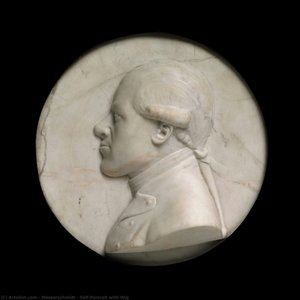
Portrét Franz Xaver Messerschmidt

Obrazy autora Franz Xaver Messerschmidt: 19 nejznámějších díel podle pohledu galerie

Aktualizováno listopad 2026 · seřazeno podle našeho skóre popularity (vyhledávání, návštěvy a objednávky u každého díla) · 24 děl umělce Franz Xaver Messerschmidt v našem katalogu

Stručně řečeno

Z pohledu galerie je nejslavnějším dílem Franz Xaver Messerschmidt obrazem Self-Portrait with Wig (1780), jehož originál je vystaven v Szépművészeti Múzeum v obci Budapešť. Self-Portrait: Laughing (1780) a The Yawner (1775) doplňují trio, které každé oko okamžitě pozná. Z 24 děl umělce Franz Xaver Messerschmidt v našem katalogu představuje galerie níže 19 nejznámějších děl, z nichž každé je originálem s uvedením roku vzniku, muzea a toho, co jej činí jedinečným.

1736 – 1783, Wiesensteig Neoclassicism Nejvíce děl: Szépművészeti Múzeum

Top 10 obrazů umělce Franz Xaver Messerschmidt v naší galerii

1
Self-Portrait with Wig (1780) od Franz Xaver Messerschmidt

Self-Portrait with Wig

1780 · Marble · Szépművészeti Múzeum, Budapešť

Franz Xaver Messerschmidt, a name often whispered in circles devoted to early Expressionism, remains an artist profoundly intriguing for his singular vision. Born into a lineage steeped in sculpting tradition – his family were renowned carvers in Bavaria – Messerschmidt didn’t simply inherit a craft; he seemed to wrestle with the very essence of human emotion, translating it into powerfully unsettling and intensely personal busts. His “Self-Portrait with Wig,” created…

2
Self-Portrait: Laughing (1780) od Franz Xaver Messerschmidt

Self-Portrait: Laughing

1780 · Sculpture · Szépművészeti Múzeum, Budapešť

Franz Xaver Messerschmidt's "Self-Portrait: Laughing," created around 1780, is not merely a depiction of an artist; it’s a profound exploration of the human psyche rendered in the cool, enduring medium of marble. Born into a family steeped in sculpting tradition – his uncle, Johann Baptist Straub, instilled in him the fundamentals of carving – Messerschmidt quickly transcended mere technical skill to become a figure both celebrated and increasingly shadowed by…

3
The Yawner (1775) od Franz Xaver Messerschmidt

The Yawner

1775 · Marble · Kunstpalast, Düsseldorf

The Yawner is a work by Franz Xaver Messerschmidt, dated 1775. It belongs to the series of character heads that define the artist's most striking output. These studies focus on the expressive power of the human face through extreme physiognomic contortions.

4
Character Head: Childish Weeping (1783) od Franz Xaver Messerschmidt

Character Head: Childish Weeping

1783 · Bronze · Szépművészeti Múzeum, Budapešť

In the quiet, somber depths of Franz Xaver Messerschmidt’s “Character Head: Childish Weeping,” one encounters more than a mere sculpture; one meets a profound psychological confrontation. Created in 1783, this bronze bust serves as a haunting window into the human soul, capturing a moment of raw, unadulterated sorrow that transcends the boundaries of its era. While many sculptors of the late eighteenth century sought to immortalize the idealized grace of…

5
Character Head: Quiet, Peaceful Sleep (1783) od Franz Xaver Messerschmidt

Character Head: Quiet, Peaceful Sleep

1783 · Bronze · Szépművészeti Múzeum, Budapešť

The bronze bust titled Character Head: Quiet, Peaceful Sleep emerges from the shadows of history, a singular creation by the artist Franz Xaver Messerschmidt. This sculpture, dating to 1783, captures a man's head and upper shoulders in a moment of profound stillness. The metal holds the form of a face surrendered to rest, frozen in a state of deep relaxation. It is a quiet departure from the more turbulent expressions…

6
Portrait of a Woman od Franz Xaver Messerschmidt

Portrait of a Woman

Sculpture · Bratislava City Gallery, Bratislava

In this portrait, we find ourselves observing a sculpted bust of a woman, captured within the soft, circular confines of a frame. The work presents a study in monochromatic restraint, relying on a palette of grays, whites, and blacks to define the contours of the human form. There is a certain stillness here, a composure that suggests a moment of dignified reflection. The lighting is diffused, washing over the surface…

7
Character Head: The Yawner (1783) od Franz Xaver Messerschmidt

Character Head: The Yawner

1783 · Bronze · Szépművészeti Múzeum, Budapešť

Franz Xaver Messerschmidt's "Character Head: The Yawner," created in 1783, isn’t merely a sculpture; it’s an excavation of the human psyche. Born in Bavaria during a period of shifting artistic sensibilities—bridging the Baroque’s grandeur with the nascent Neoclassicism—Messerschmidt carved out a singular path, driven by a profound fascination with capturing raw emotion through his art. This particular piece, rendered in bronze, stands as one of his most arresting “Character Heads,”…

9
Character Head: The Hanged (1770) od Franz Xaver Messerschmidt

Character Head: The Hanged

1770 · Sculpture · Österreichische Galerie, Vídeň

Franz Xaver Messerschmidt's "Character Head: The Hanged," crafted in 1770-83 from alabaster, stands as a profoundly unsettling and remarkably prescient work of art. More than simply a sculpture, it’s a psychological portrait rendered in stone—a glimpse into the turbulent inner world of an artist grappling with his own anxieties and perhaps, foreshadowing the rise of Expressionism nearly a century before its formal emergence. The piece isn't merely aesthetically pleasing; it…

10
Character Head: The Beaked (1770) od Franz Xaver Messerschmidt

Character Head: The Beaked

1770 · Sculpture · Rakouská galerie Belvedere, Vídeň

Franz Xaver Messerschmidt's "Character Head: The Beaked," sculpted in alabaster around 1770, isn’t merely a portrait; it’s an arresting distillation of human emotion rendered with unsettling precision. This small, yet profoundly impactful sculpture offers a rare glimpse into the mind of a man grappling with psychological turmoil and a unique artistic vision—a vision that anticipated elements of Expressionism by nearly a century. The piece immediately commands attention, not through grand…

Obrazy autora Franz Xaver Messerschmidt, seřazeny od 11 do 19

Slavná díla Franz Xaver Messerschmidt podle jednotlivých období

Motivy, které zaujaly Franz Xaver Messerschmidt

Čtyři témata, která se v těchto originálech nejčastěji objevují, z nichž každé má svůj nejlepší příklad.

Muzea, v nichž jsou vystavena originálna umělce Franz Xaver Messerschmidt

6 muzea, v nichž je umístěno nejvíce obrazů z této stránky.

Muzeum Město Díla autora Franz Xaver Messerschmidt Obrazy z tohoto seznamu
Szépművészeti Múzeum, BudapešťSzépművészeti Múzeum Budapešť 5 Self-Portrait with Wig, Self-Portrait: Laughing, Character Head: Childish Weeping
Bratislava City Gallery, BratislavaBratislava City Gallery Bratislava 3 Portrait of a Woman, Portrait of a Man, The Capuchin
Österreichische Galerie, VídeňÖsterreichische Galerie Vídeň 2 Character Head: The Lecher, Character Head: The Hanged
Liechtenstein Museum, VídeňLiechtenstein Museum Vídeň 2 Elijah Increases the Oil of the Widow, Elijah Increases the Oil of the Widow (detail)
Kunstpalast, DüsseldorfKunstpalast Düsseldorf 1 The Yawner
Rakouská galerie Belvedere, VídeňRakouská galerie Belvedere Vídeň 1 Character Head: The Beaked

Franz Xaver Messerschmidt, ikonická díla každého roku

Kariéra umělce Franz Xaver Messerschmidt na této stránce trvá 14 let, od 1770 do 1783: každý rok je zde zastoupen svými nejznámějšími originály.

Díla podle roku

Vyberte rok a prohlédněte si originály.

Obrazy umělce Franz Xaver Messerschmidt: odpovědi galerie

Který obraz autora Franz Xaver Messerschmidt je nejslavnější ze všech?Odhalit odpověď

Self-Portrait with Wig (1780), Szépművészeti Múzeum, Budapešť. Následují Self-Portrait: Laughing (1780) a The Yawner (1775).

Kolik let bylo Franz Xaver Messerschmidt, když dokončil/a Self-Portrait with Wig?Odhalit odpověď

44 let: dílo Self-Portrait with Wig pochází z roku 1780 a Franz Xaver Messerschmidt se narodil/a v roce 1736.

Kterých 10 nejlepších obrazů má Franz Xaver Messerschmidt?Odhalit odpověď

Self-Portrait with Wig, Self-Portrait: Laughing, The Yawner, Character Head: Childish Weeping, Character Head: Quiet, Peaceful Sleep, Portrait of a Woman, Character Head: The Yawner, Character Head: The Lecher, Character Head: The Hanged a Character Head: The Beaked. Hodnocení výše uvádí rok a muzeum pro každé z nich.

Kolik děl vytvořil/a Franz Xaver Messerschmidt?Odhalit odpověď

Náš katalog obsahuje 24 děl umělce Franz Xaver Messerschmidt z let 1770 až 1783.

Kde jsou vystavena nejznámější originály umělce Franz Xaver Messerschmidt?Odhalit odpověď

Většinou v Szépművészeti Múzeum (Budapešť), Bratislava City Gallery (Bratislava) a Österreichische Galerie (Vídeň). V tabulce muzeí výše jsou vypsány všechny.

Kdy Franz Xaver Messerschmidt vytvořil své nejslavnější obrazy?Odhalit odpověď

V období 1770: 3 z celkem 19 děl na této stránce vzniklo právě tehdy, z toho Character Head: The Lecher z nich.

Která jsou nejstarší a nejnovější slavná díla umělce Franz Xaver Messerschmidt?Odhalit odpověď

Na této stránce je nejstarší dílo z Character Head: The Lecher (1770) a nejnovější z Character Head: Childish Weeping (1783).

Kterým tématům se Franz Xaver Messerschmidt věnoval(a) nejčastěji?Odhalit odpověď

Sculpture (7), Baroque (3) a Human emotion (3) napříč 19 díly na této stránce.

V jaké technice tvořil(a) Franz Xaver Messerschmidt nejčastěji?Odhalit odpověď

Marble, u 4 z 19 děl na této stránce.

S jakým směrem je spojen(a) Franz Xaver Messerschmidt?Odhalit odpověď

Neoclassicism, podle originálů na této stránce.

Jaká originální díla Franz Xaver Messerschmidt má v obsluze Szépművészeti Múzeum?Odhalit odpověď

Self-Portrait with Wig, Self-Portrait: Laughing a Character Head: Childish Weeping: muzeum Szépművészeti Múzeum, Budapešť má v obsluze 5 děl z této stránky.

Franz Xaver Messerschmidt: umělec

Franz Xaver Messerschmidt (1736-1783): Master sculptor of haunting 'Character Heads' – intensely expressive busts exploring human emotion & psychology. A unique precursor to Expressionism.

Franz Xaver Messerschmidt, born in the Bavarian village of Wiesensteig in 1736, occupies a singular and often unsettling position in the history of sculpture. He wasn’t merely a product of his time—a bridge between the opulent late Baroque and the emerging Neoclassical styles—but an artist who seemed to anticipate the emotional intensity of Expressionism nearly a century before its formal emergence. His life, marked by both artistic promise and increasing psychological turmoil, is inextricably linked to his most enduring legacy: the “Character Heads,” busts that capture human emotion in states of raw, almost unbearable intensity. Messerschmidt’s early training was steeped in family tradition; he first learned the craft under the tutelage of his uncle, Johann Baptist Straub, a sculptor working in Munich. This foundational period instilled in him a mastery of traditional techniques, which he further honed through apprenticeships with another uncle, Philipp Jakob Straub, in Graz, and later at the Academy of Fine Arts Vienna, where Jacob Schletterer guided his development. These early works demonstrate a clear proficiency in the prevailing Baroque style, particularly evident in commissions for Empress Maria Theresa—bronze busts and reliefs that adhered to the conventions of courtly representation favored by artists like Balthasar Ferdinand Moll. He was, initially, a sculptor very much *of* his time, skilled at portraying power and status with appropriate grandeur.

Early Training & Baroque Commissions

Messerschmidt’s formative years instilled in him not only technical skill but also an understanding of the artistic conventions that dominated Europe during his era. His uncle Johann Baptist Straub's workshop in Munich provided invaluable experience in crafting monumental sculptures for aristocratic patrons—a tradition deeply rooted in Bavarian art history. This apprenticeship fostered a meticulous attention to detail and a command of sculptural techniques honed over decades, preparing him for ambitious projects destined to solidify his reputation. Notably, Messerschmidt secured commissions from Empress Maria Theresa, producing impressive bronze busts and reliefs that upheld the grandeur and formality demanded by Habsburg courtly art. These works exemplify the Baroque’s preoccupation with idealized beauty and symbolic representation—a stylistic choice reflecting the artistic sensibilities of the period. Artists like Balthasar Ferdinand Moll served as models for Messerschmidt's early endeavors, demonstrating a shared commitment to conveying authority and prestige through sculptural form.

The Genesis of Disquiet: The Character Heads

Around 1769-1770, however, a profound shift began to occur in Messerschmidt’s artistic vision. While continuing to accept traditional portrait commissions—albeit with diminishing frequency—he embarked on the creation of what would become his defining work—the “Character Heads.” These were not portraits in the conventional sense; they weren't intended to flatter or commemorate. Instead, they depicted faces contorted in extreme emotional expressions: laughter bordering on hysteria, grief etched into every line, grimaces of anguish and despair. The origins of this dramatic departure are complex, interwoven with both artistic experimentation and a deepening personal struggle. Accounts from the time, particularly those provided by Friedrich Nicolai following a visit to Messerschmidt in 1781, reveal an artist obsessed with capturing the full spectrum of human emotion. Nicolai described Messerschmidt’s peculiar method: he would reportedly pinch his own lower ribs, observing the resulting facial contortions in a mirror and then attempting to replicate them in marble or bronze. This self-experimentation suggests a deliberate attempt to access and portray authentic emotional states, rather than relying on idealized representations. Furthermore, Messerschmidt believed he was striving to represent all 64 “canonical grimaces” of the human face, guided by principles derived from Hermetic teachings and a quest for a "universal balance" akin to the golden ratio. This ambition speaks to a deeper philosophical underpinning—a desire to understand and codify the fundamental expressions of humanity. However, alongside this intellectual pursuit, there was a growing sense of mental instability. Ernst Kris theorized that these experiments were linked to paranoid ideas and hallucinations that began to plague Messerschmidt in the 1770s, ultimately leading to his expulsion from the Academy of Fine Arts in 1774 despite having served as a teacher since 1769.

Vienna & Artistic Innovation

His relocation to Vienna marked a pivotal moment in Messerschmidt’s artistic trajectory and intellectual engagement. Under the guidance of Jacob Schletterer at the Academy, he absorbed influences from Neoclassical aesthetics—a stylistic reaction against the excesses of Baroque art—while simultaneously pursuing his own idiosyncratic vision. This period witnessed the emergence of innovative sculptural techniques and a fascination with psychological exploration—traits that would characterize his later work. Notably, Messerschmidt undertook extensive studies in Rome and Paris, immersing himself in the artistic traditions of antiquity and encountering groundbreaking ideas about human emotion and perception. These experiences profoundly shaped his understanding of art’s role in conveying inner experience and challenged prevailing notions of beauty and representation. His bust of Franz Anton Mesmer exemplifies this newfound interest in psychological realism—a departure from Baroque conventions that foreshadowed the expressive fervor of Expressionism.

The Character Heads Revisited: A Legacy of Emotion

Despite facing professional setbacks, Messerschmidt remained steadfast in his artistic endeavors until his death in 1783. The “Character Heads,” produced during these final years, represent the culmination of his lifelong preoccupation with human emotion and psychological complexity. These sculptures—characterized by their unsettling realism and masterful articulation of facial expressions—became Messerschmidt’s enduring legacy—a testament to his artistic genius and a precursor to Expressionism's groundbreaking exploration of inner turmoil. They continue to captivate audiences today, prompting contemplation on the nature of human experience and reminding us that art can transcend mere visual beauty to convey profound emotional truths. His contribution extends beyond individual artworks; he fundamentally altered the possibilities of sculptural expression. He dared to venture into territory previously unexplored—the realm of raw, unfiltered emotion—and in doing so, left an indelible mark on the history of art. His work remains a testament to the power of art to confront uncomfortable truths and explore the depths of the human condition.

Concluding Thoughts

Franz Xaver Messerschmidt’s artistic legacy transcends stylistic categorization; he stands apart as an artist who anticipated the expressive concerns of Expressionism decades before its formal emergence. His “Character Heads,” imbued with psychological insight and unsettling realism, continue to inspire artists and scholars alike—a testament to his enduring influence on the trajectory of modern sculpture. He remains a singular figure in art history—a sculptor whose unwavering dedication to capturing human emotion cemented his place as a pioneer of psychological exploration and a champion of artistic innovation.