Stručně řečeno
Z všech originálů, které Fairlie Harmar zanechal, je nejslavnější After A Game Of Tennis (1923), který se nachází ve sbírce Birmingham Museum and Art Gallery, Birmingham. Hned za ním následují St Giles, Oxford a The Bridge at Monxton (1916). Náš katalog obsahuje 18 děl umělce Fairlie Harmar; galerie si zachovala 18 děl, která obdivuje celý svět, přičemž každé je znázorněno s datem vzniku, názevem muzea a jeho příběhem.
10 nejlepších obrazů umělce Fairlie Harmar: výběr galerie
Výběr umělce Fairlie Harmar pokračuje, od 11 do 18
Motivy, které zaujaly Fairlie Harmar
Čtyři témata, která se v těchto originálech nejčastěji objevují, z nichž každé má svůj nejlepší příklad.
British painting 2 děl
Muzea, v nichž jsou vystavena originálna umělce Fairlie Harmar
5 muzea, v nichž je umístěno nejvíce obrazů z této stránky.
| Muzeum | Město | Díla autora Fairlie Harmar | Obrazy z tohoto seznamu |
|---|---|---|---|
| Wolverhampton | 2 | Ships on the Thames, Flowers | |
| Birmingham | 1 | After A Game Of Tennis | |
| Liverpool | 1 | The Bridge at Monxton | |
| Oxford | 1 | The Laurel Walk | |
| Darlington | 1 | Chibbet, Exmoor, Somerset |
Fairlie Harmar dekáda po dekádě: originální díla, která definují každou z nich
Otázky sběratelů o obrazech umělce Fairlie Harmar
Kterým dílem je Fairlie Harmar nejznámější?Odhalit odpověď
After A Game Of Tennis (1923), Birmingham Museum and Art Gallery, Birmingham. Následují St Giles, Oxford a The Bridge at Monxton (1916).
Kolik let bylo Fairlie Harmar, když bylo vytvořeno dílo After A Game Of Tennis?Odhalit odpověď
47 let: dílo After A Game Of Tennis pochází z roku 1923 a Fairlie Harmar se narodil/a v roce 1876.
Kterých deset nejslavnějších obrazů má Fairlie Harmar?Odhalit odpověď
After A Game Of Tennis, St Giles, Oxford, The Bridge at Monxton, The Laurel Walk, Women's Royal Air Force Workers Drilling at Andover Aerodrome, Birthday Celebration, Garden Gate, L'Aveyron, Cheyne Walk Gardens a Sarson Farm, Early Spring. Hodnocení výše uvádí rok a muzeum pro každé z nich.
Kolik obrazů zanechal(a) Fairlie Harmar?Odhalit odpověď
Náš katalog obsahuje 18 děl umělce Fairlie Harmar z let 1912 až 1938.
Ve kterých muzeích jsou vystavena díla mistrovská umělce Fairlie Harmar?Odhalit odpověď
Většinou v Wolverhampton Art Gallery (Wolverhampton), Birmingham Museum and Art Gallery (Birmingham) a Walker Art Gallery (Liverpool). V tabulce muzeí výše jsou vypsány všechny.
V jakých letech namaloval Fairlie Harmar svá nejznámější díla?Odhalit odpověď
V období 1920s: 4 z celkem 18 děl na této stránce vzniklo právě tehdy, z toho After A Game Of Tennis z nich.
Jaká jsou první a poslední slavná originální díla umělce Fairlie Harmar?Odhalit odpověď
Na této stránce je nejstarší dílo z The Laurel Walk (1912) a nejnovější z Cheyne Walk Gardens (1938).
Která díla umělce Fairlie Harmar jsou vystavena v Wolverhampton Art Gallery?Odhalit odpověď
Ships on the Thames a Flowers: muzeum Wolverhampton Art Gallery, Wolverhampton má v obsluze 2 děl z této stránky.
Fairlie Harmar: život a dílo
Fairlie Harmar (1876–1945): A Painter of Quiet Landscapes and Intimate Portraits
Fairlie Harmar (1876-1945) was an English painter who quietly established herself as a significant figure in early 20th-century British art. Born in Weymouth, Dorset, she pursued her artistic ambitions at the Slade School of Fine Art under the tutelage of Henry Tonks and Fred Brown—a formative experience that instilled in her a meticulous approach to observation and representation. Her oeuvre is characterized by evocative landscapes imbued with subtle tonal harmonies alongside delicately rendered portraits capturing fleeting moments of human emotion. Harmar’s work offers a poignant glimpse into the domestic life and artistic sensibilities of her era, reflecting both Impressionistic influences and a deep connection to the natural world.- Early Life & Education: Fairlie Harmar's formative years were spent in Weymouth, Dorset, where she absorbed the beauty of the coastal landscape—a visual element that would permeate much of her subsequent artistic output. Her studies at the Slade School of Fine Art provided her with invaluable technical skills and intellectual grounding, fostering a disciplined eye for detail and composition.
- Style & Technique: Harmar’s distinctive style leaned heavily towards Impressionism, prioritizing capturing atmospheric conditions and conveying subjective experience rather than striving for photographic accuracy. She skillfully employed muted palettes—often dominated by greens, blues, and browns—to evoke mood and atmosphere, layering brushstrokes to create textured surfaces that subtly shimmered with light.
- Notable Works: Among Harmar’s most celebrated paintings are “A la Chaumière” (1928), a luminous depiction of a Parisian apartment interior bathed in diffused sunlight, and “St Giles, Oxford” (1920), which captures the serene grandeur of Oxford University Chapel. These pieces exemplify her ability to distill complex emotions into simple visual forms—a hallmark of her artistic vision.
- Influences & Connections: Harmar’s artistic sensibilities were undoubtedly shaped by the broader intellectual currents of her time, including discussions surrounding Symbolism and Modernism. Her association with Ezra Pound and fellow artists fostered a stimulating environment for experimentation and critical engagement.
- Legacy & Recognition: Fairlie Harmar's contribution to British art history is recognized through inclusion in prominent collections such as the Ashmolean Museum and the Royal Collection, where her paintings continue to inspire admiration for their understated beauty and psychological depth. Her work stands as a testament to the power of quiet observation and skillful execution—qualities that resonate powerfully with viewers today.
Exploring Landscapes & Domestic Interiors
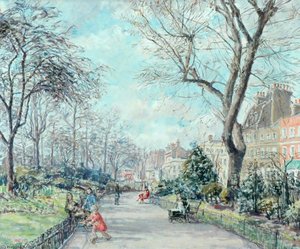
Harmar’s landscapes frequently depict tranquil scenes of Dorset countryside, capturing the subtle shifts in light and color throughout the seasons. She meticulously rendered details—such as foliage textures and reflections on water surfaces—to convey a profound sense of place. Simultaneously, her portraits delve into the inner lives of her subjects, portraying them with sensitivity and empathy. These intimate depictions reveal nuanced expressions of emotion and capture fleeting moments of human connection. Her ability to translate psychological states onto canvas solidified her reputation as one of Britain’s foremost portrait artists.- “Cheyne Walk Gardens” (1938): This Impressionistic landscape showcases Harmar's masterful use of color and brushwork, capturing the autumnal splendor of Cheyne Walk Gardens in Chelsea.