Eva Hesseová: život a dílo
Eva Hesse – Život Interrupted: The Poetic Vulnerability of Eva Hesse
Eva Hesse’s story is one of profound displacement and a relentless pursuit of artistic expression in the face of personal tragedy. Born in Hamburg, Germany (1936), her early life was irrevocably altered by the looming shadow of Nazism. Fleeing persecution, her family sought refuge in the United States in 1938, an act that would forever shape Hesse’s identity as a displaced person navigating two worlds. This sense of rootlessness, coupled with the emotional trauma of her parents' separation and her mother’s subsequent suicide when Hesse was just ten years old, became a subtle yet powerful undercurrent in her art—a haunting exploration of fragility, loss, and the ephemeral nature of existence. Her formal artistic training began at Pratt Institute in Brooklyn, followed by studies at Cooper Union and Yale University School of Art and Architecture, where she encountered the rigorous material explorations championed by Josef Albers. However, it was not within the confines of traditional painting that Hesse found her true voice; rather, she embarked on a path of radical experimentation with materials and form, ultimately becoming a pivotal figure in the development of Postminimalism and Eccentric Abstraction.
Early Life: Displacement and Trauma
Eva Hesse’s formative years were marked by upheaval and profound emotional distress. Born to an Orthodox Jewish family in Hamburg during the rise of Nazi Germany, she experienced firsthand the terror and uncertainty of persecution. Her parents’ decision to flee Germany for the Netherlands—a courageous act driven by a desire to protect their children from danger—established her familial history as one defined by resilience and vulnerability. The family endured significant hardship during their time in Amsterdam, facing separation and displacement amidst the escalating threat of Nazi aggression. Hesse’s father, an attorney specializing in criminal law, possessed considerable intellectual prowess, while her mother, a captivating artist grappling with manic depression, instilled in Hesse a deep appreciation for beauty and emotional expression. The family’s initial apartment in New York City was situated directly across from Nazi headquarters—a constant reminder of the pervasive anxieties surrounding their surroundings. Despite these challenges, Hesse demonstrated remarkable fortitude as she navigated adolescence, confronting loneliness and insecurity amidst the bustling cityscape of her new home. Her mother’s suicide at age ten profoundly impacted Hesse’s psyche, leaving an indelible mark on her artistic sensibility—a preoccupation with themes of loss, vulnerability, and psychological fragility that would permeate her oeuvre throughout her career.
From Painting to Materiality: A Sculptural Revolution
Initially drawn to abstract painting, Hesse soon recognized its limitations in conveying the complexities of human emotion and experience. She yearned for a more direct engagement with materiality—a way to imbue her work with the raw immediacy of feeling and sensation. This desire fueled her exploration of diverse artistic influences, ranging from Surrealist explorations of form and subconscious imagery to the gestural energy of Abstract Expressionism and the biomorphic sculptures of artists like Hans Arp and Jean Dubuffet. Hesse’s encounter with Louise Bourgeois proved particularly formative; Bourgeois’s psychologically charged sculptures resonated deeply with Hesse, demonstrating the potential for art to confront personal trauma and grapple with existential questions. Inspired by Bourgeois’s willingness to embrace vulnerability and explore themes of femininity—a courageous stance in a period dominated by formalism—Hesse abandoned conventional painting techniques in favor of sculptural experimentation. This decisive shift marked a pivotal moment in her artistic trajectory, propelling her toward the development of Postminimalism and Eccentric Abstraction.
Exploring Material Properties: Latex, Fiberglass, and Beyond
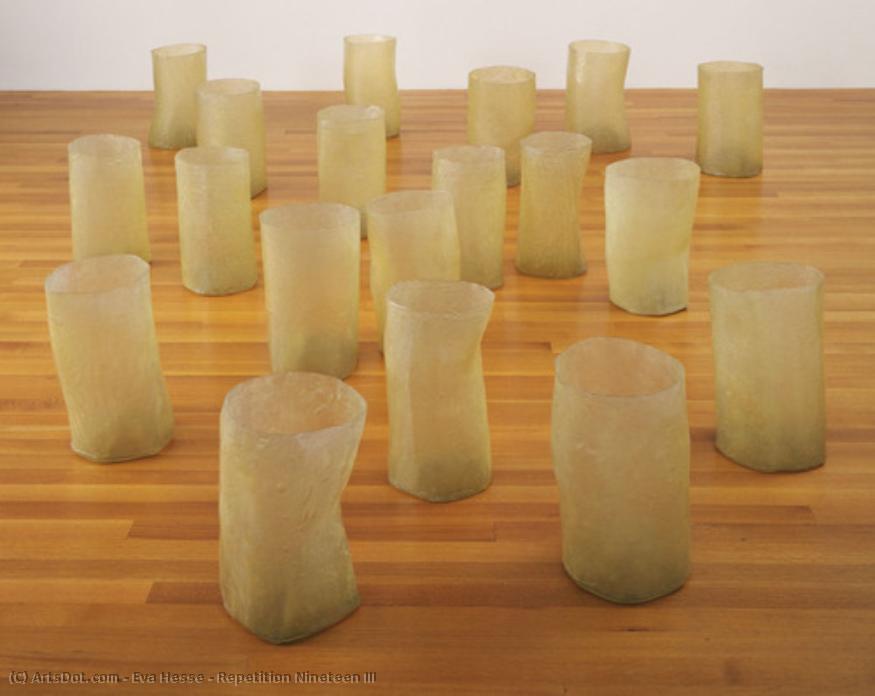
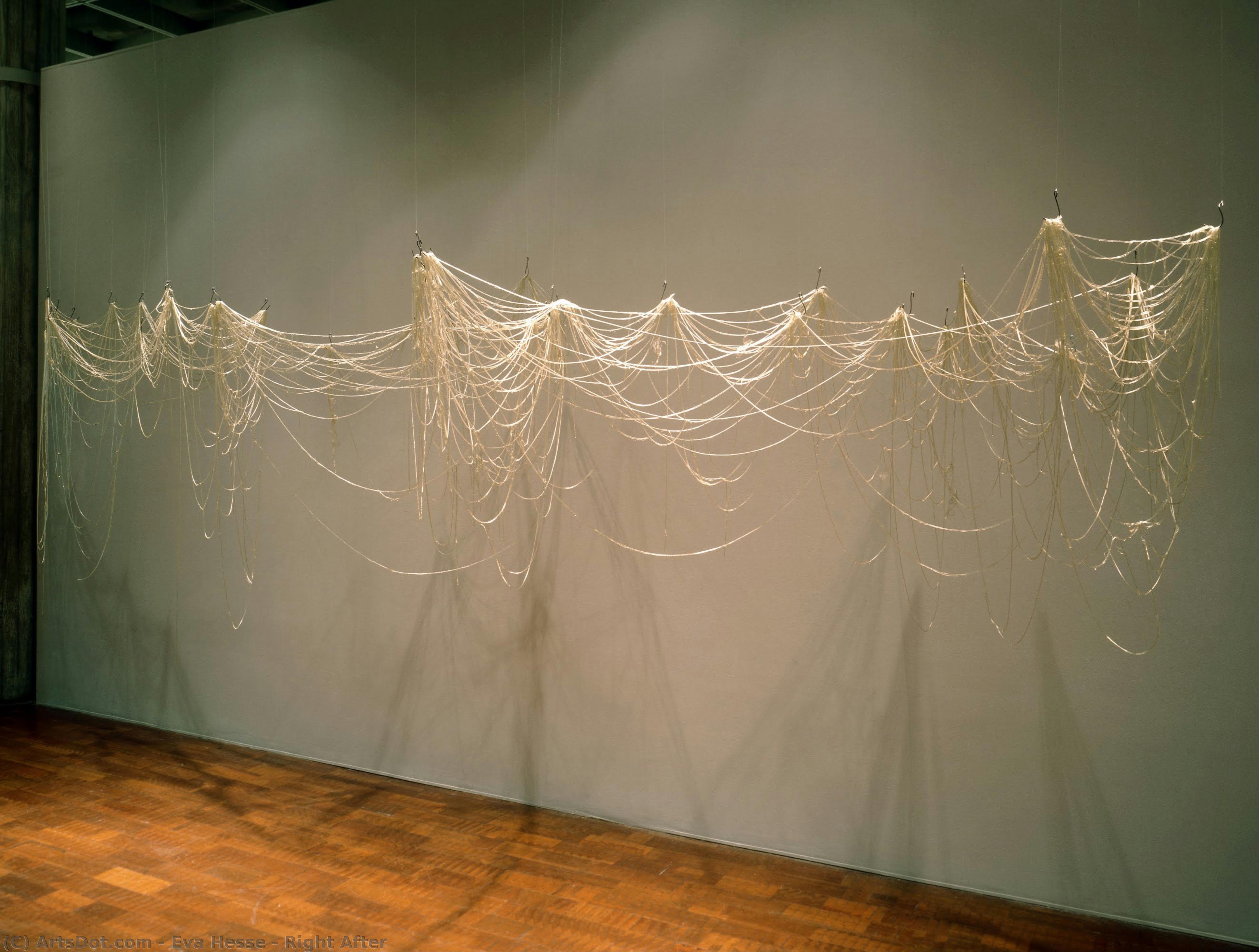
Hesse’s sculptural practice distinguished itself through its radical embrace of unconventional materials—materials often associated with industrial production or everyday life—rather than traditional mediums like marble or bronze. She skillfully manipulated substances such as latex rubber, plastic, lead, polythene, copper, felt, chicken-wire, dirt, sawdust, and paper pulp to create sculptures that defied conventional notions of form and stability. Hesse’s fascination with these materials stemmed from her conviction that they could convey emotional resonance—a belief rooted in her observation that “Life doesn’t last; art doesn’t last.” Unlike Minimalist sculptors who prioritized geometric precision and industrial fabrication, Hesse deliberately sought to exploit the temporal dimension inherent in her chosen materials. She recognized that their susceptibility to decay and transformation mirrored the fragility of human existence—a theme she consistently explored throughout her artistic output. Her innovative approach challenged established aesthetic conventions and paved the way for new forms of sculptural expression.
Major Achievements and Legacy: Postminimalism and Eccentric Abstraction
Eva Hesse’s contribution to contemporary art is undeniable, establishing herself as a cornerstone of Postminimalism and Eccentric Abstraction—movements that rejected formalism in favor of subjectivity, emotion, and organic form. Her sculptures—characterized by repetitive forms arranged in grid structures or clustered arrangements—explored themes of vulnerability, repetition, and the body with unflinching honesty—a bold departure from the prevailing aesthetic sensibilities of her time. Hesse’s work garnered critical acclaim and influenced subsequent generations of artists, notably women sculptors who embraced her pioneering use of materials and her willingness to confront difficult emotions. Her sculptures continue to resonate with audiences today, prompting contemplation on themes of loss, trauma, and the human condition—a testament to Hesse’s enduring artistic legacy. Hesse’s unwavering commitment to experimentation and her profound sensitivity to emotional experience solidified her place as one of the most influential sculptors of the 1960s and beyond.