Émile Munier: umělec
A Life Woven in Light: The World of Émile Munier
Émile Munier, born on June 2nd, 1840, within the vibrant heart of Paris, is a figure whose artistic legacy continues to resonate with a profound sense of tenderness and idealized beauty. His life wasn’t merely a chronicle of an artist's journey; it was intricately woven into the fabric of Parisian society, deeply connected to his family’s artistic heritage and profoundly shaped by the mentorship of William-Adolphe Bouguereau. From his humble beginnings in a workshop alongside his father, Pierre François Munier – a skilled upholsterer at the prestigious Gobelins Manufactory – to his eventual recognition as a master of academic painting, Munier's story is one of dedication, artistic evolution, and an unwavering pursuit of capturing the essence of innocence and domestic harmony.
The early years of Émile’s life were steeped in creativity. His father’s profession provided him with a unique environment for observation and appreciation of color and texture, while his mother, Marie Louise Carpentier, honed her skills as a polisher of cashmere cloth – an equally demanding craft requiring precision and artistry. Émile, alongside his brothers François and Florimond, displayed remarkable artistic talent from a young age, each producing self-portraits during their teenage years that hinted at the considerable promise within. These early drawings, characterized by a natural aptitude for line and form, foreshadowed the meticulous technique he would later develop under the guidance of Abel Lucas at the Gobelins. The family’s connection to the arts wasn't merely professional; it was deeply ingrained in their values and aspirations, fostering an environment where creativity flourished.
Formal Training & The Influence of Abel Lucas
Émile’s formal artistic training commenced at the Gobelins Manufactory under the tutelage of Abel Lucas, a respected figure known for his expertise in draftsmanship and design. This period proved crucial to Munier's development, providing him with a solid foundation in the fundamentals of art – anatomy, perspective, color theory, and composition. Lucas’s instruction wasn’t simply about imparting technical skills; he instilled in Émile a deep appreciation for the classical tradition and a commitment to meticulous observation. The workshops at the Gobelins were rigorous, demanding both physical stamina and artistic discipline. Munier excelled in his studies, mastering the techniques of drawing, painting, and design – skills that would prove indispensable throughout his career. He also benefited from the expertise of other instructors, including Mr. Chabale, who taught flower and ornament classes, and Mr. Chevreuil, responsible for chemistry lessons—a surprisingly important element in understanding the properties of pigments and dyes.
A pivotal moment arrived in 1861 with his marriage to Henriette Lucas, Abel’s daughter. This union not only solidified his connection to a prominent artistic family but also immersed him within Paris's vibrant creative community. The couple established their home at 66 rue des Fossés, St Marcel, a location that would become a hub for artistic activity and intellectual exchange. Tragically, Henriette passed away after the birth of their son, Emile Henri, leaving Munier with a profound sense of loss but also renewed determination to pursue his art as a means of honoring her memory.
The Bouguereau Connection & Artistic Transformation
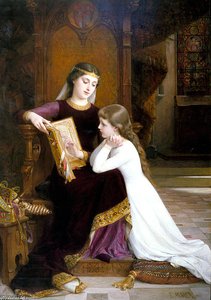
Munier’s artistic trajectory underwent a dramatic transformation following his encounter with William-Adolphe Bouguereau in 1869. Bouguereau, a leading figure in the academic art world, was renowned for his exquisite technique, idealized figures, and serene compositions. Munier became utterly devoted to the master, drawn to Bouguereau’s ability to capture the delicate beauty of human form and evoke a sense of timeless grace. He sought out every opportunity to study Bouguereau's work, absorbing his techniques and stylistic nuances. Bouguereau affectionately nicknamed him “la sagesse” (wisdom) or “le sage Munier,” recognizing in him a thoughtful, discerning artist with a quiet dedication to his craft. This mentorship profoundly influenced Munier’s style, leading him to adopt similar themes—idyllic scenes of childhood, peasant life, mythological narratives, and religious subjects—and strive for an equally high level of technical proficiency. Munier's early works already demonstrate a remarkable ability to capture the delicate beauty of form and light, foreshadowing the signature qualities that would define his mature style.
Themes of Innocence & Domestic Harmony
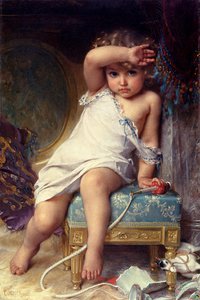
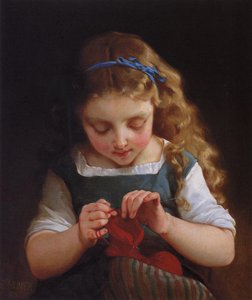
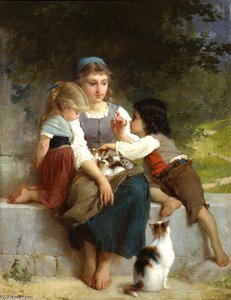
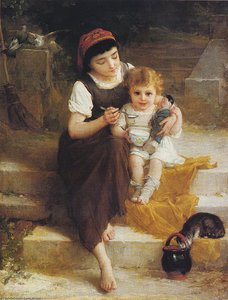
Munier’s artistic output is characterized by a profound exploration of themes centered around innocence, domestic tranquility, and the simple pleasures of life. He frequently depicted children engaged in playful activities—playing with pets, tending to gardens, or simply enjoying each other's company—creating scenes that exude warmth, tenderness, and a sense of timeless beauty. These paintings aren’t merely representations of childhood; they are imbued with an underlying spirituality, reflecting Munier’s belief in the inherent goodness of humanity. His subjects often embody a quiet dignity and grace, evoking feelings of nostalgia and longing for a simpler time. The artist's frequent use of family members as models—his daughter Marie Louise often graced his canvases—added a personal touch to these idyllic scenes, lending them an intimate quality that resonated deeply with viewers.
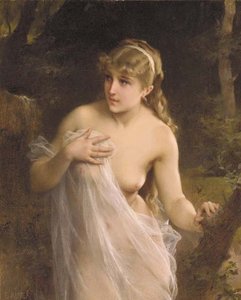
Notable works such as *Trois Amis* (Three Friends), a charming depiction of a young girl accompanied by a kitten and a dog, achieved widespread popularity and was famously utilized in advertising campaigns for Pears soap. Other masterpieces include the deeply moving *Angel Comforting His Grieving Mother*, commissioned by Jane Stanford as a poignant memorial to her son, Leland Stanford Jr., now housed at the Cantor Arts Center at Stanford University. *L'esprit de la chute d'eau* (The Spirit of the Waterfall), with its graceful nude nymph, echoes Bouguereau’s own exploration of classical themes, while *La jeune fille et le panier de chatons* (The Young Girl and Basket of Kittens) encapsulates the artist’s enduring fascination with childhood innocence.
Legacy & Recognition
Émile Munier's artistic reputation extended far beyond the borders of France, garnering significant recognition in America. Patrons like Chapman H. Hyams and his wife became devoted collectors of his work, amassing a substantial collection that now resides at the New Orleans Museum of Art. His inclusion in the 1893 Chicago World’s Fair further solidified his international standing, exposing his paintings to a wider audience and earning critical acclaim. Munier's dedication to his craft and his ability to capture the essence of human emotion ensured his place as a significant figure in French academic art. He died on June 29th, 1895, leaving behind a body of work that continues to be cherished for its exquisite craftsmanship, sentimental appeal, and timeless depiction of a bygone era—a testament to the enduring power of beauty, innocence, and human connection.