Portrét Edward Duncan

52 nejslavnějších obrazů autora Edward Duncan, výběr z galerie

Aktualizováno listopad 2026 · seřazeno podle našeho skóre popularity (vyhledávání, návštěvy a objednávky u každého díla) · 52 děl umělce Edward Duncan v našem katalogu

Stručně řečeno

Z všech originálů, které Edward Duncan zanechal, je nejslavnější Ludlow Castle, Shropshire. Hned za ním následují Destroying Chinese War Junks a 'Nemesis', East India Iron Armed Steamship. Náš katalog obsahuje 52 děl umělce Edward Duncan; galerie si zachovala 52 děl, která obdivuje celý svět, přičemž každé je znázorněno s datem vzniku, názevem muzea a jeho příběhem.

1803 – 1882, Londýn Nejvíce děl: Yale Center for British Art

10 nejlepších obrazů umělce Edward Duncan: výběr galerie

1
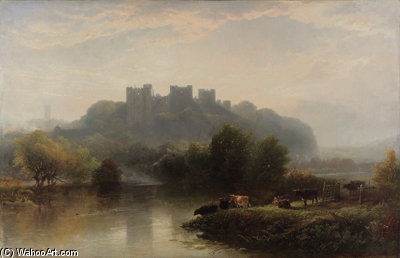
Ludlow Castle, Shropshire od Edward Duncan

Ludlow Castle, Shropshire

Watercolor

The scene unfolds in the quietude of the English countryside, presenting Ludlow Castle, Shropshire. This work by the artist Edward Duncan captures a moment of stillness where the weight of stone meets the softness of the natural world. The castle sits in the background, its large building rising against the skyline to command the view. It is a place where history feels present in the very air, watching over the…

2
Destroying Chinese War Junks od Edward Duncan

Destroying Chinese War Junks

Watercolor

In this work, titled Destroying Chinese War Junks, the artist Edward Duncan captures a specific moment of naval engagement. The scene focuses on the destruction of the Chinese war junk 'Fu Kee' by the HMS 'Sparrow Hawk'. It is a precise rendering of a maritime conflict that took place about 1864. Through his brush, Edward Duncan documents the collision of different naval traditions on the open water.

3
'Nemesis', East India Iron Armed Steamship od Edward Duncan

'Nemesis', East India Iron Armed Steamship

Watercolor

The painting presents a large-scale maritime scene featuring numerous vessels navigating the water. At least twelve boats of varying sizes and shapes are visible throughout the composition, some of which are equipped with masts flying flags. These vessels appear to be engaged in various activities, carrying different passengers or cargo across the water.

4
Spithead (1855) od Edward Duncan

Spithead

1855 · Watercolor · Birmingham Museum and Art Gallery, Birmingham

In this maritime watercolor, Edward Duncan captures a quiet moment at Spithead, a coastal area in Hampshire, England. Created about 1855, the work presents a serene view of the Solent's waters. The scene focuses on the interaction between the land and the sea, where several sailing vessels of varying sizes sit anchored in the shallow, calm waters near a sandy shoreline. A large wooden vessel is positioned near the coast,…

5
A Shipwreck (1865) od Edward Duncan

A Shipwreck

1865 · Watercolor

Edward Duncan created A Shipwreck about 1865, a work centered on the violent intersection of maritime disaster and the natural world. The subject matter focuses on a vessel caught in a tumultuous sea, a theme that highlights the inherent perils of life upon the waves. Through this depiction, the artist explores the immense power of nature and the resulting isolation of those caught in its grip. The scene captures a…

6
Sheep Feeding In A Winter Landscape od Edward Duncan

Sheep Feeding In A Winter Landscape

Watercolor

In Sheep Feeding In A Winter Landscape, the quietude of a frozen rural scene unfolds before us. Edward Duncan captures a moment of stillness where a flock of sheep rests upon wooden planks, their forms set against a cold, pale expanse. A man and a woman linger in the background, their presence adding a layer of human observation to the pastoral rhythm of the landscape. The scene feels suspended in…

7
The Compliments Of The Season od Edward Duncan

The Compliments Of The Season

Engraving

In The Compliments Of The Season, we encounter a scene of festive abundance and domestic movement. The work captures a crowded, bustling interior during a holiday gathering, where figures navigate a space filled with the energy of arrival and celebration. There is a palpable sense of merriment and slight chaos as guests enter with gifts, accompanied by dogs, creating a narrative of social connection within a detailed architectural setting. The…

8
Culver Cliff, Isle Of Wight, After The Wreck od Edward Duncan

Culver Cliff, Isle Of Wight, After The Wreck

Watercolor

In "Culver Cliff, Isle Of Wight, After The Wreck" by Edward Duncan, a dramatic coastal scene unfolds where the raw power of the sea meets the unyielding edge of the land. The aftermath of a shipwreck dominates the shoreline, leaving a broken vessel partially submerged in the churning water. This wreckage lies as a heavy reminder of vulnerability and destruction, a stark contrast to the environment surrounding it. On the…

9
Regatta off lowestoft od Edward Duncan

Regatta off lowestoft

Oil On Canvas

Regatta off lowestoft is an oil painting created by the artist Edward Duncan. This work depicts a maritime gathering near a coastline, focusing on the interaction between a crowd on a pier and the various vessels situated within a harbor. The scene captures a specific moment of social and maritime activity typical of the mid-19th century.

10
The Opening Of St. Katharine Docks od Edward Duncan

The Opening Of St. Katharine Docks

Watercolor

In The Opening Of St. Katharine Docks, Edward Duncan captures a bustling 19th-century harbor. The scene centers on a grand sailing vessel, its rigging detailed against the sky. This ship occupies the center foreground, a heavy presence amidst the movement of the water. Around the hull, a large gathering of people has assembled to witness the maritime activity. They form a crowd of spectators, their figures small against the scale…

Výběr umělce Edward Duncan pokračuje, od 11 do 52

Motivy, které zaujaly Edward Duncan

Čtyři témata, která se v těchto originálech nejčastěji objevují, z nichž každé má svůj nejlepší příklad.

Muzea, v nichž jsou vystavena originálna umělce Edward Duncan

3 muzea, v nichž je umístěno nejvíce obrazů z této stránky.

Muzeum Město Díla autora Edward Duncan Obrazy z tohoto seznamu
Yale Center for British Art, New HavenYale Center for British Art New Haven 2 Partridge Shooting, Pheasant Shooting
Birmingham Museum and Art Gallery, BirminghamBirmingham Museum and Art Gallery Birmingham 1 Spithead
Pinacoteca do Estado de São Paulo, São PauloPinacoteca do Estado de São Paulo São Paulo 1 The Opium Ships At Lintin In China

Edward Duncan rok po roce: originální díla, která definují každou éru

Ani necelých deset let, od 1855 do 1865, obdarilo svět v tomto výběru každým datovaným originálem od Edward Duncan: zde jej najdete, rok po roce.

Díla podle roku

Vyberte rok a prohlédněte si originály.

Otázky sběratelů o obrazech umělce Edward Duncan

Kterým dílem je Edward Duncan nejznámější?Odhalit odpověď

Ludlow Castle, Shropshire. Následují Destroying Chinese War Junks a 'Nemesis', East India Iron Armed Steamship.

Kterých deset nejslavnějších obrazů má Edward Duncan?Odhalit odpověď

Ludlow Castle, Shropshire, Destroying Chinese War Junks, 'Nemesis', East India Iron Armed Steamship, Spithead, A Shipwreck, Sheep Feeding In A Winter Landscape, The Compliments Of The Season, Culver Cliff, Isle Of Wight, After The Wreck, Regatta off lowestoft a The Opening Of St. Katharine Docks. Hodnocení výše uvádí rok a muzeum pro každé z nich.

Kolik obrazů zanechal(a) Edward Duncan?Odhalit odpověď

Náš katalog obsahuje 52 děl umělce Edward Duncan z let 1855 až 1865.

Ve kterých muzeích jsou vystavena díla mistrovská umělce Edward Duncan?Odhalit odpověď

Většinou v Yale Center for British Art (New Haven), Birmingham Museum and Art Gallery (Birmingham) a Pinacoteca do Estado de São Paulo (São Paulo). V tabulce muzeí výše jsou vypsány všechny.

Jaká jsou první a poslední slavná originální díla umělce Edward Duncan?Odhalit odpověď

Na této stránce je nejstarší dílo z Spithead (1855) a nejnovější z A Shipwreck (1865).

Jaká témata si Edward Duncan vybíral nejčastěji?Odhalit odpověď

Water (6), Beach (6) a Sea (5) napříč 52 díly na této stránce.

Kterou techniku používal(a) Edward Duncan nejčastěji?Odhalit odpověď

Watercolor, u 10 z 52 děl na této stránce.

Která díla umělce Edward Duncan jsou vystavena v Yale Center for British Art?Odhalit odpověď

Partridge Shooting a Pheasant Shooting: muzeum Yale Center for British Art, New Haven má v obsluze 2 děl z této stránky.

Edward Duncan: život a dílo

A Life Immersed in Watercolour: The World of Edward Duncan

Edward Duncan, born in London in 1803, wasn’t merely a painter of maritime scenes and coastal views; he was a chronicler of a changing world, a meticulous observer who translated the dynamism of the sea and the quiet beauty of the English countryside onto paper with breathtaking precision. His life unfolded during an era of immense naval power, burgeoning industrialization, and a growing Victorian fascination with landscape, all of which profoundly shaped his artistic vision. Duncan’s journey began not with a brush in hand, but as an apprentice to Robert Havell, a prominent aquatint engraver renowned for his work on Audubon's monumental “Birds of America.” This formative experience instilled within him a deep appreciation for detail and the intricacies of reproduction, skills that would later become hallmarks of his own artistic style. Studying alongside William Havell, Robert’s brother and a skilled watercolourist, further nurtured Duncan’s burgeoning talent, laying the groundwork for a career dedicated to capturing light, atmosphere, and the subtle nuances of the natural world.

Early Influences and Artistic Training

Duncan's initial artistic education took place under the tutelage of Robert Havell, whose mastery of aquatint engraving profoundly impacted his understanding of visual representation. Havell’s meticulous attention to tonal gradation and textural detail served as a crucial model for Duncan’s own approach to watercolour painting—a technique characterized by its ability to convey subtle variations in light and shadow with remarkable subtlety. This apprenticeship fostered not only technical proficiency but also an appreciation for the art of reproduction, recognizing that capturing the essence of a scene required more than just visual observation; it demanded careful consideration of how best to translate those observations onto paper. Furthermore, Duncan’s studies alongside William Havell honed his artistic sensibilities and instilled in him a lifelong commitment to exploring the expressive potential of watercolour—a medium he would champion throughout his prolific career.

Maritime Artistry: Collaboration with Huggins

Duncan's artistic trajectory shifted decisively around 1826 when he embarked on a collaborative partnership with William John Huggins, the official artist to both King William IV and King George IV. This fruitful association centered on engraving maritime scenes based on Huggins’ paintings—a commission that ignited within Duncan an enduring passion for marine subjects. The rhythmic sway of ships, the glint of sunlight on water, the raw power of the ocean—these elements captivated him, becoming central themes in his artistic exploration. Huggins' dramatic compositions and masterful use of colour influenced Duncan’s stylistic choices, encouraging him to embrace bold brushstrokes and vibrant hues while maintaining a steadfast commitment to capturing the atmospheric conditions prevalent at sea. This partnership solidified Duncan’s position within a vibrant circle of artists and fueled his creative endeavors for decades to come.

A Distinctive Watercolor Technique: Transparency and Atmosphere

Duncan distinguished himself from many of his contemporaries through his unwavering dedication to watercolour painting—a medium he approached with unparalleled precision and sensitivity. Unlike artists who favored bolder techniques employing bodycolour, Duncan prioritized the delicate layering of translucent washes that allowed him to achieve remarkable atmospheric effects. This distinctive approach enabled him to convey not merely what he saw but *how* he felt—the chill air of a misty coastline, the warmth of sunlight reflecting off rippling waves, and the ethereal beauty of twilight skies. His meticulous attention to tonal gradation and textural detail mirrored Havell’s influence, resulting in paintings that possessed both technical brilliance and profound emotional resonance. He skillfully blended pigments to create luminous hues and subtle gradations, capturing the fleeting moods of nature with breathtaking accuracy.

Notable Achievements and Legacy

Edward Duncan achieved widespread recognition throughout his lifetime as a celebrated British watercolourist—a testament to his unwavering dedication to his craft and his enduring artistic vision. Over 40 works were showcased at the Royal Academy, cementing his reputation as one of the foremost artists of his era. Furthermore, he exhibited more than 500 watercolors and drawings across various watercolour societies throughout England, demonstrating a remarkable breadth of artistic exploration. Among Duncan’s most iconic paintings include “The Shipwreck” (1859), depicting a dramatic maritime disaster with meticulous detail; “The Life-Boat” (1860), capturing the heroic efforts of rescuers amidst turbulent seas; "Oyster Dredgers – Swansea Bay" (1874) showcasing the industrious activity of coastal communities; and “Spithead from the Isle of Wight” (1857), portraying a grand naval procession with breathtaking grandeur. Duncan’s membership in the New Society of Painters in Water-Colours and the Royal Watercolour Society underscored his commitment to artistic excellence and solidified his place within the intellectual landscape of Victorian Britain. His legacy continues to inspire artists today, serving as an exemplar of technical mastery combined with profound aesthetic sensitivity—a testament to the enduring power of watercolour painting and Duncan’s singular contribution to British art history.