


1


Aktualizováno listopad 2026 · seřazeno podle našeho skóre popularity (vyhledávání, návštěvy a objednávky u každého díla) · 5 děl umělce Domenico Rossi v našem katalogu
Stručně řečeno
Gesuiti Façade (1709) je obraz autora Domenico Rossi, který přitahuje nejvíce pohledů; originál se nachází v Campo Dei Gesuiti, Benátky. Poté se zrak přesouvá k Ca' Dolfin in San Pantalon Façade (1710) a San Stae Façade (1709). Z 5 děl umělce Domenico Rossi v našem katalogu je těchto 5 těch nejznámějších; každé z nich je unikátním originálem s uvedením roku vzniku, muzea a důvodu jeho nesmrtelnosti.



The Gesuiti Interior painting by Domenico Rossi is a breathtaking work of art that showcases the grandeur of the Church of Santa Maria Assunta, also known as I Gesuiti, in Venice, Italy. Created in 1709, this magnificent piece is a testament to the artistic genius of Domenico Rossi and the rich cultural heritage of Venice. The Painting's Details The Gesuiti Interior painting features an ornate design, with intricate carvings and…
3 muzea, v nichž je umístěno nejvíce obrazů z této stránky.
| Muzeum | Město | Díla autora Domenico Rossi | Obrazy z tohoto seznamu |
|---|---|---|---|
 Campo Dei Gesuiti |
Benátky | 2 | Gesuiti Façade, Gesuiti Interior |
 Canal Grande |
Benátky | 2 | San Stae Façade, Ca' Corner della Regina Facade |
 Dorsoduro |
Benátky | 1 | Ca' Dolfin in San Pantalon Façade |
Vyberte si dekádu a prohlédněte si originál, který ji definuje.
Gesuiti Façade (1709), Campo Dei Gesuiti, Benátky. Následují Ca' Dolfin in San Pantalon Façade (1710) a San Stae Façade (1709).
31 let: dílo Gesuiti Façade pochází z roku 1709 a Domenico Rossi se narodil/a v roce 1678.
Náš katalog obsahuje 5 děl umělce Domenico Rossi z let 1709 až 1726.
Většinou v Campo Dei Gesuiti (Benátky), Canal Grande (Benátky) a Dorsoduro (Benátky). V tabulce muzeí výše jsou vypsány všechny.
V období 1700s: 3 z celkem 5 děl na této stránce vzniklo právě tehdy, z toho Gesuiti Façade z nich.
Na této stránce je nejstarší dílo z Gesuiti Façade (1709) a nejnovější z Ca' Corner della Regina Facade (1726).
Gesuiti Façade a Gesuiti Interior: muzeum Campo Dei Gesuiti, Benátky má v obsluze 2 děl z této stránky.
Domenico Rossi, a name perhaps less familiar than those of Tintoretto or Titian, nevertheless stands as a pivotal figure in the artistic landscape of 18th-century Venice. Born in Fano in 1657 and tragically passing away in 1737, Rossi’s legacy is primarily etched into the very fabric of the city he called home – through his masterful architectural facades, particularly those adorning some of Venice's most iconic palazzi. He wasn’t a painter of grand canvases; instead, he was a sculptor and architect who transformed the visual experience of Venetian buildings, imbuing them with an unparalleled sense of drama, elegance, and illusion.
Rossi’s early life reveals a strong connection to the artistic traditions of the Marche region. He began his training in Bologna, absorbing the influences of Mannerism before transitioning into the burgeoning Baroque style. This formative period instilled within him a deep understanding of classical principles combined with an innovative approach to ornamentation and spatial design. Crucially, he spent time in Vienna under the patronage of the House of Liechtenstein, honing his skills in creating elaborate decorative schemes for imperial residences – experiences that would profoundly shape his later work in Venice.
Rossi’s arrival in Venice marked a turning point. He quickly established himself as a sought-after architect, undertaking numerous commissions that showcased his distinctive style. The Chiesa di Santa Maria Assunta (I Gesuiti), completed in 1708, stands as perhaps his most celebrated early work. This magnificent church, located within the bustling Campo dei Gesuiti neighborhood, exemplifies Rossi’s signature approach: a dramatic interplay of light and shadow, intricate sculptural details, and an almost theatrical use of space. The facade is a breathtaking spectacle – a cascade of columns, pilasters, and elaborate cartouches that seem to defy gravity.
Another significant early commission was the renovation of the San Stae facade (1709). This project demonstrated Rossi’s ability to seamlessly integrate new elements with existing structures while maintaining a cohesive aesthetic. The result is a façade brimming with dynamism, featuring soaring columns, intricate carvings, and a sense of monumental grandeur that transformed the appearance of this important Venetian church.
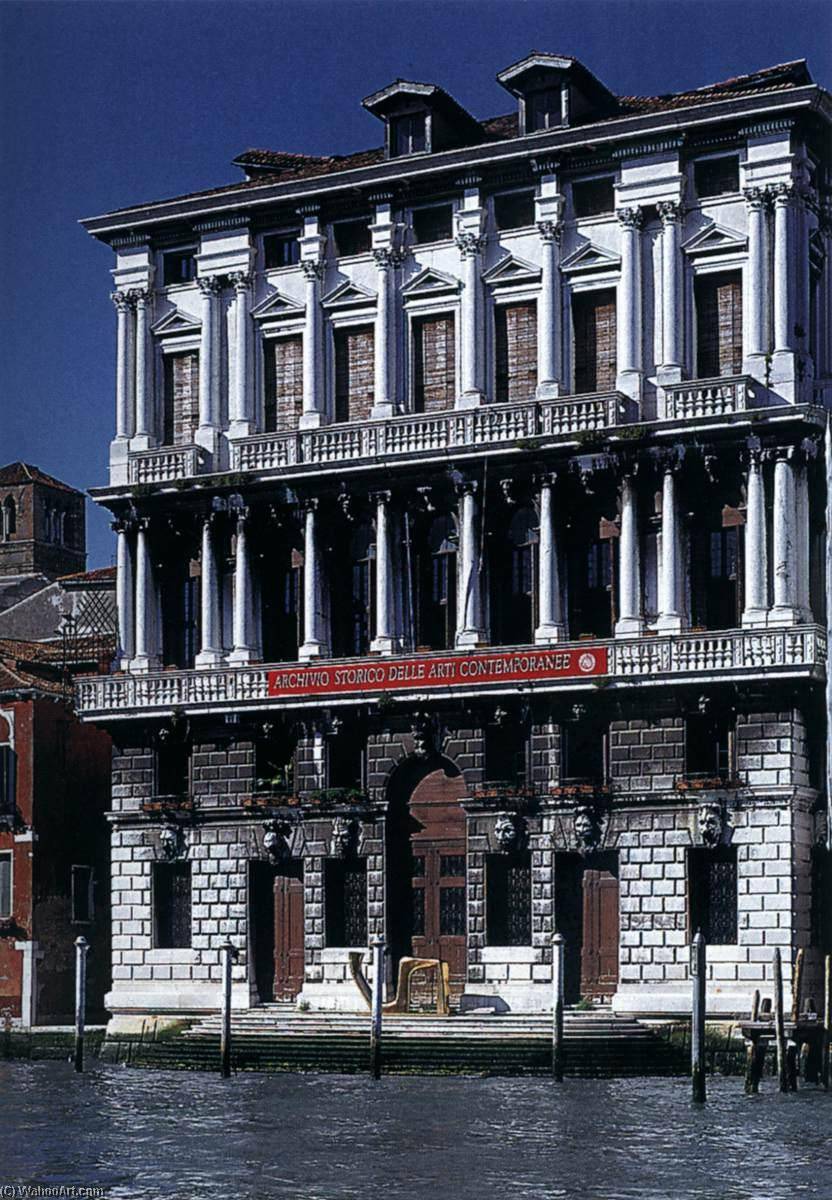
However, it’s the Ca’ Corner della Regina facade (1713-1715) that arguably represents Rossi’s absolute peak. This monumental work is a testament to his genius – a breathtaking illusionistic masterpiece that seamlessly blends architecture with painting. The facade appears to extend infinitely outwards, creating an astonishing sense of depth and perspective. Rossi employed a sophisticated technique known as *trompe-l'œil*, meticulously crafting the architectural elements to appear three-dimensional, blurring the boundaries between reality and artifice.
The intricate details of the Ca’ Corner facade – the sculpted figures, the elaborate cornices, the seemingly endless columns – are executed with remarkable precision. Rossi’s skill in manipulating light and shadow further enhances the illusion, creating a truly immersive experience for the viewer. The building itself is a reflection of Rossi's artistic vision: an architectural statement that transcends mere functionality and becomes a work of art in its own right.
Domenico Rossi’s impact on Venetian architecture extends far beyond his individual projects. He helped to establish a new standard for facade design, influencing generations of architects who followed. His innovative use of illusionistic techniques paved the way for future developments in Baroque art and set a precedent for the integration of painting and sculpture in architectural decoration.
While he may not be as widely recognized as some of his contemporaries, Domenico Rossi’s contribution to Venetian art is undeniable. He was a master craftsman who transformed the visual landscape of Venice, leaving behind a legacy of beauty, drama, and illusion – a testament to the power of architectural artistry.