Domenico Maria Canuti: A Bolognese Baroque Visionary
Domenico Maria Canuti (1625 – 1684) stands as a pivotal figure in the artistic landscape of Bologna and Rome during the baroque era, leaving an indelible mark on ceiling frescoes and portraiture alike. Born in Bologna, he embarked upon his artistic journey under the tutelage of Guido Reni and Guercino, absorbing foundational principles of Mannerism before embracing the exuberant dynamism characteristic of Baroque style. His formative years instilled a meticulous approach to technique combined with a profound understanding of humanist ideals—a duality that would permeate his subsequent oeuvre.- Early Training & Influences:
- Reni’s emphasis on idealized form and harmonious composition profoundly shaped Canuti's early artistic sensibilities, while Guercino’s masterful use of chiaroscuro introduced him to the expressive power of dramatic lighting. These influences fostered a stylistic blend that distinguishes his work from contemporaries.
Career in Bologna: Frescoes and Patronage
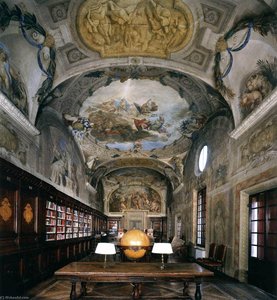
Canuti's artistic career gained considerable momentum in Bologna, where he secured prestigious commissions from influential families and institutions. Notably, he undertook monumental fresco cycles for the Biblioteca Sancti Michele in Bosco and Palazzo Pepoli Campogrande—projects that showcased his exceptional skill in depicting biblical narratives and mythological scenes with breathtaking detail and emotional intensity. His involvement in decorating Palazzo Felicini alongside Domenico Santi and Girolamo Negri further cemented his reputation as a leading Bolognese painter, demonstrating collaborative artistry and stylistic innovation.- Notable Commissions:
- The Biblioteca Sancti Michele’s frescoes exemplify Canuti's mastery of perspective and color palettes—a testament to his dedication to artistic excellence. Similarly, Palazzo Felicini benefited from his collaborative efforts with Santi and Negri, resulting in a visually stunning ensemble that reflects the stylistic trends of the period.
Rome: Ceiling Decoration and Artistic Collaborations
Moving to Rome in 1650, Canuti ascended to prominence as a ceiling decorator, collaborating with luminaries such as Francesco Cozza and Carlo Maratta on ambitious projects commissioned by papal patrons. His contribution to Palazzo Altieri’s quadratura—the illusionistic decoration of the ceiling—represented a pinnacle of Baroque artistry, demonstrating his ability to create immersive visual experiences that captivated viewers. Furthermore, he served as an assistant to Maratta in decorating Palazzo Colonna, solidifying his position within Rome's artistic elite and fostering stylistic exchange.- Collaborations & Patronage:
- Working alongside Maratta underscored Canuti’s commitment to pushing the boundaries of artistic innovation—a characteristic that distinguishes him from many of his peers. His patronage by influential families ensured continued access to resources and opportunities for creative exploration.
Portraiture and Artistic Legacy
Beyond his monumental fresco cycles, Canuti excelled in portrait painting, capturing the likenesses of prominent figures—including Ludovico Carracci, Agostino Carracci, and Annibale Carracci. His portraits are distinguished by their psychological depth and nuanced rendering of facial expressions—reflecting a humanist preoccupation with portraying human individuality. Moreover, he mentored younger artists such as Giuseppe Maria Mazza and Lucrezia Scarfaglia, fostering the transmission of artistic knowledge and shaping the future trajectory of Bolognese painting.- Portraiture Style:
- Canuti’s portraits stand apart from conventional depictions of nobility—characterized by idealized beauty and formal poses. Instead, he sought to convey inner character through subtle gestures and expressions, demonstrating a profound understanding of human psychology.
Historical Significance
Domenico Maria Canuti’s artistic legacy extends beyond his individual achievements—he embodies the spirit of Bolognese Baroque artistry. His frescoes continue to inspire admiration for their grandeur and technical virtuosity, while his portraits offer invaluable insights into the cultural milieu of 17th-century Rome. As a teacher and collaborator, he played an instrumental role in shaping the artistic landscape of his time—leaving an enduring imprint on the history of Italian art.Otázky a odpovědi
Odkud pochází Domenico Maria Canuti?
Domenico Maria Canuti se narodil(a) v Italy.
Jak je kariéra umělce Domenico Maria Canuti rozdělena do období?
Kariéra umělce Domenico Maria Canuti se na stránce Kronika umělce odvíjí období po období v podobě horizontální časové osy děl uspořádaných do kapitol podle tvůrčích etap.
Kde mohu najít statistiky o dílech umělce Domenico Maria Canuti?
Statistiky o dílech umělce Domenico Maria Canuti naleznete na jeho profilové stránce Statistiky.