David Alfaro Siqueiros (1896–1974): A Life Forged in Revolution
David Alfaro Siqueiros, born José de Jesús Alfaro Siqueiros in 1896 – though later research pinpointed his birthplace as Chihuahua City rather than Camargo – was more than just a painter; he was a force of nature, an embodiment of the tumultuous spirit of post-revolutionary Mexico. His life wasn’t confined to the studio but exploded onto the public stage, interwoven with political struggle and a relentless pursuit of art as a tool for social transformation. Early experiences shaped his trajectory: orphaned young, raised by his grandparents in Irapuato, Guanajuato, he was exposed to anarcho-syndicalist ideas that would deeply influence his worldview. This nascent political awareness blossomed during his student days at the Academy of San Carlos, where a protest against rigid teaching methods led to the establishment of an “open-air academy” – a defiant act marking the beginning of his artistic journey and foreshadowing a lifetime of challenging convention. The Mexican Revolution itself was the crucible in which Siqueiros’s artistic and political convictions were forged. He didn't merely observe the upheaval; he actively participated, joining the constitutional army and witnessing firsthand the hardships endured by working people and rural communities – experiences that would forever inform his art.Early Influences and Artistic Formation
Siqueiros’s formative years instilled in him a profound empathy for the marginalized and oppressed, shaping his artistic vision from its earliest stages. His upbringing amidst anarchist circles exposed him to radical ideas about social justice and economic equality, fueling his desire to use art as a vehicle for political critique. These influences found their expression during his studies at the Academy of San Carlos, where he spearheaded a movement for reform, advocating for greater freedom of expression and challenging the prevailing academic orthodoxy. This rebellious spirit culminated in the creation of “El Taller Libre,” an experimental academy that prioritized practical skills and artistic innovation over traditional instruction – a bold declaration of independence from established norms and a precursor to his lifelong commitment to pushing creative boundaries. The influence of Cézanne’s exploration of form and color proved particularly significant, prompting Siqueiros to abandon representational painting in favor of abstraction and experimenting with new techniques that prioritized expressive gesture and visual impact.European Immersion: Rediscovering Renaissance Fresco Techniques
Between 1919 and 1923, Siqueiros embarked on a transformative journey to Europe, immersing himself in the avant-garde currents reshaping the art world. This period wasn’t simply about acquiring technical skills; it was an intellectual pilgrimage fueled by a desire to engage with the most daring artistic ideas of his time. He absorbed the lessons of Cubism, particularly Picasso's groundbreaking explorations of fractured perspectives and geometric abstraction, recognizing its potential for conveying complex emotions and challenging conventional notions of reality. However, perhaps his most enduring influence came from studying Renaissance fresco techniques in Italy – a skill that would become central to his monumental mural projects. Witnessing firsthand the mastery of artists like Michelangelo instilled in him a reverence for craftsmanship and a conviction that art could achieve grandeur and permanence through meticulous execution. This fascination with classical aesthetics combined with his burgeoning Marxist convictions to propel him toward a distinctive artistic style characterized by dynamism, sculptural form, and a deliberate rejection of illusionistic representation.The Mexican Mural Movement: A Response to Revolution
The outbreak of the Mexican Revolution in 1917 irrevocably altered Siqueiros’s trajectory, galvanizing his political activism and propelling him into the forefront of Mexico's artistic renaissance. Rejecting academic conventions and embracing a radical vision of art as social transformation, he joined forces with Diego Rivera and José Clemente Orozco to establish “La Escuela Muralista,” a movement dedicated to commemorating the revolution through monumental wall paintings that celebrated Mexican history and culture while simultaneously advocating for social justice. Unlike Rivera’s idealized depictions of indigenous traditions or Orozco's brooding explorations of human suffering, Siqueiros’s murals prioritized dynamism and compositional movement, utilizing innovative techniques like spray guns and industrial paints to achieve unprecedented visual impact. His approach was deliberately confrontational, rejecting the passive acceptance of artistic beauty in favor of active engagement with social issues—a stance that reflected his unwavering belief in art's capacity to inspire change.Major Achievements and Legacy
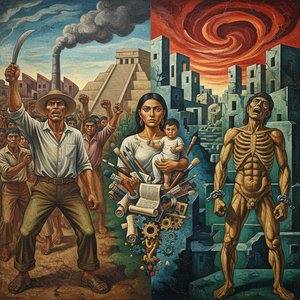
Siqueiros’s prolific output spanned decades, producing thousands of square metres of vibrant wall paintings that stand as enduring symbols of Mexican cultural heritage. His most celebrated works include “The New Democracy,” a sprawling mural depicting the struggles for social justice in Mexico during the 1930s; "The Polished City," which critiques industrial capitalism and its dehumanizing effects; and “March of Humanity,” an ambitious undertaking commemorating the centenary of Mexican Independence, exploring themes of history, myth, and human aspiration. His distinctive style—characterized by dynamic compositions, dramatic lighting, and sculptural form—became instantly recognizable and profoundly influenced subsequent generations of artists. Beyond his artistic accomplishments, Siqueiros’s unwavering commitment to Marxist ideology cemented his legacy as a champion of social justice and a fearless advocate for revolutionary ideals. He served as General Secretary of Mexico's Confederación Sindical Unitaria, tirelessly campaigning for workers' rights and promoting socialist principles throughout his life. His influence extended beyond the visual arts, inspiring movements for cultural renewal and challenging dominant narratives about Mexican history and identity. David Alfaro Siqueiros remains an artist whose work continues to resonate with audiences worldwide—a testament to the enduring power of art as a catalyst for social transformation and intellectual inquiry. ## Notable Murals: A Reflection of Revolutionary Ideals- The New Democracy (1940–1943): Depicts the struggles for social justice during the Mexican Revolution, emphasizing dynamism and expressive gesture.
- The Polished City (1930–1932): Critiques industrial capitalism and its impact on urban life, employing a stark palette and sculptural form to convey emotional intensity.
- March of Humanity (1957–1971): Commemorates the centenary of Mexican Independence, exploring themes of history, myth, and human aspiration through monumental scale and innovative technique.
- Paul Cézanne: Cézanne’s exploration of form and color profoundly impacted Siqueiros's artistic vision, encouraging him to abandon representational painting in favor of abstraction.
- Pablo Picasso: Picasso’s pioneering use of fractured perspectives and geometric abstraction served as inspiration for Siqueiros’s compositional innovations.
- Renaissance Fresco Techniques: Studying Michelangelo’s mastery of fresco painting instilled in Siqueiros a reverence for craftsmanship and a conviction that art could achieve grandeur through meticulous execution.
- Siqueiros established “La Escuela Muralista,” fundamentally reshaping Mexican artistic expression and solidifying the movement’s commitment to social realism.
- His techniques and themes profoundly influenced the Chicano art movement in the United States, providing a visual language for expressing cultural identity and challenging systemic oppression.
Otázky a odpovědi
Jak populární jsou umělecká díla umělce David Alfaro Siqueiros?
Stránka s odkazem na Statistiky pro umělce David Alfaro Siqueiros obsahuje statistiky vypočítané z děl tohoto umělce uvedených na tento web.
V jakém městě a z jaké země pochází David Alfaro Siqueiros?
David Alfaro Siqueiros se narodil(a) ve městě Chihuahua v zemi Mexiko.
Kde a kdy se narodil/a David Alfaro Siqueiros?
David Alfaro Siqueiros se narodil(a) ve městě Chihuahua v roce 1896.