Portrét Cherubino Alberti

5 nejslavnějších obrazů autora Cherubino Alberti, každý naprosto unikátní

Aktualizováno listopad 2026 · seřazeno podle našeho skóre popularity (vyhledávání, návštěvy a objednávky u každého díla) · 5 děl umělce Cherubino Alberti v našem katalogu

Stručně řečeno

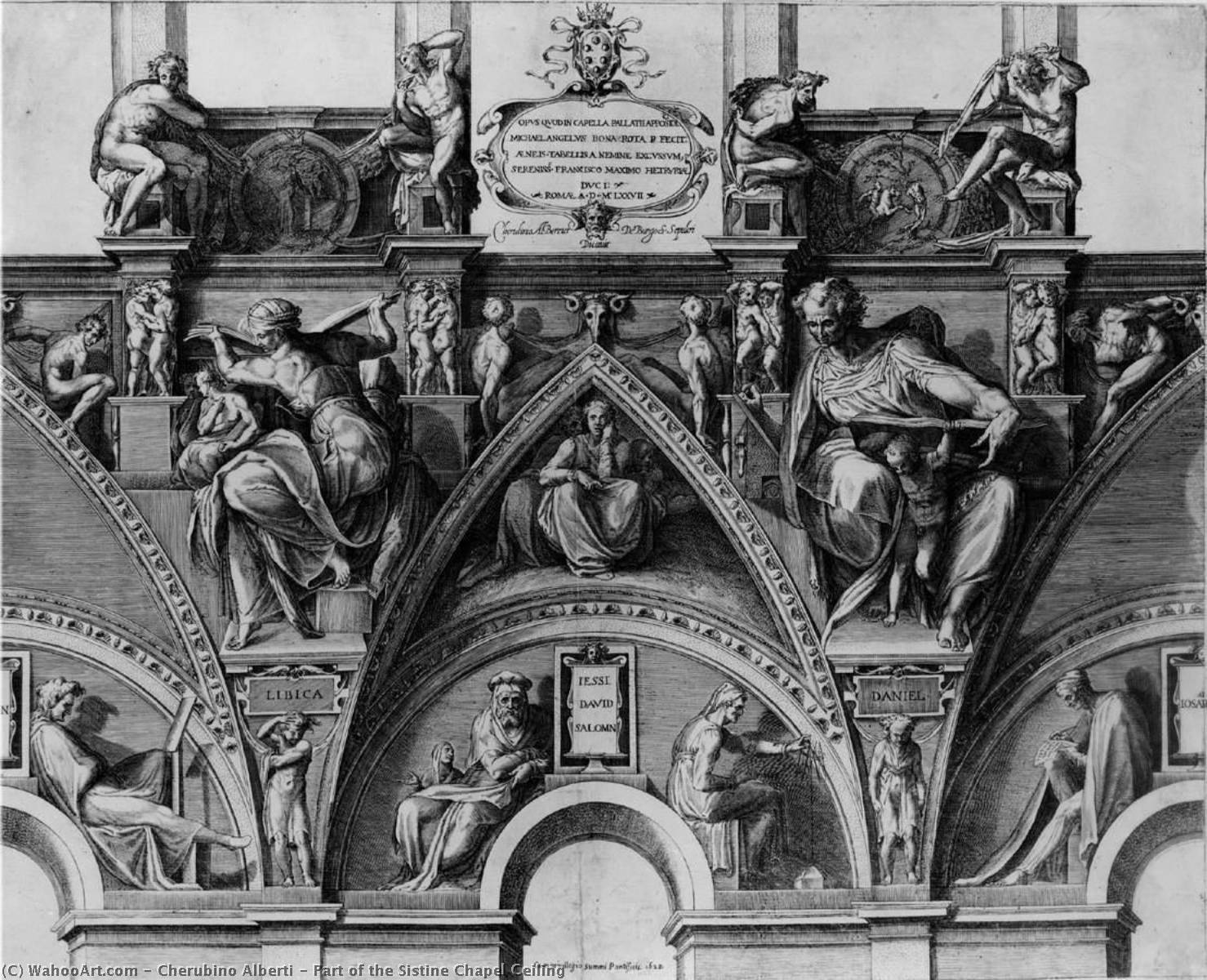
Part of the Sistine Chapel Ceiling (1577) je obraz autora Cherubino Alberti, který přitahuje nejvíce pohledů. Poté se zrak přesouvá k The Cardinal Virtues a Madona a dítě v slávě s anděly. Z 5 děl umělce Cherubino Alberti v našem katalogu je těchto 5 těch nejznámějších; každé z nich je unikátním originálem s uvedením roku vzniku, muzea a důvodu jeho nesmrtelnosti.

1553 – 1615 Nejvíce děl: Sala Clementina

Top 10 obrazů autora Cherubino Alberti podle výběru galerie

1
Part of the Sistine Chapel Ceiling (1577) od Cherubino Alberti

Part of the Sistine Chapel Ceiling

1577 · Black and White Photography

This black and white photograph captures a section of the Sistine Chapel ceiling, a work attributed to Cherubino Alberti from 1577. The image presents a dense arrangement of figures situated within a complex framework of architectural panels. These panels are defined by arched structures that segment the composition into rectangular and curved spaces. The figures are positioned in various states of movement and repose, some overlapping to create a sense…

2
The Cardinal Virtues od Cherubino Alberti

The Cardinal Virtues

Fresco · Sala Clementina, Řím

The fresco depicts four figures arranged against a pale, neutral background. In the center, a man stands with one hand raised, his posture suggesting the presence of Faith. To his left and right, two angels are positioned; one represents Hope and the other Charity. In the lower left corner, a woman is situated, identified as Temperance. The figures are dressed in classical attire, including garments that resemble togas. The arrangement…

3
Madona a dítě v slávě s anděly od Cherubino Alberti

Madona a dítě v slávě s anděly

Akryl na plátně · Fine Arts Museums of San Francisco, San Francisco

Cherubino Alberti: Mistr Engravingu Borghegijského Český odborník na výtvarné umění, akademický tvorba a dekorativní architektura vám představuje fascinující dílo Cherubina Albertiho – Madonu s dítětem v slávě s andílky. Tento monochromální rytinový obraz je ukázkou vrcholného období renesanční italštiny, kdy byl podporován papežem Clementem VIII., a nabízí komplexní pohled na estetiku doby a umělecké řemeslo. Albertiho dílo není jen technicky dokonalé reprodukce klasické ikonografie; je to vyjádření filozofických myšlenek a…

Muzea, v nichž jsou vystavena originálna umělce Cherubino Alberti

3 muzea, v nichž je umístěno nejvíce obrazů z této stránky.

Muzeum Město Díla autora Cherubino Alberti Obrazy z tohoto seznamu
Sala Clementina, ŘímSala Clementina Řím 1 The Cardinal Virtues
Fine Arts Museums of San Francisco, San FranciscoFine Arts Museums of San Francisco San Francisco 1 Madona a dítě v slávě s anděly
Museum of Fine Arts of Tatarstan, KazanMuseum of Fine Arts of Tatarstan Kazan 1 The Good Thief

Cherubino Alberti v průběhu let: unikátní originály každého díla

Všechny originály umělce Cherubino Alberti s datem 1577 zobrazené zde patří k jednomu roku, 1577: jsou uspořádány podle míry slavnosti.

Díla podle roku

Vyberte rok a prohlédněte si originály.

Obrazy umělce Cherubino Alberti: dotazy pro galerii

Kterým nejznámějším dílem je Cherubino Alberti?Odhalit odpověď

Part of the Sistine Chapel Ceiling (1577). Následují The Cardinal Virtues a Madona a dítě v slávě s anděly.

V jakém věku vytvořil(a) Cherubino Alberti dílo Part of the Sistine Chapel Ceiling?Odhalit odpověď

24 let: dílo Part of the Sistine Chapel Ceiling pochází z roku 1577 a Cherubino Alberti se narodil/a v roce 1553.

Kolik známých děl má autor Cherubino Alberti?Odhalit odpověď

Náš katalog obsahuje 5 děl od Cherubino Alberti.

Kde lze vidět nejznámější originály umělce Cherubino Alberti?Odhalit odpověď

Většinou v Sala Clementina (Řím), Fine Arts Museums of San Francisco (San Francisco) a Museum of Fine Arts of Tatarstan (Kazan). V tabulce muzeí výše jsou vypsány všechny.

Cherubino Alberti: portrét umělce

Cherubino Alberti: The Borghegiano Master of Mannerist Engraving

Cherubino Alberti (1553–1615), also called Borghegiano, stands as a pivotal figure in the artistic landscape of Renaissance Italy—specifically during the fervent patronage of Clement VIII. Though overshadowed by his brother Giovanni’s more celebrated frescoes within the Vatican’s Sala Clementina, Cherubino’s singular contribution to engraving cemented his legacy as one of the era's foremost printmakers and solidified his family’s reputation for artistic excellence. Born in Borgo San Sepulcro, Tuscany, Alberti descended from a lineage deeply rooted in craftsmanship; his father, Alberto Alberti, was a sculptor and carver—a familial tradition that instilled within Cherubino himself an unwavering dedication to meticulous detail and technical mastery.
  • Early Influences & Training: Alberti’s artistic education commenced under Cornelius Cort in Rome, where he absorbed the stylistic precepts of Raphael and embraced the prevailing currents of Mannerist art. This formative period exposed him to the grandeur and innovation of Michelangelo's monumental sculptures and instilled a profound appreciation for expressive distortion—a hallmark of the Mannerist aesthetic.
  • Engraving Virtuoso: Alberti swiftly established himself as an exceptional engraver, meticulously replicating the visions of his contemporaries. His initial commissions focused on works by Federico and Taddeo Zuccari, followed by collaborations with Raphael, Michelangelo, Polidoro da Caravaggio, Andrea del Sarto, Rosso Fiorentino, Marco Pino Sebastianio, and Cristofano Gherardi—artists whose stylistic prowess profoundly impacted Alberti’s oeuvre. Notably, he undertook projects based on ancient sculptures, demonstrating a keen interest in classical ideals and techniques.

The Sala Clementina Frescoes: A Collaborative Triumph

Perhaps Alberti's most enduring achievement resides in his partnership with Giovanni Alberti during the decoration of the Sala Clementina—a monumental fresco cycle commissioned by Pope Clement VIII. This ambitious undertaking demanded unparalleled artistic coordination and technical prowess, resulting in a breathtaking panorama of mythological scenes rendered with remarkable precision and emotional depth. The frescoes exemplify the collaborative spirit characteristic of Florentine art circles during this period and stand as testament to Alberti’s ability to synthesize disparate influences into a cohesive visual narrative.
  • Technique & Style: Alberti's engraving style was characterized by meticulous draughtsmanship, subtle tonal gradations, and an unwavering commitment to capturing the nuances of form and texture—traits that mirrored his fresco technique. He skillfully employed etching and drypoint methods, achieving astonishing levels of detail and expressive power.
  • Notable Engravings: Alberti produced over 180 engravings during his lifetime, showcasing a diverse range of subjects—from biblical narratives to mythological allegories to portraits of prominent figures. Among his most celebrated prints are depictions of Raphael’s “School of Athens,” Michelangelo’s “Creation of Adam,” and scenes from Caravaggio's dramatic compositions.

Legacy & Historical Significance

Cherubino Alberti’s contribution to the artistic heritage of Italy extends far beyond his individual engravings. He served as director of the Accademia di San Luca—Rome’s premier artists’ guild—promoting artistic innovation and fostering a vibrant intellectual environment. His influence permeated Florentine art circles, shaping stylistic trends and inspiring subsequent generations of engravers and painters. Alberti's meticulous craftsmanship and unwavering dedication to classical ideals ensured that his work would endure as an exemplar of Mannerist excellence—a testament to the enduring power of artistic vision and technical skill.

Further Exploration

For a deeper understanding of Cherubino Alberti’s life and artistry, consult resources such as:
  • Wikipedia:
  • Getty Museum:
  • The Art Institute of Chicago: