Portrét Carl Van Vechten

Obrazy autora Carl Van Vechten: 41 nejznámějších díel podle pohledu galerie

Aktualizováno listopad 2026 · seřazeno podle našeho skóre popularity (vyhledávání, návštěvy a objednávky u každého díla) · 41 děl umělce Carl Van Vechten v našem katalogu

Stručně řečeno

Z pohledu galerie je nejslavnějším dílem Carl Van Vechten obraz Rose McClendon, from the unrealized portfolio Noble Black Women The Harlem Renaissance and After (1983). Portrait of Frida Kahlo and Diego Rivera (1932) a Joe Louis, from the portfolio O Write My Name American Portraits, Harlem Heroes (1983) doplňují trio, které každé oko okamžitě pozná. Z 41 děl umělce Carl Van Vechten v našem katalogu představuje galerie níže 41 nejznámějších děl, z nichž každé je originálem s uvedením roku vzniku, muzea a toho, co jej činí jedinečným.

1880 – 1964, Cedar Rapids Harlem renaissance Nejvíce děl: Archives of American Art

Top 10 obrazů umělce Carl Van Vechten v naší galerii

1
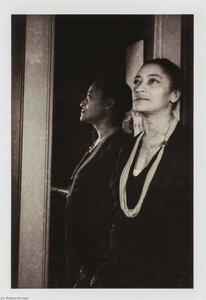
Rose McClendon, from the unrealized portfolio Noble Black Women The Harlem Renaissance and After (1983) od Carl Van Vechten

Rose McClendon, from the unrealized portfolio Noble Black Women The Harlem Renaissance and After

1983 · Black and White Photography

Two women stand poised before a doorway, their presence commanding the frame with a quiet, dignified grace. The scene is captured in monochrome, a world of deep blacks and luminous whites that strips away the distraction of color to focus on the essence of form. They are positioned on either side of the entrance, creating a balanced arrangement that draws the eye toward the dark, receding space behind them. There…

2
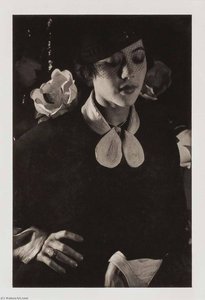
Portrait of Frida Kahlo and Diego Rivera (1932) od Carl Van Vechten

Portrait of Frida Kahlo and Diego Rivera

1932 · Black and White Photography · Archives of American Art, Washington, D.C.

In this evocative black and white photograph captured by the legendary Carl Van Vechten in 1932, we are granted a rare, unvarnished glimpse into the private world of two of the twentieth century's most formidable artistic icons. The portrait features Frida Kahlo and Diego Rivera standing side by side, caught in a quiet moment of togetherness that transcends the mere act of posing for a camera. There is an undeniable…

Obrazy autora Carl Van Vechten, seřazeny od 11 do 41

11W.E.B. DuBois, from the portfolio O Write My Name American Portraits, Harlem Heroes (1983) od Carl Van VechtenW.E.B. DuBois, from the portfolio O Write My Name American Portraits, Harlem Heroes1983 12Romaine Brooks (1936) od Carl Van VechtenRomaine Brooks1936 13Josh White, from the portfolio O Write My Name American Portraits, Harlem Heroes (1983) od Carl Van VechtenJosh White, from the portfolio O Write My Name American Portraits, Harlem Heroes1983 14Bill Bojangles Robinson, from the portfolio O Write My Name American Portraits, Harlem Heroes (1983) od Carl Van VechtenBill Bojangles Robinson, from the portfolio O Write My Name American Portraits, Harlem Heroes1983 15Jacob Lawrence, from the portfolio O Write My Name American Portraits, Harlem Heroes (1983) od Carl Van VechtenJacob Lawrence, from the portfolio O Write My Name American Portraits, Harlem Heroes1983 16John W. Bubbles, from the portfolio O Write My Name American Portraits, Harlem Heroes (1983) od Carl Van VechtenJohn W. Bubbles, from the portfolio O Write My Name American Portraits, Harlem Heroes1983 17Ossie Davis, from the portfolio O Write My Name American Portraits, Harlem Heroes (1983) od Carl Van VechtenOssie Davis, from the portfolio O Write My Name American Portraits, Harlem Heroes1983 18Ruby Elzy, from the unrealized portfolio Noble Black Women The Harlem Renaissance and After (1983) od Carl Van VechtenRuby Elzy, from the unrealized portfolio Noble Black Women The Harlem Renaissance and After1983 19Horace Pippin, from the portfolio O Write My Name American Portraits, Harlem Heroes (1983) od Carl Van VechtenHorace Pippin, from the portfolio O Write My Name American Portraits, Harlem Heroes1983 20Althea Gibson, from the unrealized portfolio Noble Black Women The Harlem Renaissance and After (1983) od Carl Van VechtenAlthea Gibson, from the unrealized portfolio Noble Black Women The Harlem Renaissance and After1983 21Nora Holt, from the unrealized portfolio Noble Black Women The Harlem Renaissance and After (1983) od Carl Van VechtenNora Holt, from the unrealized portfolio Noble Black Women The Harlem Renaissance and After1983 22Lena Horne, from the unrealized portfolio Noble Black Women The Harlem Renaissance and After (1983) od Carl Van VechtenLena Horne, from the unrealized portfolio Noble Black Women The Harlem Renaissance and After1983 23Ella Fitzgerald, from the unrealized portfolio Noble Black Women The Harlem Renaissance and After (1983) od Carl Van VechtenElla Fitzgerald, from the unrealized portfolio Noble Black Women The Harlem Renaissance and After1983 24Fredi Washington, from the unrealized portfolio Noble Black Women The Harlem Renaissance and After (1983) od Carl Van VechtenFredi Washington, from the unrealized portfolio Noble Black Women The Harlem Renaissance and After1983 25James Weldon Johnson, from the portfolio O Write My Name American Portraits, Harlem Heroes (1983) od Carl Van VechtenJames Weldon Johnson, from the portfolio O Write My Name American Portraits, Harlem Heroes1983 26Mahalia Jackson, from the unrealized portfolio Noble Black Women The Harlem Renaissance and After (1983) od Carl Van VechtenMahalia Jackson, from the unrealized portfolio Noble Black Women The Harlem Renaissance and After1983 27Bessie Smith, from the unrealized portfolio Noble Black Women The Harlem Renaissance and After (1983) od Carl Van VechtenBessie Smith, from the unrealized portfolio Noble Black Women The Harlem Renaissance and After1983 28Maxine Sullivan, from the unrealized portfolio Noble Black Women The Harlem Renaissance and After (1983) od Carl Van VechtenMaxine Sullivan, from the unrealized portfolio Noble Black Women The Harlem Renaissance and After1983 29Richard Wright, from the portfolio O Write My Name American Portraits, Harlem Heroes (1983) od Carl Van VechtenRichard Wright, from the portfolio O Write My Name American Portraits, Harlem Heroes1983 30Ella Fitzgerald, from the portfolio O Write My Name American Portraits, Harlem Heroes (1983) od Carl Van VechtenElla Fitzgerald, from the portfolio O Write My Name American Portraits, Harlem Heroes1983 31Eslanda G. Robeson, from the unrealized portfolio Noble Black Women The Harlem Renaissance and After (1983) od Carl Van VechtenEslanda G. Robeson, from the unrealized portfolio Noble Black Women The Harlem Renaissance and After1983 32Romare Bearden, from the portfolio O Write My Name American Portraits, Harlem Heroes (1983) od Carl Van VechtenRomare Bearden, from the portfolio O Write My Name American Portraits, Harlem Heroes1983 33Howard Swanson, from the portfolio O Write My Name American Portraits, Harlem Heroes (1983) od Carl Van VechtenHoward Swanson, from the portfolio O Write My Name American Portraits, Harlem Heroes1983 34Mary McLeod Bethune, from the unrealized portfolio Noble Black Women The Harlem Renaissance and After (1983) od Carl Van VechtenMary McLeod Bethune, from the unrealized portfolio Noble Black Women The Harlem Renaissance and After1983 35Zora Neale Hurston, from the unrealized portfolio Noble Black Women The Harlem Renaissance and After (1983) od Carl Van VechtenZora Neale Hurston, from the unrealized portfolio Noble Black Women The Harlem Renaissance and After1983 36Esther Perkins, from the unrealized portfolio Noble Black Women The Harlem Renaissance and After (1983) od Carl Van VechtenEsther Perkins, from the unrealized portfolio Noble Black Women The Harlem Renaissance and After1983 37Ada Bricktop Smith, from the unrealized portfolio Noble Black Women The Harlem Renaissance and After (1983) od Carl Van VechtenAda Bricktop Smith, from the unrealized portfolio Noble Black Women The Harlem Renaissance and After1983 38Langston Hughes, from the portfolio O Write My Name American Portraits, Harlem Heroes (1983) od Carl Van VechtenLangston Hughes, from the portfolio O Write My Name American Portraits, Harlem Heroes1983 39Leontyne Price, from the unrealized portfolio Noble Black Women The Harlem Renaissance and After (1983) od Carl Van VechtenLeontyne Price, from the unrealized portfolio Noble Black Women The Harlem Renaissance and After1983 40Ethel Waters, from the unrealized portfolio Noble Black Women The Harlem Renaissance and After (1983) od Carl Van VechtenEthel Waters, from the unrealized portfolio Noble Black Women The Harlem Renaissance and After1983 41Dorothy Peterson, from the unrealized portfolio Noble Black Women The Harlem Renaissance and After (1983) od Carl Van VechtenDorothy Peterson, from the unrealized portfolio Noble Black Women The Harlem Renaissance and After1983

Motivy, které zaujaly Carl Van Vechten

Čtyři témata, která se v těchto originálech nejčastěji objevují, z nichž každé má svůj nejlepší příklad.

Muzea, v nichž jsou vystavena originálna umělce Carl Van Vechten

Muzeum s největším počtem obrazů na této stránce.

Muzeum Město Díla autora Carl Van Vechten Obrazy z tohoto seznamu
Archives of American Art, Washington, D.C.Archives of American Art Washington, D.C. 1 Portrait of Frida Kahlo and Diego Rivera

Carl Van Vechten, ikonická díla každého roku

5 let, od 1932 do 1936, zachycuje na této stránce celou časopisevnou tvorbu umělce Carl Van Vechten: krátký přehled, který zde uvidíte rok po roce prostřednictvím jeho nejslavnějších originálů.

Díla podle roku

Vyberte rok a prohlédněte si originály.

Obrazy umělce Carl Van Vechten: odpovědi galerie

Který obraz autora Carl Van Vechten je nejslavnější ze všech?Odhalit odpověď

Rose McClendon, from the unrealized portfolio Noble Black Women The Harlem Renaissance and After (1983). Následují Portrait of Frida Kahlo and Diego Rivera (1932) a Joe Louis, from the portfolio O Write My Name American Portraits, Harlem Heroes (1983).

Kterých 10 nejlepších obrazů má Carl Van Vechten?Odhalit odpověď

Rose McClendon, from the unrealized portfolio Noble Black Women The Harlem Renaissance and After, Portrait of Frida Kahlo and Diego Rivera, Joe Louis, from the portfolio O Write My Name American Portraits, Harlem Heroes, James Baldwin, from the portfolio O Write My Name American Portraits, Harlem Heroes, Paul Robeson, from the portfolio O Write My Name American Portraits, Harlem Heroes, Charles S. Johnson, from the portfolio O Write My Name American Portraits, Harlem Heroes, Ralph Bunche, from the portfolio O Write My Name American Portraits, Harlem Heroes, Margaret Walker, from the portfolio O Write My Name American Portraits, Harlem Heroes, Altonell Hines, from the unrealized portfolio Noble Black Women The Harlem Renaissance and After a Katherine Dunham, from the unrealized portfolio Noble Black Women The Harlem Renaissance and After. Hodnocení výše uvádí rok a muzeum pro každé z nich.

Kolik děl vytvořil/a Carl Van Vechten?Odhalit odpověď

Náš katalog obsahuje 41 děl umělce Carl Van Vechten z let 1932 až 1936.

Kde jsou vystavena nejznámější originály umělce Carl Van Vechten?Odhalit odpověď

Většinou v Archives of American Art (Washington, D.C.). V tabulce muzeí výše jsou vypsány všechny.

Která jsou nejstarší a nejnovější slavná díla umělce Carl Van Vechten?Odhalit odpověď

Na této stránce je nejstarší dílo z Portrait of Frida Kahlo and Diego Rivera (1932) a nejnovější z Romaine Brooks (1936).

Kterým tématům se Carl Van Vechten věnoval(a) nejčastěji?Odhalit odpověď

Women (17), Portraits (13) a Portraiture (4) napříč 41 díly na této stránce.

V jaké technice tvořil(a) Carl Van Vechten nejčastěji?Odhalit odpověď

Black and White Photography, u 2 z 41 děl na této stránce.

S jakým směrem je spojen(a) Carl Van Vechten?Odhalit odpověď

Harlem renaissance a Documentary photography, podle originálů na této stránce.

Carl Van Vechten: umělec

A Life Intertwined with the Avant-Garde

Carl Van Vechten, a name resonating through the annals of early 20th-century American culture, was far more than simply a writer or photographer. He was a cultural catalyst, a passionate patron, and an astute observer who navigated the vibrant currents of modernism with remarkable energy. Born in Cedar Rapids, Iowa, in 1880, into a family that valued both intellectual pursuits and artistic expression—his mother founded the local library and possessed musical talent—Van Vechten’s early life laid the foundation for his multifaceted career. His initial passions leaned towards music and theatre, but it was through writing that he first found his voice, initially as “The Chaperone,” a columnist known for its semi-autobiographical gossip and sharp criticism in Chicago. This marked the beginning of a lifelong engagement with public discourse and artistic commentary. A move to New York City in 1906 solidified his position within the burgeoning cultural landscape, leading to a role as an assistant music critic at *The New York Times*.

From Literary Critic to Champion of Modernity

Van Vechten’s intellectual curiosity propelled him beyond traditional criticism. He embarked on journeys to Europe, immersing himself in the world of opera and forging connections that would shape his artistic sensibilities. It was during this period he met Mabel Dodge Luhan, a pivotal figure who introduced him to the heart of the avant-garde movement. This introduction led to a profound friendship with Gertrude Stein, a relationship that would profoundly influence Van Vechten’s own work and ultimately lead to his role as her literary executor. He became a devoted advocate for Stein's experimental writing, even penning “How to Read Gertrude Stein” in an attempt to demystify her often challenging prose. His involvement with figures like Isadora Duncan, Anna Pavlova, and Loie Fuller further cemented his position as a champion of modern dance and performance art—a realm where he recognized the urgent need for artistic innovation and a rejection of established conventions. He wasn’t merely observing these movements; he was actively participating in their evolution, fostering dialogue and providing crucial support to artists pushing boundaries. This period witnessed him transforming from solely critiquing the arts into becoming an integral part of its creation and dissemination—a testament to his unwavering belief in artistic progress.

Photography and the Harlem Renaissance

The 1930s marked a significant turning point in Van Vechten’s artistic trajectory with his embrace of photography, specifically utilizing a Leica camera. This new medium allowed him to capture portraits of his extensive network of friends and acquaintances—artists, writers, performers—with an intimacy and immediacy that resonated deeply. However, it was his engagement with the Harlem Renaissance that truly defined this phase of his career. Van Vechten became a dedicated patron and documentarian of African American artistic expression, employing his considerable influence to elevate the voices of emerging talents. His photographs offer invaluable glimpses into the lives and creative energies of figures like Langston Hughes, Zora Neale Hurston, and Bessie Smith—artists who bravely confronted racial prejudice and sought to redefine American identity. He meticulously documented their performances, studios, and daily routines, capturing not just likenesses but also essence—the spirit of a movement striving for recognition and artistic liberation. Through his lens, he presented a nuanced portrayal of Harlem’s vibrant cultural landscape, challenging stereotypes and fostering understanding across racial divides.

Notable Works & Legacy

Van Vechten's oeuvre encompasses both literary endeavors and photographic masterpieces. His novel *Nigger Heaven* (1926), remains controversial due to its provocative title—a deliberate provocation aimed at confronting societal prejudices surrounding race and sexuality—yet it served as a catalyst for critical discussions about representation and artistic responsibility. Beyond this singular work, his extensive photographic archive constitutes an unparalleled visual record of the era’s artistic milieu. Images like “Margaret Walker Portrait” and “Ralph Bunche Portrait” exemplify his masterful technique in capturing subjects with sensitivity and nuance, revealing not only their physical appearance but also their inner character. His photographs are housed in prominent museums across America, ensuring that Van Vechten's vision continues to inspire future generations of artists and scholars alike. He stands as a symbol of artistic courage—a man who dared to challenge norms and explore uncomfortable truths—leaving an indelible mark on the history of American art and culture.
  • Literary Contributions: “How to Read Gertrude Stein” – A seminal work demonstrating his dedication to interpreting Stein’s experimental prose.
  • Photographic Achievements: Extensive portraiture documenting Harlem Renaissance artists, showcasing exceptional technical skill and artistic insight.
  • Cultural Patronage: Active supporter of Mabel Dodge Luhan and Gertrude Stein, fostering connections within the avant-garde movement.