Portrét Bertram Nicholls

36 nejslavnějších obrazů autora Bertram Nicholls, výběr z galerie

Aktualizováno listopad 2026 · seřazeno podle našeho skóre popularity (vyhledávání, návštěvy a objednávky u každého díla) · 39 děl umělce Bertram Nicholls v našem katalogu

Stručně řečeno

Z všech originálů, které Bertram Nicholls zanechal, je nejslavnější Bridgnorth, Shropshire (1943), který se nachází ve sbírce Buxton Museum - Art Gallery, Buxton. Hned za ním následují By a Sussex Stream (1926) a Porto Rocco, Orvieto, Italy (1926). Náš katalog obsahuje 39 děl umělce Bertram Nicholls; galerie si zachovala 36 děl, která obdivuje celý svět, přičemž každé je znázorněno s datem vzniku, názevem muzea a jeho příběhem.

1883 – 1974 Contemporary realism Nejvíce děl: The National Trust For Scotland

10 nejlepších obrazů umělce Bertram Nicholls: výběr galerie

1
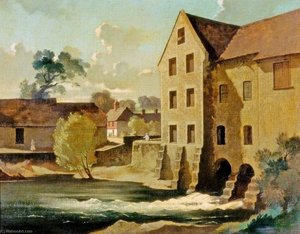
Bridgnorth, Shropshire (1943) od Bertram Nicholls

Bridgnorth, Shropshire

The painting Bridgnorth, Shropshire by Bertram Nicholls is a captivating representation of a quaint town in the English countryside. Created in 1943, this oil on canvas piece measures 54 x 76 cm and is currently housed at the Buxton Museum - Art Gallery in Buxton, United Kingdom. The scene features a picturesque town situated near a river with a bridge crossing it, surrounded by lush greenery and charming buildings. Composition…

5
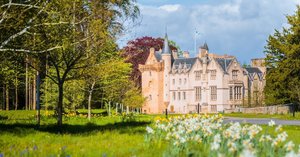
Pitigliano (1926) od Bertram Nicholls

Pitigliano

1926 · Oil · The National Trust For Scotland, Forres

In the quiet, evocative strokes of Bertram Nicholls’ 1926 masterpiece, Pitigliano, we are transported to a world where history breathes through the very architecture of the landscape. The painting captures the enchanting Italian town of Pitigliano, famously carved into the volcanic tuff rock, presenting a scene that feels less like a mere depiction and more like a rediscovered memory. At the heart of the composition stands a formidable stone castle,…

6
Washing in a Stream at Gouda (1928) od Bertram Nicholls

Washing in a Stream at Gouda

In the quietude of 1928, Bertram Nicholls captured a moment of profound stillness in his evocative work, Washing in a Stream at Gouda. This painting invites the viewer into a pastoral dreamscape where the boundaries between human presence and the natural world seem to dissolve. At its heart, the composition centers on a gentle stream flowing beneath a weathered stone bridge, a structure that speaks of time's passage and the…

Výběr umělce Bertram Nicholls pokračuje, od 11 do 36

Motivy, které zaujaly Bertram Nicholls

Čtyři témata, která se v těchto originálech nejčastěji objevují, z nichž každé má svůj nejlepší příklad.

Muzea, v nichž jsou vystavena originálna umělce Bertram Nicholls

8 muzea, v nichž je umístěno nejvíce obrazů z této stránky.

Muzeum Město Díla autora Bertram Nicholls Obrazy z tohoto seznamu
The National Trust For Scotland, ForresThe National Trust For Scotland Forres 3 Pitigliano, A Mountain Village, Philippe le Bel's Tower
Buxton Museum - Art Gallery, BuxtonBuxton Museum - Art Gallery Buxton 2 Bridgnorth, Shropshire, Wilton Bridge, Ross on Wye, Herefordshire
Harris Museum - Art Gallery, PrestonHarris Museum - Art Gallery Preston 2 By a Sussex Stream, Ragusa
Bristol Museum - Art Gallery, BristolBristol Museum - Art Gallery Bristol 2 Washing in a Stream at Gouda, Assisi
Government Art Collection, LondýnGovernment Art Collection Londýn 2 Le mammelle d'Italia, Lambeth Bridge
Guildhall Art Gallery, LondýnGuildhall Art Gallery Londýn 1 Porto Rocco, Orvieto, Italy
Maidstone Museum - Bentlif Art Gallery, MaidstoneMaidstone Museum - Bentlif Art Gallery Maidstone 1 San Giovanni Nepomuceno
Touchstones Rochdale, RochdaleTouchstones Rochdale Rochdale 1 Easby Abbey, Richmond, North Yorkshire

Bertram Nicholls dekáda po dekádě: originální díla, která definují každou z nich

Díla podle dekád

Vyberte si dekádu a prohlédněte si originál, který ji definuje.

Otázky sběratelů o obrazech umělce Bertram Nicholls

Kterým dílem je Bertram Nicholls nejznámější?Odhalit odpověď

Bridgnorth, Shropshire (1943), Buxton Museum - Art Gallery, Buxton. Následují By a Sussex Stream (1926) a Porto Rocco, Orvieto, Italy (1926).

Kolik let bylo Bertram Nicholls, když bylo vytvořeno dílo Bridgnorth, Shropshire?Odhalit odpověď

60 let: dílo Bridgnorth, Shropshire pochází z roku 1943 a Bertram Nicholls se narodil/a v roce 1883.

Kterých deset nejslavnějších obrazů má Bertram Nicholls?Odhalit odpověď

Bridgnorth, Shropshire, By a Sussex Stream, Porto Rocco, Orvieto, Italy, Goodrich Village, Herefordshire, Pitigliano, Washing in a Stream at Gouda, Picturesque Steyning, Drying the Sails, Steyning Church, Sussex a The Bridge. Hodnocení výše uvádí rok a muzeum pro každé z nich.

Kolik obrazů zanechal(a) Bertram Nicholls?Odhalit odpověď

Náš katalog obsahuje 39 děl umělce Bertram Nicholls z let 1914 až 1949.

Ve kterých muzeích jsou vystavena díla mistrovská umělce Bertram Nicholls?Odhalit odpověď

Většinou v The National Trust For Scotland (Forres), Buxton Museum - Art Gallery (Buxton) a Harris Museum - Art Gallery (Preston). V tabulce muzeí výše jsou vypsány všechny.

V jakých letech namaloval Bertram Nicholls svá nejznámější díla?Odhalit odpověď

V období 1920s: 16 z celkem 36 děl na této stránce vzniklo právě tehdy, z toho By a Sussex Stream z nich.

Jaká jsou první a poslední slavná originální díla umělce Bertram Nicholls?Odhalit odpověď

Na této stránce je nejstarší dílo z Picturesque Steyning (1914) a nejnovější z Lambeth Bridge (1949).

Jaká témata si Bertram Nicholls vybíral nejčastěji?Odhalit odpověď

Bridge (2), People (2) a Dog (2) napříč 36 díly na této stránce.

K kterému uměleckému směru patří Bertram Nicholls?Odhalit odpověď

Contemporary realism, podle originálů na této stránce.

Která díla umělce Bertram Nicholls jsou vystavena v The National Trust For Scotland?Odhalit odpověď

Pitigliano, A Mountain Village a Philippe le Bel's Tower: muzeum The National Trust For Scotland, Forres má v obsluze 3 děl z této stránky.

Bertram Nicholls: život a dílo

The Quiet Observer: The Life and Legacy of Bertram Nicholls

Born in the industrious heart of Didsbury, Manchester, on September 26th, 1883, Bertram Nicholls emerged as a painter of profound stillness and atmospheric grace. As the youngest child of William Andrews Nicholls, a local fruit merchant, and Mary Allen, his early years were rooted in the steady rhythms of Northern English life. His journey toward artistic mastery began at the Manchester Grammar School, but it was his subsequent enrollment at the prestigious Slade School of Fine Art between 1901 and 1904 that would fundamentally reshape his vision. Under the tutelage of Reginald Barber, Nicholls began to move beyond mere representation, seeking instead a deeper connection with the light and tonal harmonies that define the natural world.

The foundations of his style were laid by the giants of British art history. He drew deep inspiration from the meticulous observation found in the works of Joshua Reynolds and the landscape sensibilities of Richard Wilson. These early influences instilled in him a reverence for compositional balance and a sophisticated understanding of how light interacts with texture. His formative years were further enriched by encounters with the Staithes Group, particularly Frederick Jackson, whose commitment to plein air painting—the practice of painting directly from nature—encouraged Nicholls to capture the immediate, breathing essence of the British countryside.

A Journey Through Light and Stone

In 1904, a transformative voyage to Madrid introduced Nicholls to the profound complexities of Baroque mastery. Immersing himself in the works of Diego Velázquez, he developed an acute sensitivity to the rendering of light and the structural integrity of composition. This Spanish influence would later manifest in his ability to imbue even the most tranquil landscapes with a sense of monumental presence. Upon returning to England, Nicholls’ work began to reflect a unique synthesis of styles; he absorbed the innovative color palettes of Whistler and the atmospheric grandeur of Turner, blending them into a personal language characterized by understated beauty and quietude.

His travels across Europe provided him with an endless repertoire of subjects, from the rugged, sun-drenched architecture of Italy to the pastoral serenity of the Netherlands. In his 1926 masterpiece, Pitigliano, one can witness his ability to turn stone into memory, capturing an Italian town carved from volcanic tuff with a tactile precision that makes the ancient masonry feel almost palpable. Similarly, in works such as Washing in a Stream at Gouda (1928), he achieved a rare dissolution of boundaries between human presence and the natural world, using soft, painterly brushstrokes to evoke the misty, restorative solitude of a Dutch landscape.

The Resilience of Vision

The trajectory of Nicholls’ life was not without its interruptions by the turbulence of history. During the First World War, he served in the Kite Balloon Service of the Royal Flying Corps. This period of aerial reconnaissance offered him a unique, panoramic perspective on the landscape—a view from above that likely deepened his understanding of spatial relationships and the sweeping contours of the earth. This experience of observing the world from a detached, soaring height may have contributed to the sense of peaceful, observational distance found in his later landscapes.

Throughout his long life, which concluded in 1974, Nicholls remained dedicated to the pursuit of the "quiet landscape." His oeuvre stands as a testament to the power of subtle emotion and the enduring beauty of the everyday. Whether depicting a sun-dappled quay in Italy or a muted, impressionistic stream in Sussex, his work continues to resonate with those seeking a moment of respite. His historical significance lies in his ability to bridge the gap between the rigorous traditions of the Slade School and a modern, emotive approach to light, ensuring that his paintings remain timeless windows into a world of profound peace.