Portrét Bernat Martorell

24 nejslavnějších obrazů autora Bernat Martorell, každý naprosto unikátní

Aktualizováno listopad 2026 · seřazeno podle našeho skóre popularity (vyhledávání, návštěvy a objednávky u každého díla) · 24 děl umělce Bernat Martorell v našem katalogu

Stručně řečeno

The Lamentation (1330) je obraz autora Bernat Martorell, který přitahuje nejvíce pohledů; originál se nachází v Metropolitan Museum of Art, New York. Poté se zrak přesouvá k The Crucifixion (1330) a Saint John the Evangelist poisoned (1430). Z 24 děl umělce Bernat Martorell v našem katalogu je těchto 24 těch nejznámějších; každé z nich je unikátním originálem s uvedením roku vzniku, muzea a důvodu jeho nesmrtelnosti.

1390 – 1452, Sant Celoni International gothic Nejvíce děl: Museu Nacional d'Art de Catalunya

Top 10 obrazů autora Bernat Martorell podle výběru galerie

1
The Lamentation (1330) od Bernat Martorell

The Lamentation

1330 · Tempera On Panel · Metropolitan Museum of Art, New York

To stand before The Lamentation is to be enveloped in an atmosphere of profound, sacred sorrow. This masterpiece, attributed to the enigmatic Master Of The Codex Of Saint George, does not merely depict a biblical event; it captures the very essence of human grief rendered eternal through pigment and panel. Dating back to 1330, this work stands as a breathtaking testament to the emotional zenith of Gothic art. One is…

2
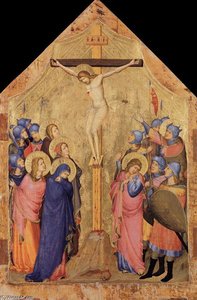
The Crucifixion (1330) od Bernat Martorell

The Crucifixion

1330 · Tempera On Panel · Metropolitan Museum of Art, New York

In The Crucifixion by Bernat Martorell, the central figure of Jesus Christ dominates the scene, nailed to a wooden cross with arms outstretched in a gesture of profound sacrifice. He bears long hair and a beard, his body draped only in a simple loincloth. Around him, a circle of mourners gathers to witness the event. The Virgin Mary and Mary Magdalene move through the crowd, their faces etched with grief.…

3
Saint John the Evangelist poisoned (1430) od Bernat Martorell

Saint John the Evangelist poisoned

1430 · Tempera On Panel · Musée Rolin, Autun

This late medieval religious painting, dating to 1430, captures the dramatic scene of Saint John the Evangelist being poisoned. The composition is densely packed with figures, creating a sense of crowded, dramatic tension within a shallow, stage-like space. The subject matter focuses on the miraculous survival of Saint John, who is shown drinking from a chalice while other figures react with various expressions of concern or observation.

4
Table of Saints John. Central pannel (1430) od Bernat Martorell

Table of Saints John. Central pannel

1430 · Tempera On Panel

In the Table of Saints John. Central pannel by Bernat Martorell, two male figures stand side-by-side within a sacred, vertical arrangement. The figure on the left is draped in a heavy, dark cloak lined with deep red, his garment detailed with intricate gold embroidery. He holds a golden chalice, which is topped by a single, luminous star. Beside him, the second figure wears a simple brown robe cinched by a…

7
Triptych of the Descent from the Cross (1445) od Bernat Martorell

Triptych of the Descent from the Cross

1445 · Tempera On Panel · Národní muzeum starého umění, Lisabon

The Triptych of the Descent from the Cross is a religious painting from 1445, characterized by its intense emotional gravity and intricate Gothic detail. The composition is organized into three vertical panels: a large central panel depicting the Descent from the Cross, flanked by two narrower side panels containing individual saintly figures. In the central scene, Christ is being lowered from the cross, surrounded by figures including Joseph of Arimathea,…

8
Saint Stephen (1450) od Bernat Martorell

Saint Stephen

1450 · Tempera On Panel · Museu Nacional d'Art de Catalunya, Barcelona

The painting titled Saint Stephen by Bernat Martorell is a vertical, narrow panel. The composition is highly elongated and centered, focusing the viewer's attention on the bust and upper torso of the subject. The figure is positioned in a frontal manner, occupying the central axis of the narrow wooden support. This arrangement creates a sense of stillness and directness in the presentation of the saint.

9
Saint Michael, Martyrdom of Saint Eulalia and Saint Catherine (1442) od Bernat Martorell

Saint Michael, Martyrdom of Saint Eulalia and Saint Catherine

1442 · Tempera On Panel · Museu Nacional d'Art de Catalunya, Barcelona

The International Gothic triptych Saint Michael, Martyrdom of Saint Eulalia and Saint Catherine by Bernat Martorell, created about 1442, is organized into three vertical panels. These sections are separated by gilded, twisted columns that frame the narrative. The composition relies on a color palette dominated by gold, deep reds, royal blues, and stark whites. A flat, shimmering gold leaf forms the background across the panels, creating a shallow space for…

10
Martyrdom of Saint Eulalia (1442) od Bernat Martorell

Martyrdom of Saint Eulalia

1442 · Tempera On Panel · Museu Nacional d'Art de Catalunya, Barcelona

The scene unfolds within the Martyrdom of Saint Eulalia, a work that places the viewer directly before a profound moment of religious sacrifice. Painted by Bernat Martorell, this piece captures the intense struggle of a young saint facing her end. The composition functions as an altarpiece to Saint Eulalia, designed to command attention within a sacred space. Every figure in the crowded assembly contributes to the weight of this historical…

Slavná díla umělce Bernat Martorell, čísla 11 až 24

Motivy, které zaujaly Bernat Martorell

Čtyři témata, která se v těchto originálech nejčastěji objevují, z nichž každé má svůj nejlepší příklad.

Muzea, v nichž jsou vystavena originálna umělce Bernat Martorell

8 muzea, v nichž je umístěno nejvíce obrazů z této stránky.

Muzeum Město Díla autora Bernat Martorell Obrazy z tohoto seznamu
Museu Nacional d'Art de Catalunya, BarcelonaMuseu Nacional d'Art de Catalunya Barcelona 7 Altarpiece of the Saints John, Saint Stephen, Saint Michael, Martyrdom of Saint Eulalia and Saint Catherine
Metropolitan Museum of Art, New YorkMetropolitan Museum of Art New York 2 The Lamentation, The Crucifixion
Musée Rolin, AutunMusée Rolin Autun 2 Saint John the Evangelist poisoned, Saint John the Baptist preaching to the Levites table
Vatikánská apoštolská knihovna, VatikánVatikánská apoštolská knihovna Vatikán 2 Codex of St George (Folio 17r), Codex of St George (Folio 85r)
Národní muzeum starého umění, LisabonNárodní muzeum starého umění Lisabon 1 Triptych of the Descent from the Cross
Philadelphia Museum of Art, PhiladelphiaPhiladelphia Museum of Art Philadelphia 1 Enthroned Virgin and Child, with the Cardinal Virtues and Two Figures Holding Scrolls
Morganova knihovna & muzeum, New YorkMorganova knihovna & muzeum New York 1 Missal (Folio 55)
Art Institute of Chicago, ChicagoArt Institute of Chicago Chicago 1 Saint George and the Dragon

Bernat Martorell napříč desetiletími: jeden unikátní originál pro každou dekádu

Díla podle dekád

Vyberte si dekádu a prohlédněte si originál, který ji definuje.

Obrazy umělce Bernat Martorell: dotazy pro galerii

Kterým nejznámějším dílem je Bernat Martorell?Odhalit odpověď

The Lamentation (1330), Metropolitan Museum of Art, New York. Následují The Crucifixion (1330) a Saint John the Evangelist poisoned (1430).

Kterých deset obrazů autora Bernat Martorell je nejznámějších?Odhalit odpověď

The Lamentation, The Crucifixion, Saint John the Evangelist poisoned, Table of Saints John. Central pannel, Altarpiece of the Saints John, Saint John the Baptist preaching to the Levites table, Triptych of the Descent from the Cross, Saint Stephen, Saint Michael, Martyrdom of Saint Eulalia and Saint Catherine a Martyrdom of Saint Eulalia. Hodnocení výše uvádí rok a muzeum pro každé z nich.

Kolik známých děl má autor Bernat Martorell?Odhalit odpověď

Náš katalog obsahuje 24 děl umělce Bernat Martorell z let 1430 až 1450.

Kde lze vidět nejznámější originály umělce Bernat Martorell?Odhalit odpověď

Většinou v Museu Nacional d'Art de Catalunya (Barcelona), Metropolitan Museum of Art (New York) a Musée Rolin (Autun). V tabulce muzeí výše jsou vypsány všechny.

V jakém období vytvořil(a) Bernat Martorell svá nejznámější obrazy?Odhalit odpověď

V období 1430s: 11 z celkem 24 děl na této stránce vzniklo právě tehdy, z toho Saint John the Evangelist poisoned z nich.

Který slavný obraz od Bernat Martorell je nejstarší a který nejnovější?Odhalit odpověď

Na této stránce je nejstarší dílo z Saint John the Evangelist poisoned (1430) a nejnovější z Saint Stephen (1450).

Jakým tématům se Bernat Martorell věnoval/a nejčastěji?Odhalit odpověď

People (8), Gold background (6) a Figures (5) napříč 24 díly na této stránce.

Jaké materiály používal(a) Bernat Martorell nejčastěji?Odhalit odpověď

Tempera On Panel, u 17 z 24 děl na této stránce.

K kterému směru patří dílo umělce Bernat Martorell?Odhalit odpověď

International gothic, podle originálů na této stránce.

Jaká originální díla Bernat Martorell mohu vidět v Museu Nacional d'Art de Catalunya?Odhalit odpověď

Altarpiece of the Saints John, Saint Stephen a Saint Michael, Martyrdom of Saint Eulalia and Saint Catherine: muzeum Museu Nacional d'Art de Catalunya, Barcelona má v obsluze 7 děl z této stránky.

Bernat Martorell: portrét umělce

Záhada iluminované stránky

V temných chodbách dějin umění, kde jména pohltil plynutí staletí, zůstává Mistr z codexu svatého Jiří jednou z nejpoutavějších záhad fourteenth století. Tento malíř, jehož pravé identity byl čas zastřen, je znám pouze díky zářivému dědictví své iluminace. Působící přibližně mezi lety 1320 a 1330, tento anonymní tvůrce vdechoval život posvátným textům a proměňoval pergamen v okno pro božskou vizi. Ačkoliv biografické údaje zůstávají neuchopitelné, čistý genialismus jeho přeživších rukopisů nám umožňuje nahlédnout do duše hluboce naladěné na duchovní a estetické proudy římské školy iluminace.

Identita Mistra je neoddělitelně spjata s velkolepým iluminovaným missálem, svazcem, který obsahuje nejen liturgické texty, ale i Vita svatého Jiří. Toto jedinečné dílo, které slouží jako jméno umělce, naznačuje tvůrce s obrovskými technickými dovednostmi a hlubokou náboženskou oddaností. I když jeho jméno zaniklo, jeho přítomnost je cítit v každém stehu zlátého listu a v každém pečlivě vrstveném pigmentu, což z něj činí klíčovou postavu přechodu k emotivnějším a detailnějším narativním stylům v rámci puzší pozdní gotiky.

Cesta přes Řím a Avignon

Umělecká dráha Mistra naznačuje život prožitý v srdci velkých náboženských centrí moci. Vědci věří, že tento malíř byl představitelem římské školy, působícím pravděpodobně v živé atmosféře Říma, než si možná našel ochránce v Avignonu. Toto druhé město, sloužící od roku 1309 jako sídlo papežského dvora, by poskytlo vysoce sofistikovanou scénu pro iluminátora takového kalibru. Vliv pápežství a přítomnost vysokých duchovních, jako byl kardinál Jacopo Stefaneschi, pravděpodobně formovaly rozsah a velkolepost Mistrových zakázek.

Práce v těchto prostředích znamenala kontakt s rozmanitými uměleckými vlivy. Mistrův styl odráží sofistikovanou syntézu tradic, která spojuje strukturovanou eleganci římské iluminace s rostoucími expresivními kvalitami, jež později definovaly mezinárodní gotiku. V jeho díle je patrný pocit pohybu a emocionální hloubky, což naznačuje umělce, který nebyl pouze dekorátorem textů, ale vypravěčem schopným překladit složité teologické koncepty do vizuální poezie.
Mistrovství pigmentu a oddanost

Studium děl připisovaných Mistru z codexu svatého Jiří je jako sledování mistrovské lekce středověké techniky. Jeho schopnost manipulovat se světlem a barvou vytváří atmosféru, která je současně vznešená i intimní. Umělecký repertoár vykazuje mimořádnou ovládnutí vzácných materiálů tehdejší éry:

  • Lapis Lazuli: Používán k vytvoření hlubokých, nebeských ultramarínových modří, které kotví kompozice.
  • Pozlacování: Precizní aplikace zlatého listu k vyjádření božského světla a posvátnosti postav.
  • Narativní detail: Neuvěřitelná schopnost vykreslit mimiku obličejů a záhyby šatů, které vyjadřují hluboké lidské emoce, jako je žalost v Pochlazení.

Kromě technické brilantnosti spočívá historický význam tohoto umělce v jeho přínosu k evoluci náboženské ikonografie. Díky zdobení evangeliářů a žalmářů pomohl Mistr překlenout propast mezi rigidními, symbolickými formami předchozích staletí a více naturalistickým, humanistickým přístupem rané renesance. I bez biografie zůstává Mistrů hlas jasný – tichý, zlatý šepot čtrnáctého století, který nadále inspiruje úžas u všech, kteří obdivují jeho iluminované divy.