Portrét Antoni Gaudí

20 nejslavnějších obrazů autora Antoni Gaudí, každý naprosto unikátní

Aktualizováno listopad 2026 · seřazeno podle našeho skóre popularity (vyhledávání, návštěvy a objednávky u každého díla) · 20 děl umělce Antoni Gaudí v našem katalogu

Stručně řečeno

The Basílica de la Sagrada Família, Barcelona, Spain je obraz autora Antoni Gaudí, který přitahuje nejvíce pohledů; originál se nachází v Italia Liberty, Rimini. Poté se zrak přesouvá k Park Guell, Barcelona: mosaic medallion showing the name of the park (2004) a Park Guell, Barcelona: mosaic medallion showing the name of the park: Guell (2004). Z 20 děl umělce Antoni Gaudí v našem katalogu je těchto 20 těch nejznámějších; každé z nich je unikátním originálem s uvedením roku vzniku, muzea a důvodu jeho nesmrtelnosti.

1847 – 1926, Grenoble Catalan modernisme Nejvíce děl: Italia Liberty

Top 10 obrazů autora Antoni Gaudí podle výběru galerie

1
The Basílica de la Sagrada Família, Barcelona, Spain od Antoni Gaudí

The Basílica de la Sagrada Família, Barcelona, Spain

Giclée Print · Italia Liberty, Rimini

The Basílica de la Sagrada Família: Gaudí's Vision of Faith and Geometry Barcelona’s skyline is forever marked by Antoni Gaudí’s magnum opus, the Sagrada Família – a basilica unlike any other. Begun in 1883 and continuing its construction to this day, it stands as a testament to Catalan Modernisme and Gaudí's unwavering belief in harmonizing art with nature and spirituality. More than just a building, it’s an evolving narrative of…

2
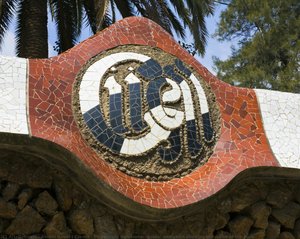
Park Guell, Barcelona: mosaic medallion showing the name of the park (2004) od Antoni Gaudí

Park Guell, Barcelona: mosaic medallion showing the name of the park

2004 · Digital Painting · Royal Institute of British Architects, Londýn

In the heart of Barcelona, where the Mediterranean breeze meets the rugged spirit of Catalonia, lies a testament to a man who saw the divine in the curve of a leaf and the strength in the spiral of a shell. Antoni Gaudí, the master of Modernisme, did not merely build structures; he breathed life into stone. The mosaic medallion of Park Güell serves as a profound entry point into this…

3
Park Guell, Barcelona: mosaic medallion showing the name of the park: Guell (2004) od Antoni Gaudí

Park Guell, Barcelona: mosaic medallion showing the name of the park: Guell

2004 · Mosaic · Royal Institute of British Architects, Londýn

In the heart of Barcelona, where the Mediterranean breeze meets the rugged spirit of Catalonia, lies a mosaic medallion that serves as more than a mere signpost; it is a portal into the transcendent mind of Antoni Gaudí. This mesmerizing piece, featuring the name "Guell," stands as a profound testament to the Catalan Modernisme movement, capturing a moment where architecture ceases to be static stone and begins to breathe with…

4
The roof of Palau Güell, Barcelona od Antoni Gaudí

The roof of Palau Güell, Barcelona

Acrylic On Canvas · Italia Liberty, Rimini

A Symphony in Stone and Light: Exploring Gaudí’s “The Roof of Palau Güell” Antoni Gaudí i Cornet's "The Roof of Palau Güell," perched atop Barcelona’s Güell Estate, isn’t merely a building; it’s an audacious declaration of artistic vision—a testament to the transformative power of blending organic forms with architectural grandeur. Completed in 1906, this project represents a pivotal moment in Gaudí's oeuvre and embodies the core principles of Catalan Modernisme,…

5
Palau Güell, Barcelona od Antoni Gaudí

Palau Güell, Barcelona

Acrylic On Canvas · Italia Liberty, Rimini

Palau Güell: Gaudí's Vision of Catalan Modernisme The Palau Güell stands as a testament to Antoni Gaudí’s unparalleled genius and the burgeoning spirit of Catalan Modernisme at the turn of the century. Commissioned by Eusebi Güell, a wealthy industrialist with ambitious visions for Barcelona’s transformation, this mansion isn’t merely a building; it's an embodiment of Gaudí’s revolutionary aesthetic principles—a harmonious fusion of nature, geometry, and craftsmanship that continues to inspire…

6
Park Guell, Barcelona: the flower tub pinnacles of the promenade (2009) od Antoni Gaudí

Park Guell, Barcelona: the flower tub pinnacles of the promenade

2009 · Acrylic On Canvas · Royal Institute of British Architects, Londýn

Park Guell, Barcelona: The Flower Tub Pinnacles of the Promenade The artwork "Park Guell, Barcelona: The Flower Tub Pinnacles of the Promenade" by Antoni Gaudí I Cornet is more than just a depiction of a beautiful garden; it’s a testament to Catalan Modernisme and Gaudí's singular vision for harmonizing art, nature, and spirituality. Completed in 2009, this digital painting captures the essence of Gaudí’s masterpiece – a UNESCO World Heritage…

7
Casa Vicens od Antoni Gaudí

Casa Vicens

Keramika · Italia Liberty, Rimini

Antoni Gaudí, jeden z nejvýznamnějších architektů všech dob, nezůstal jen konstruktorem impozantních staveb; stal se skutečným básníkem kamene. Jeho život byl plný překvapení a kontrastů – stejně jako budovy, které nesou jeho nezapomenutelné známky. Gaudího výchova v Katalánsku, mezi rozsáhlými pláněmi a tvrdými skalami, zásadně ovlivnila jeho umělecké cítění. Už jako dítě vykazoval mimořádnou pozornost k detailům a pečlivě pozoroval krásy přírody – základy jeho jedinečného architektonického jazyka.

8
Casa Milà / La Pedrera at night od Antoni Gaudí

Casa Milà / La Pedrera at night

Giclée Print · Italia Liberty, Rimini

This black and white photograph captures the Casa Milà building at night. The structure features a unique design characterized by many arches and intricate patterns across its facade. Within the scene, several people are visible, appearing to be walking by or admiring the building. Near the base of the image, two potted plants are positioned, with one located closer to the left side and the other towards the right. The…

9
Retrato de Jorge Tibiriçá (1901) od Antoni Gaudí

Retrato de Jorge Tibiriçá

1901 · Oil · Ipiranga Museum, São Paulo

The oil painting titled Retrato de Jorge Tibiriçá captures a moment of quiet gravity. Created in 1901 by the artist Louis Guédy, this portrait presents the likeness of Jorge Tibiriçá Piratininga. The subject sits with a steady, composed posture, his gaze meeting the viewer from a position of formal dignity. He was a significant figure in Brazilian politics, having served as the president of São Paulo.

10
Casa Batlló, Barcelona, Spain od Antoni Gaudí

Casa Batlló, Barcelona, Spain

Photography · Italia Liberty, Rimini

The facade of Casa Batlló presents a study in organic movement, captured here through the stark clarity of black and white photography. The composition centers on the building's undulating curves, where the rigid constraints of traditional masonry appear to dissolve into liquid forms. Shadows define the deep recesses of the arched windows and the textured surfaces of the stone, creating a rhythmic interplay of light and dark. The absence of…

Slavná díla umělce Antoni Gaudí, čísla 11 až 20

Motivy, které zaujaly Antoni Gaudí

Čtyři témata, která se v těchto originálech nejčastěji objevují, z nichž každé má svůj nejlepší příklad.

Muzea, v nichž jsou vystavena originálna umělce Antoni Gaudí

5 muzea, v nichž je umístěno nejvíce obrazů z této stránky.

Muzeum Město Díla autora Antoni Gaudí Obrazy z tohoto seznamu
Italia Liberty, RiminiItalia Liberty Rimini 13 The Basílica de la Sagrada Família, Barcelona, Spain, The roof of Palau Güell, Barcelona, Palau Güell, Barcelona
Royal Institute of British Architects, LondýnRoyal Institute of British Architects Londýn 3 Park Guell, Barcelona: mosaic medallion showing the name of the park, Park Guell, Barcelona: mosaic medallion showing the name of the park: Guell, Park Guell, Barcelona: the flower tub pinnacles of the promenade
Ipiranga Museum, São PauloIpiranga Museum São Paulo 1 Retrato de Jorge Tibiriçá
Chernihiv Regional Art Museum, ČernihivChernihiv Regional Art Museum Černihiv 1 Near the well
Museu Agbar de les Aigües, Cornellà de llobregatMuseu Agbar de les Aigües Cornellà de llobregat 1 Project for a monumental fountain

Antoni Gaudí v průběhu let: unikátní originály každého díla

Mezi lety 1901 a 1906, tedy celkem za 6 let, vytvořil Antoni Gaudí každý zobrazený zde původní datovaný obraz: krátké období, rok po roce.

Díla podle roku

Vyberte rok a prohlédněte si originály.

Obrazy umělce Antoni Gaudí: dotazy pro galerii

Kterým nejznámějším dílem je Antoni Gaudí?Odhalit odpověď

The Basílica de la Sagrada Família, Barcelona, Spain, Italia Liberty, Rimini. Následují Park Guell, Barcelona: mosaic medallion showing the name of the park (2004) a Park Guell, Barcelona: mosaic medallion showing the name of the park: Guell (2004).

Kterých deset obrazů autora Antoni Gaudí je nejznámějších?Odhalit odpověď

The Basílica de la Sagrada Família, Barcelona, Spain, Park Guell, Barcelona: mosaic medallion showing the name of the park, Park Guell, Barcelona: mosaic medallion showing the name of the park: Guell, The roof of Palau Güell, Barcelona, Palau Güell, Barcelona, Park Guell, Barcelona: the flower tub pinnacles of the promenade, Casa Vicens, Casa Milà / La Pedrera at night, Retrato de Jorge Tibiriçá a Casa Batlló, Barcelona, Spain. Hodnocení výše uvádí rok a muzeum pro každé z nich.

Kolik známých děl má autor Antoni Gaudí?Odhalit odpověď

Náš katalog obsahuje 20 děl umělce Antoni Gaudí z let 1901 až 1906.

Kde lze vidět nejznámější originály umělce Antoni Gaudí?Odhalit odpověď

Většinou v Italia Liberty (Rimini), Royal Institute of British Architects (Londýn) a Ipiranga Museum (São Paulo). V tabulce muzeí výše jsou vypsány všechny.

Který slavný obraz od Antoni Gaudí je nejstarší a který nejnovější?Odhalit odpověď

Na této stránce je nejstarší dílo z Retrato de Jorge Tibiriçá (1901) a nejnovější z Corner display cabinet (1906).

Jakým tématům se Antoni Gaudí věnoval/a nejčastěji?Odhalit odpověď

Architecture (9), Barcelona (7) a Catalonia (4) napříč 20 díly na této stránce.

Jaké materiály používal(a) Antoni Gaudí nejčastěji?Odhalit odpověď

Acrylic On Canvas, u 3 z 20 děl na této stránce.

K kterému směru patří dílo umělce Antoni Gaudí?Odhalit odpověď

Catalan modernisme, podle originálů na této stránce.

Jaká originální díla Antoni Gaudí mohu vidět v Italia Liberty?Odhalit odpověď

The Basílica de la Sagrada Família, Barcelona, Spain, The roof of Palau Güell, Barcelona a Palau Güell, Barcelona: muzeum Italia Liberty, Rimini má v obsluze 13 děl z této stránky.

Antoni Gaudí: portrét umělce

Antoni Gaudí i Cornet – A Life Forged in Stone and Faith

Antoni Gaudí i Cornet, born on June 25, 1852, in the Catalan town of Reus, Spain, was not merely an architect; he was a visionary who sculpted dreams into reality. His life story is as captivating and unconventional as the buildings that bear his indelible mark – structures that continue to inspire awe and wonder centuries later. Growing up amidst the rolling hills and rugged landscapes of Catalonia profoundly shaped Gaudí’s artistic sensibility. Even as a child, he displayed an extraordinary observational skill, meticulously studying the forms and textures of nature – an influence that would become the cornerstone of his unique architectural language. Family life was marked by both comfort and constraint; his father, a coppersmith, instilled in him a deep respect for craftsmanship, while his mother’s devout Catholicism fostered a profound spiritual connection that permeated his later work. These formative experiences laid the foundation for a career dedicated to harmonizing art, nature, and faith – a pursuit that would define his entire life's trajectory. His formal education began at the Piarist school in Reus, where he honed his intellectual curiosity alongside artistic inclinations. Subsequently, he pursued studies at the University of Barcelona before ultimately enrolling in the Provincial School of Architecture, graduating in 1878. Even during his academic years, Gaudí’s talent was evident, though perhaps not conventionally recognized; his professors acknowledged his skill but often struggled to reconcile it with established architectural doctrines. Recognizing the limitations of traditional approaches, Gaudí sought inspiration beyond convention—a quest that would propel him toward groundbreaking innovations. He supplemented his formal education by working as a draughtsman for architect Josep Fontserè i Mestres, contributing to projects like Ciutadella Park in Barcelona – an early glimpse into the urban landscapes he would soon transform with audacious creativity.

The Blossoming of a Unique Vision

Gaudí’s initial commissions showcased a developing style that skillfully blended historical influences—Neo-Gothic Revival and Orientalism—but it was his innate ability to transcend imitation and forge something entirely new that set him apart from his contemporaries. The Casa Vicens (1883–1888), commissioned by Catalan industrialist Manuel Vicens i Montaner, stands as an early testament to this burgeoning originality. Gaudí’s design deliberately rejected symmetrical layouts and embraced undulating surfaces, incorporating vibrant ceramic tiles—a technique he termed *trencadís*—to create kaleidoscopic patterns that mirrored the rhythms of nature. The Casa Vicens' façade is adorned with intricate mosaics crafted from broken ceramic shards—a bold departure from conventional architectural ornamentation—reflecting Gaudí’s fascination with organic forms and textures. Simultaneously, Gaudí undertook ambitious projects like Sagrada Família (begun in 1883), a monumental basilica dedicated to the Holy Family that embodies his unwavering vision of Christian faith expressed through architectural grandeur. Unlike many Gothic Revival churches of the time, Sagrada Família eschewed rigid symmetry and embraced parabolic arches—a structural innovation inspired by the curves of seashells—demonstrating Gaudí’s mastery of biomimicry. His exploration of organic forms extended to Casa Milà (La Pedrera), completed between 1905 and 1910, which is arguably Gaudí's most iconic masterpiece. The building’s undulating façade resembles a honeycomb structure—a deliberate reference to beehive architecture—and its interior spaces are characterized by sculptural staircases and fluid lines that defy conventional architectural conventions. Gaudí skillfully integrated natural materials—such as limestone and sandstone—into the building’s design, creating a harmonious dialogue between human craftsmanship and geological forces. Furthermore, Gaudí's commitment to spiritual symbolism is palpable throughout Casa Milà, where intricate mosaics depict biblical scenes and geometric patterns convey profound theological concepts. He also designed Parc Güell (1900–1914), a whimsical urban park that blends architectural innovation with landscaped gardens—a testament to Gaudí’s belief in the importance of fostering connection between humanity and nature. The undulating benches and sculptural mosaics of Parc Güell exemplify Gaudí's distinctive style, inviting visitors to contemplate the beauty and grandeur of the Catalan countryside.

Nature, Faith, and Innovation: Gaudí’s Architectural Philosophy

At the core of Gaudí’s architectural philosophy lay an unwavering reverence for nature—a conviction that informed every aspect of his creative process. He meticulously studied geological formations, animal skeletons, and plant structures, seeking inspiration in their inherent symmetries and patterns. This biomimicry wasn't merely aesthetic; it underpinned his structural innovations as well. Gaudí’s groundbreaking use of parabolic arches—inspired by the curves of seashells—allowed him to distribute weight efficiently without relying on external buttressing—a revolutionary departure from traditional architectural techniques. He skillfully employed inclined columns and lightweight tile vaults—another innovative structural system—creating buildings that seemed to defy gravity while simultaneously harmonizing with the surrounding environment. Gaudí’s meticulous attention to detail extended beyond structural considerations; he incorporated handcrafted ceramic tiles, stained glass windows, and wrought ironwork into his designs—each element contributing to a holistic artistic experience. His deep Catholic faith profoundly influenced his creative vision—a conviction that fueled his relentless pursuit of beauty and truth. Sagrada Família embodies Gaudí’s spiritual aspirations—a monumental basilica conceived as a physical manifestation of Christian theology. The basilica's intricate sculptural program depicts biblical narratives and saints—reflecting Gaudí’s desire to communicate religious ideas through visual art—demonstrating the transformative power of faith in shaping artistic expression. Gaudí’s legacy transcends architectural achievement; he remains an enduring symbol of Catalan identity—a visionary artist who dared to challenge conventions and forge a unique aesthetic language that continues to captivate audiences worldwide. His unwavering dedication to craftsmanship, his profound understanding of nature, and his fervent belief in the sacred cemented his place as one of the most influential architects of the 20th century.

A Lasting Legacy: Gaudí’s Impact on Art and Architecture

Antoni Gaudí died unexpectedly on June 10, 1926, in Barcelona—a tragic end to a life devoted entirely to artistic creation. Despite his untimely demise, Gaudí's influence on subsequent generations of architects persists—inspiring designers to embrace innovation, explore organic forms, and infuse their work with spiritual resonance. His masterpiece, Sagrada Família, continues to inspire awe and wonder—a testament to Gaudí’s enduring vision and the transformative power of architectural grandeur. UNESCO recognized Sagrada Família as a World Heritage Site in 1984—affirming its exceptional universal value and ensuring its preservation for future generations. Gaudí's pioneering structural techniques—such as parabolic arches and inclined columns—have become foundational principles of modern architecture, shaping buildings across the globe. Furthermore, his distinctive *trencadís* technique—the use of broken ceramic shards—has inspired artists and designers to experiment with unconventional materials and textures—demonstrating Gaudí’s enduring influence on artistic expression. Antoni Gaudí remains an unparalleled figure in architectural history—a visionary artist who transformed Barcelona into a living testament to Catalan creativity and spiritual devotion.