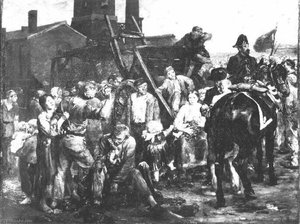
Portrét Alfred Philippe Roll

49 nejslavnějších obrazů autora Alfred Philippe Roll, výběr z galerie

Aktualizováno listopad 2026 · seřazeno podle našeho skóre popularity (vyhledávání, návštěvy a objednávky u každého díla) · 50 děl umělce Alfred Philippe Roll v našem katalogu

Stručně řečeno

Z všech originálů, které Alfred Philippe Roll zanechal, je nejslavnější Portrait de Mme Roll. Hned za ním následují Retour du bal a The feast of Silenus (1871). Náš katalog obsahuje 50 děl umělce Alfred Philippe Roll; galerie si zachovala 49 děl, která obdivuje celý svět, přičemž každé je znázorněno s datem vzniku, názevem muzea a jeho příběhem.

1845 – 1919, bývalý 8. pařížský obvod Nejvíce děl: Petit Palais

10 nejlepších obrazů umělce Alfred Philippe Roll: výběr galerie

1
Portrait de Mme Roll od Alfred Philippe Roll

Portrait de Mme Roll

Oil On Canvas

The portrait depicts a woman, identified as Madame Roll, positioned in a vertical orientation. She is situated slightly off-center within a domestic interior, appearing to stand near a window. The figure is rendered with a muted color palette, primarily composed of blacks, grays, and browns. Subtle ochre and muted red tones appear in the highlights and the background. Her attire is formal, and her expression remains serene with a slight…

2
Retour du bal od Alfred Philippe Roll

Retour du bal

Oil On Canvas · Musée d'Arts de Nantes, Nantes

The air in the room feels heavy with the scent of perfume and the soft rustle of silk as two women move through an opulent interior. We watch them from behind, catching only the graceful curve of their backs and the sweeping lines of their attire. They are poised, perhaps caught in a moment of transition between the excitement of a social gathering and the quietude of their private quarters.…

3
The feast of Silenus (1871) od Alfred Philippe Roll

The feast of Silenus

1871 · Oil On Canvas · Museum of Fine Arts Ghent (MSK), Ghent

The feast of Silenus emerges from the brush of Alfred Philippe Roll, a painter whose life spanned the transformative decades of the late nineteenth century. Born in the former 8th arrondissement of Paris, France, in 1845, Roll carries the weight of a changing era within his lineage. He remains a figure of the French tradition, having departed this world in 1919. This specific work, The feast of Silenus, captures a…

4
Marianne Orfrey, Green Crier (1880) od Alfred Philippe Roll

Marianne Orfrey, Green Crier

1880 · Oil On Canvas · Musée des Beaux-Arts de Pau, Pau

In this 1880 oil on canvas, we find ourselves standing at eye-level with a solitary woman, a street vendor whose presence commands a quiet, stoic dignity. She is positioned slightly off-center, a choice that lends a sense of naturalism to the vertical composition. There is a certain weight to her figure, anchored by the heavy folds of her skirt and the rounded, organic form of the basket she carries. The…

5
July 14, 1880, Inauguration of the Monument to the République (1882) od Alfred Philippe Roll

July 14, 1880, Inauguration of the Monument to the République

1882 · Oil · Petit Palais, Paříž

The canvas depicts a dense, wide-angle view of a Parisian square during a large-scale public celebration. In the center of the composition, a monument rises toward a sky filled with fluttering flags. The scene is populated by a vast, diverse crowd of figures that extend from the immediate foreground into the distance. These people are rendered with varied postures, some standing in groups and others moving through the space. The…

6
Henri Rochefort (Victor-Henri, marquis de Rochefort-Luçay, 1831-1913), journalist, politician and writer (1879) od Alfred Philippe Roll

Henri Rochefort (Victor-Henri, marquis de Rochefort-Luçay, 1831-1913), journalist, politician and writer

1879 · Oil On Canvas · Musée Carnavalet, Paříž

The portrait emerges from a period of transition in French art, moving away from the rigid constraints of academic tradition toward a more grounded, empathetic realism. The visible layering of paint suggests a preoccupation with the authentic human form rather than an idealized version of it. There is a palpable sense of the man's internal life, a quiet intensity that lingers in the way the light interacts with his features.…

7
Woman and bull (1885) od Alfred Philippe Roll

Woman and bull

1885 · Oil · Národní muzeum krásných umění, Buenos Aires

The air feels heavy and still within this shadowed woodland, where the light filters through a dense canopy in soft, dappled patches. A nude woman rests in an intimate, quiet moment, her pale skin glowing against the deep, earthy tones of the surrounding meadow. Beside her, the muscular form of a bull emerges from the darkness, its presence a powerful counterpoint to her vulnerability. There is a profound sense of…

8
Alsatian and Lorrainer (1891) od Alfred Philippe Roll

Alsatian and Lorrainer

1891 · Oil · Museum of the French Revolution, Vizille

In the work Alsatian and Lorrainer by Alfred Philippe Roll, the composition is structured as a tight, intimate close-up of two female figures. The primary subject is positioned in the foreground, presented in a sharp profile facing toward the left side of the frame. Behind her, a second woman is partially visible, also oriented toward the left. This overlapping arrangement creates a sense of depth within the narrow field of…

9
Portrait of Thaulow and His Wife (1890) od Alfred Philippe Roll

Portrait of Thaulow and His Wife

1890 · Oil On Canvas · Petit Palais, Paříž

In this intimate oil on canvas, Alfred Philippe Roll presents Portrait of Thaulow and His Wife. Painted about 1890, the work captures a quiet moment between a man and a woman. The subjects are likely the artist's acquaintances, Thaulow and his wife, rendered with a sense of naturalism that suggests a close proximity to the figures. There is a palpable sense of companionship in the way they are positioned together.

10
Portrait of Jane Hading (1890) od Alfred Philippe Roll

Portrait of Jane Hading

1890 · Oil On Canvas · Petit Palais, Paříž

The portrait presents a woman seated centrally within a luxurious interior. She is positioned in a vertical orientation, wearing a sleeveless black gown that features shimmering, light-colored patterns suggestive of sequins or embroidery. A large, dark, textured element, resembling a fur mantle or heavy drapery, surrounds the upper portion of her chair. Her skin is rendered with smooth, luminous textures, and her reddish-brown hair is styled softly around her face.…

Výběr umělce Alfred Philippe Roll pokračuje, od 11 do 49

11André Manaut (1890) od Alfred Philippe RollAndré Manaut1890 · Municipal museum (Saverne) 12Au trot (1888) od Alfred Philippe RollAu trot1888 · Municipal museum (Saverne) 13Adolphe Alphand (1888) od Alfred Philippe RollAdolphe Alphand1888 · Petit Palais 14Centenary of the Estates General at the Neptune Basin (May 3, 1889) (1889) od Alfred Philippe RollCentenary of the Estates General at the Neptune Basin (May 3, 1889)1889 15Exodus (1893) od Alfred Philippe RollExodus1893 · Petit Palais 16Louise Cattel, wet nurse (1894) od Alfred Philippe RollLouise Cattel, wet nurse1894 · Palais des Beaux-Arts de Lille 17Alexandre Dumas fils (1895) od Alfred Philippe RollAlexandre Dumas fils1895 · Musée des Beaux-Arts 18Roll Painting (1900) od Alfred Philippe RollRoll Painting1900 · Petit Palais 19Portrait de Mme Henriette Roll (1900) od Alfred Philippe RollPortrait de Mme Henriette Roll1900 · Municipal museum (Saverne) 20Nu couché (1900) od Alfred Philippe RollNu couché1900 · Musée d'Art Moderne et Contemporain de Strasbourg 21In Summer, Woman with Dog (1909) od Alfred Philippe RollIn Summer, Woman with Dog1909 · Petit Palais 22Sketch for the Petit Palais, south gallery: Apotheosis (central ceiling) (1909) od Alfred Philippe RollSketch for the Petit Palais, south gallery: Apotheosis (central ceiling)1909 · Petit Palais 23Sketch for the Petit Palais, south gallery: Poetry - Drama (1910) od Alfred Philippe RollSketch for the Petit Palais, south gallery: Poetry - Drama1910 · Petit Palais 24Sketch for the Petit Palais, south gallery: Fantastic Music (1911) od Alfred Philippe RollSketch for the Petit Palais, south gallery: Fantastic Music1911 · Petit Palais 25Sketch for the South Gallery of the Petit Palais: Apotheosis (central ceiling) (1913) od Alfred Philippe RollSketch for the South Gallery of the Petit Palais: Apotheosis (central ceiling)1913 · Petit Palais 26The Big Bed (1912) od Alfred Philippe RollThe Big Bed1912 · Municipal museum (Saverne) 27Bourgeoisie (1913) od Alfred Philippe RollBourgeoisie1913 · Municipal museum (Saverne) 28Portrait of Miss Amélie Diéterle, in 1913. Title : In June, Amélie Diéterle. (1913) od Alfred Philippe RollPortrait of Miss Amélie Diéterle, in 1913. Title : In June, Amélie Diéterle.1913 · Petit Palais 29The Tea Cup (1918) od Alfred Philippe RollThe Tea Cup1918 · Municipal museum (Saverne) 30CHEMIN SOUS BOIS od Alfred Philippe RollCHEMIN SOUS BOIS 31July 14, 1880, Inauguration of the Monument to the Republic (1881) od Alfred Philippe RollJuly 14, 1880, Inauguration of the Monument to the Republic1881 · Petit Palais 32Esquisse pour La fête nationale du 14 juillet 1880 (1881) od Alfred Philippe RollEsquisse pour La fête nationale du 14 juillet 18801881 · Municipal museum (Saverne) 33Sketch for the Hôtel de Ville de Paris: Art, Movement, Work, Lights (1897) od Alfred Philippe RollSketch for the Hôtel de Ville de Paris: Art, Movement, Work, Lights1897 · Petit Palais 34The Vigil under the Arc de Triomphe (1903) od Alfred Philippe RollThe Vigil under the Arc de Triomphe1903 · Musée Victor Hugo 35The Wave (1911) od Alfred Philippe RollThe Wave1911 · Petit Palais 36Sketch for the Petit Palais, south gallery: Fantastic Music (1911) od Alfred Philippe RollSketch for the Petit Palais, south gallery: Fantastic Music1911 · Petit Palais 37Peder Severin Kröyer (1851-1909) od Alfred Philippe RollPeder Severin Kröyer (1851-1909)Nationalmuseum 38Petite République (1907) od Alfred Philippe RollPetite République1907 · Municipal museum (Saverne) 39La grève de mineurs od Alfred Philippe RollLa grève de mineurs 40Portrait de Léon Bourgeois od Alfred Philippe RollPortrait de Léon Bourgeois 41PORTRAIT DE JEUNE FILLE od Alfred Philippe RollPORTRAIT DE JEUNE FILLE 42Portrait de jeune femme od Alfred Philippe RollPortrait de jeune femme 43L'Exécution d'un trompette sous la Commune od Alfred Philippe RollL'Exécution d'un trompette sous la CommuneMusée Carnavalet 44Les baigneuses Panneau décoratif (Ancien titre) od Alfred Philippe RollLes baigneuses Panneau décoratif (Ancien titre) 45Bathers od Alfred Philippe RollBathersMusée des Beaux-Arts de Dijon 46Chevaux à l'écurie od Alfred Philippe RollChevaux à l'écurie 47Manda Lamétrie, fermière (1887) od Alfred Philippe RollManda Lamétrie, fermière1887 · Musée d'Orsay 48The Young Republic (1908) od Alfred Philippe RollThe Young Republic1908 · Musée d'Orsay 49The Striker's Wife od Alfred Philippe RollThe Striker's WifeMusee Baron Martin

Slavná díla Alfred Philippe Roll podle jednotlivých období

Motivy, které zaujaly Alfred Philippe Roll

Čtyři témata, která se v těchto originálech nejčastěji objevují, z nichž každé má svůj nejlepší příklad.

Muzea, v nichž jsou vystavena originálna umělce Alfred Philippe Roll

8 muzea, v nichž je umístěno nejvíce obrazů z této stránky.

Muzeum Město Díla autora Alfred Philippe Roll Obrazy z tohoto seznamu
Petit Palais, PařížPetit Palais Paříž 16 July 14, 1880, Inauguration of the Monument to the République, Portrait of Thaulow and His Wife, Portrait of Jane Hading
Municipal museum (Saverne), SaverneMunicipal museum (Saverne) Saverne 8 André Manaut, Au trot, Portrait de Mme Henriette Roll
Musée Carnavalet, PařížMusée Carnavalet Paříž 2 Henri Rochefort (Victor-Henri, marquis de Rochefort-Luçay, 1831-1913), journalist, politician and writer, L'Exécution d'un trompette sous la Commune
Musée d'Orsay, PařížMusée d'Orsay Paříž 2 Manda Lamétrie, fermière, The Young Republic
Musée d'Arts de Nantes, NantesMusée d'Arts de Nantes Nantes 1 Retour du bal
Museum of Fine Arts Ghent (MSK), GhentMuseum of Fine Arts Ghent (MSK) Ghent 1 The feast of Silenus
Musée des Beaux-Arts de Pau, PauMusée des Beaux-Arts de Pau Pau 1 Marianne Orfrey, Green Crier
Národní muzeum krásných umění, Buenos AiresNárodní muzeum krásných umění Buenos Aires 1 Woman and bull

Alfred Philippe Roll dekáda po dekádě: originální díla, která definují každou z nich

Díla podle dekád

Vyberte si dekádu a prohlédněte si originál, který ji definuje.

Otázky sběratelů o obrazech umělce Alfred Philippe Roll

Kterým dílem je Alfred Philippe Roll nejznámější?Odhalit odpověď

Portrait de Mme Roll. Následují Retour du bal a The feast of Silenus (1871).

Kterých deset nejslavnějších obrazů má Alfred Philippe Roll?Odhalit odpověď

Portrait de Mme Roll, Retour du bal, The feast of Silenus, Marianne Orfrey, Green Crier, July 14, 1880, Inauguration of the Monument to the République, Henri Rochefort (Victor-Henri, marquis de Rochefort-Luçay, 1831-1913), journalist, politician and writer, Woman and bull, Alsatian and Lorrainer, Portrait of Thaulow and His Wife a Portrait of Jane Hading. Hodnocení výše uvádí rok a muzeum pro každé z nich.

Kolik obrazů zanechal(a) Alfred Philippe Roll?Odhalit odpověď

Náš katalog obsahuje 50 děl umělce Alfred Philippe Roll z let 1871 až 1918.

Ve kterých muzeích jsou vystavena díla mistrovská umělce Alfred Philippe Roll?Odhalit odpověď

Většinou v Petit Palais (Paříž), Municipal museum (Saverne) (Saverne) a Musée Carnavalet (Paříž). V tabulce muzeí výše jsou vypsány všechny.

V jakých letech namaloval Alfred Philippe Roll svá nejznámější díla?Odhalit odpověď

V období 1880s: 9 z celkem 49 děl na této stránce vzniklo právě tehdy, z toho Marianne Orfrey, Green Crier z nich.

Jaká jsou první a poslední slavná originální díla umělce Alfred Philippe Roll?Odhalit odpověď

Na této stránce je nejstarší dílo z The feast of Silenus (1871) a nejnovější z The Tea Cup (1918).

Jaká témata si Alfred Philippe Roll vybíral nejčastěji?Odhalit odpověď

Woman (19), Man (8) a Skin tones (5) napříč 49 díly na této stránce.

Kterou techniku používal(a) Alfred Philippe Roll nejčastěji?Odhalit odpověď

Oil On Canvas, u 17 z 49 děl na této stránce.

Která díla umělce Alfred Philippe Roll jsou vystavena v Petit Palais?Odhalit odpověď

July 14, 1880, Inauguration of the Monument to the République, Portrait of Thaulow and His Wife a Portrait of Jane Hading: muzeum Petit Palais, Paříž má v obsluze 16 děl z této stránky.

Alfred Philippe Roll: život a dílo

Duše Třetí republiky: Umělecká cesta Alfred Philippe Roll

V živulném a neustále se měnícím prostředí konce 19. století ve Francii zachytilo puls měnícího se národa jen málo umělců tak dojmově jako Alfred Philippe Roll. Roll se narodil v Paříži v roce 1846 a vystoupil ze prestižních síňí École des Beaux-Arts jako student formovaný přísnými akademickými tradicemi mistrů, jako byli Jean-Léon Gérôme, Léon Bonnat a Charles-François Daubigny. Jeho raná léta byla poznamenána romantickou citlivostí, stylistickým obdobím, kdy jeho plátna dýchala velkolepostí a pitoreskním kouzlem charakteristickým pro celou tuto éru. V této formativní fázi jeho dílo často odráželo hlubokou emosionalitu boloňské tradice i rodící se realismus Gustave Courbeta, čímž vytvářelo jemné napětí mezi klasickou krásou a syrovou observací.

Trajektorie Rollovy kariéry byla nezvratně změněna bouřlivými větry historie. Prusko-francouzská válka, během ní sloužil jako poručík milice, vnesla do jeho pohledu hluboké porozumění lidské odolnosti a společenskému převratu. Toto období konfliktů působilo jako křídelní oheň, který vyostřil jeho pohled od čistě romantického směrem k více ukotvenému, empatickému realismu. Jeho mistrovské dílo z roku 1875, Záplav v Toulouse, stojí jako strašidelné svědectví této transformace; zachycením okamžitého utrpení a křehkosti života během přírodní katastrofy se posunul nad rámec pouhé dekorace a vstoupil do kolektivní psychiky francouzského lidu. Toto dílo, které dnes sídlí v Musée Malraux, naznačilo jeho příchod jako umělce schopného hlubokého vizuálního vyprávění.

Od romantismu k syrovosti realismu

Jak roky míjela, Rollův tah pędzlem začal ztrácet své romantizované hrany a místo toho přijal drsnost a pravdu naturalistického hnutí. Stal se malířem lidu, který obrátil svou pozornost k socio-politické dynamice Třetí republiky. Tato evoluce nebyla pouze stylistická, ale hluboce ideologická. Snažil se dokumentovat autentickou lidskou zkušenost, zejména zápasy a triumfy dělnické třídy. Jeho milník, obraz Stávka horníků (1880), zůstává jedním z jeho nejvýznamnějších úspěchů, který ho catapultoval do nejvyšších sfér francouzského uměleckého světa. V tomto díle nezobrazoval pouze pracovní nepokoje; humanizoval boj a vnesl postavám důstojnost, která rezonovala daleko za hranicemi galerií.

Tato oddanost sociálnímu realismu umožnila Rollovi s neuvěřitelnou obratností navigovat v komplexitách jeho éry. Jeho repertoár se rozšířil o:

  • Urbanistické krajiny: pečlivé zachycení pařížského života a proměňující se tváře města.
  • Intimní portréty: studie odrážející nuance identit buržoazie i dělnické třídy.
  • Sociální narativy: rozsáhlé kompozice, které se věnovaly současným politickým a sociálním otázkám.

Jeho schopnost spojit technickou preciznost, kterou se naučil od svých akademických mentorů, s progresivním, téměř dokumentárním přístupem k tématu, z něj učinila klíčový hlas francouzského umění. Nebyl jen pozorovatelem života, ale kronikářem jeho nejnaléhavějších transformací.

Odkaz a historický význam

Odkaz Alfred Philippe Roll je definován jeho rolí jako mostu mezi starým světem akademické tradice a novým světem sociálního zapojení. Jako spoluzakladatel Société Nationale des Beaux-Arts odehrál zásadní roli při přetváření institucionální krajiny francouzského umění a prosazoval prostor, kde by mohly koexistovat různé styly. Jeho dílo zůstává živým historickým záznamem, zachycujícím podstatu Francie zachycené mezi ozvuky romantismu a drsnou realitou industrializace a sociálních reform.

Díky své mistrovské práci se světlem, texturou a kompozicí Roll zajistil, že zápasy i krása každodenního života byly nesmrteleny. Ať už prostřednictvím rozlehlých výhledů regionu Champagne nebo temných tónů stávky dělníků, jeho umění neustále zve diváky do hlubokého dialogu s minulostí. Zůstává významnou postavou pro každého, kdo se chce pochopit tlukot srdce 19. století ve Francii—umělcem, který se na svět nedíval jen tak, jak se zdál být, ale tak, jak byl skutečně vnímán.