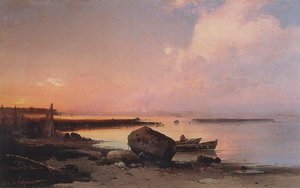
Kavči dorazili
Obraz s názvem Kavči dorazili byl vytvořen v roce 1871. Jedná se o dílo ruského umělce Alexeje Savrasova. Umělec se narodil v roce 1830 v Moskvě, Rusko, a v tomto městě zůstal žít až do své smrti v roce 1897.
Stručně řečeno
Z všech originálů, které Alexej Kondraťjevič Savrasov zanechal, je nejslavnější Kavči dorazili (1871), který se nachází ve sbírce Tretyakovská galerie, Moskva. Hned za ním následují Rooks come flying (1871) a Winter Night (1869). Náš katalog obsahuje 281 děl umělce Alexej Kondraťjevič Savrasov; galerie si zachovala 100 děl, která obdivuje celý svět, přičemž každé je znázorněno s datem vzniku, názevem muzea a jeho příběhem.
Obraz s názvem Kavči dorazili byl vytvořen v roce 1871. Jedná se o dílo ruského umělce Alexeje Savrasova. Umělec se narodil v roce 1830 v Moskvě, Rusko, a v tomto městě zůstal žít až do své smrti v roce 1897.
To gaze upon Alexei Kondratyevich Savrasov's "Rooks Come Flying" is to step directly into a moment suspended between the quiet hush of deep winter and the sudden, vibrant burst of life. This masterpiece, painted in 1871, is far more than a mere depiction of a snowy landscape; it is an emotional resonance captured on oil canvas. Savrasov, celebrated as a pioneer of the lyrical landscape, possessed a rare gift for…
A small house sits nestled among trees, its form partially obscured by the surrounding landscape. The scene is set during a winter night, where a soft, orange tint warms the sky, providing a subtle contrast to the cold, snow-covered terrain. A river flows through the background, its surface reflecting the muted light of the moon. Near the center, a horse and two figures—one standing to the left and another further…
To gaze upon Alexei Kondratyevich Savrasov's View of the Kremlin from the Krimsky Bridge in Inclement Weather is to step directly into a moment suspended between grandeur and quiet contemplation. This 1851 masterpiece does more than merely depict a vista; it captures the very breath of a Russian day when nature’s drama—the interplay of light, cloud, and enduring stone—becomes the central character. Savrasov, who elevated landscape painting to an art…
The painting presents a landscape centered on a single tree with sparse branches positioned in the foreground. This tree grows from a rugged, rocky terrain. In the middle distance, two figures stand near a building, their presence suggesting a quiet human activity amidst the terrain. The background is composed of a sky filled with dense cloud formations. Several birds are scattered throughout the composition, appearing in flight or resting within…
The painting titled Sea is a work by the Russian artist Alexei Savrasov. Created in 1860, this piece reflects the artist's early development during a period when he was refining his unique approach to the natural world. Savrasov, who was born in Moscow, Russia, in 1830, spent much of his life capturing the specific atmosphere of the landscapes he encountered. He remained in Moscow until his death in 1897.
In this work, titled After the storm, Alexei Savrasov presents a quiet moment of transition within the natural world. Painted about 1870, the scene captures the immediate aftermath of a tempest, focusing on the stillness that settles over the land once the wind has subsided. It is a study of the atmosphere that follows a period of turbulence, where the elements find a temporary, fragile equilibrium.
The painting presents a wide view of a cityscape situated beside a large body of water. In the foreground, the water occupies a significant portion of the lower frame, its surface reflecting the light from a sky filled with scattered clouds. Above the urban horizon, the clouds create a heavy, dramatic atmosphere. In the distance, the silhouettes of various buildings rise, suggesting a dense and active urban environment. Small figures…
The sun hangs low in the sky, casting a warm, golden glow over the scene in Summer landscape with windmills. Painted by Alexei Savrasov in 1859, this work invites the viewer into a quiet moment of the Russian countryside. The landscape genre finds its expression here through a serene depiction of nature, where the air feels heavy with the stillness of a summer afternoon. One can almost feel the gentle…
The ocean churns with a violent, restless energy, its dark waters rising hungrily toward the mast of a struggling vessel. Every wave seems to possess a heavy, liquid weight, threatening to pull the wooden hull into the depths. Above the chaos, birds scatter through the salt-heavy air, their frantic flight mirroring the desperation of the scene below. A smaller boat drifts in the distance, a lonely silhouette against the turbulent…
Čtyři témata, která se v těchto originálech nejčastěji objevují, z nichž každé má svůj nejlepší příklad.
2 muzea, v nichž je umístěno nejvíce obrazů z této stránky.
| Muzeum | Město | Díla autora Alexej Kondraťjevič Savrasov | Obrazy z tohoto seznamu |
|---|---|---|---|
| Moskva | 16 | Kavči dorazili, Rooks come flying, View of the Kremlin from the Krimsky Bridge in Inclement Weather | |
| Basilej | 1 | Landscape with hut |
Vyberte si dekádu a prohlédněte si originál, který ji definuje.
To gaze upon Alexei Kondratyevich Savrasov's View of the Kremlin from the Krimsky Bridge in Inclement Weather is to step directly into a moment suspended between grandeur and quiet contemplation. This 1851 masterpiece does more than merely depict a vista; it captures the very breath of a Russian day when nature’s drama—the interplay of light, cloud, and enduring stone—becomes the central character. Savrasov, who elevated landscape painting to an art…
A small house sits nestled among trees, its form partially obscured by the surrounding landscape. The scene is set during a winter night, where a soft, orange tint warms the sky, providing a subtle contrast to the cold, snow-covered terrain. A river flows through the background, its surface reflecting the muted light of the moon. Near the center, a horse and two figures—one standing to the left and another further…
Obraz s názvem Kavči dorazili byl vytvořen v roce 1871. Jedná se o dílo ruského umělce Alexeje Savrasova. Umělec se narodil v roce 1830 v Moskvě, Rusko, a v tomto městě zůstal žít až do své smrti v roce 1897.
Early spring. Backwoods is a landscape painting by the Russian artist Alexei Savrasov. The work was executed in 1884. This piece captures a specific seasonal transition within a forest setting, focusing on the period when winter begins to recede.
A serene and melancholic landscape unfolds across a quiet stretch of the Volga River. The scene is dominated by muted earth tones, suggesting the damp, heavy atmosphere of autumn or winter. A small, dilapidated wooden structure sits near the riverbank, perhaps a fisherman’s hut or an abandoned dwelling, while a thin plume of smoke rises from a nearby fire. In the foreground, a few figures provide a sense of scale…
Kavči dorazili (1871), Tretyakovská galerie, Moskva. Následují Rooks come flying (1871) a Winter Night (1869).
41 let: dílo Kavči dorazili pochází z roku 1871 a Alexej Kondraťjevič Savrasov se narodil/a v roce 1830.
Kavči dorazili, Rooks come flying, Winter Night, View of the Kremlin from the Krimsky Bridge in Inclement Weather, Landscape with pine, Sea, After the storm, View of Moscow from Sparrow Hills, Summer landscape with windmills a The death of the ship at sea. Hodnocení výše uvádí rok a muzeum pro každé z nich.
Náš katalog obsahuje 281 děl umělce Alexej Kondraťjevič Savrasov z let 1849 až 1893.
Většinou v Tretyakovská galerie (Moskva) a Kunstmuseum Basel (Basilej). V tabulce muzeí výše jsou vypsány všechny.
V období 1850s: 45 z celkem 100 děl na této stránce vzniklo právě tehdy, z toho View of the Kremlin from the Krimsky Bridge in Inclement Weather z nich.
Na této stránce je nejstarší dílo z Ukrainian landscape (1849) a nejnovější z Spassky backwater on the Volga (1893).
Forests (34), Landscape (24) a Sky (15) napříč 100 díly na této stránce.
Oil On Canvas, u 17 z 100 děl na této stránce.
Realism, podle originálů na této stránce.
Kavči dorazili, Rooks come flying a View of the Kremlin from the Krimsky Bridge in Inclement Weather: muzeum Tretyakovská galerie, Moskva má v obsluze 10 děl z této stránky.
V rozlehlých a nekonečných prostorech ruského umění devatenáctého století vyvolává jen málo jmen tichou a melancholickou krásu přírody tak dojmově jako Aleksej Kondratjevič Savrasov. Narodil se v Moskvě roku 1830 a Savrasov nemaloval krajiny prostě jen tak; on zachytil samotný dech ruské země. Jeho cesta začala v posvátných sálech Moskevské školy malby, sochařství a architektury, kde studoval pod vedením mistrů jako Vasily Petrovich Verkhoff. Právě během těchto formativních let si Savrasov vyvinul hlubokou citlivost k okolí a naučil se nahlížet pod povrch terénu, aby našel emocionální tep skrytý pod mrazem a listím. Jeho rané vzdělání mu vštíplo přísnou oddanost realismu, přesto jeho duch zůstal hluboce spjat s lyrickými nuancemi romantismu, což mu umožnilo proměnit topografické pozorování v hluboké psychologické zážitky.
Evoluci Savrasovova stylu nejjasněji osvětluje jeho schopnost nacházet velkolepost v tom, co je skromné a přehlížené. Zatímco mnozí jeho contemporary hledali dramatické vrcholy vzdálených hor, Savrasov obrátil svůj pohled k intimní, často ponuré realitě ruského venkova. Jeho průlom nastal s monumentálním dílem „Zimní krajina“ z roku 1865, které by definovalo celý žánr. V tomto mistrovském díle se vzdálil od pouhé fotografické přesnosti a přijal atmosférickou perspektivu; využíval tlumené palety a jemné gradace šedé, bílé a hnědé barvy, aby vyvolal pocit pronikavého chladu a těžkého ticha sněhem pokrytého světa. Tento posun od doslovného detailu směrem k náladě ho ugruntoval jako průkopníka lyrické krajinné malby a dokázal, že obraz může sloužit jako zrcadlo lidské duše.
Savrasovova technická zdatnost spočívala v jeho mistrovském ovládání světla a tónálních variací. Disponoval neuvěřitelnou schopností vykreslit vlhkost tátícího sněhu, těžkou vzdušnou vlhkost po bouři i měkké, rozptýlené světlo jarního odpoledne. Jeho díla často vykazují jemnou hru textur – drsnou kůru březového stromu proti hladkému, sklovitému povrchu zamrzlé řeky. To se snad nejznáměji projevilo v jeho ikonickém obraze „Vratové se vracejí“ (1871). V tomto malířském díle slouží pohled ptáků vracejících se do sněhem pokryté háje jako mocný symbol naděje a cykličnosti života, ztělesňující jedinečnou ruskou formu sezónní melancholie, která rezonuje v divácích dodnes.
Kromě zimních scén zahrával jeho repertoár díla nesmírné atmosférické hloubky, jako například:
Skrze tato díla Savrasov dosáhl pocitu sounění mezi pozorovatelem a tím, co je pozorováno. Nepřistupoval k přírodě jako k pouhému pozadí lidského dramatu, ale jako k hlavní postavě samotné. Jeho malby zvou ke stavu kontemplace a osamění, nutí diváka nacházet krásu v tom, co je strohé, tiché a pomíjivé. Pozdvihnutím ruské krajiny na téma vysokého emocionálního významu zanechal Savrasov v dějinách umění nezmazatelnou stopu a zajistil, že jeho vize duševně prožívané, dýchající země bude trvat dlouho po jeho odchodu v roce 1897.