La Fête Dieu
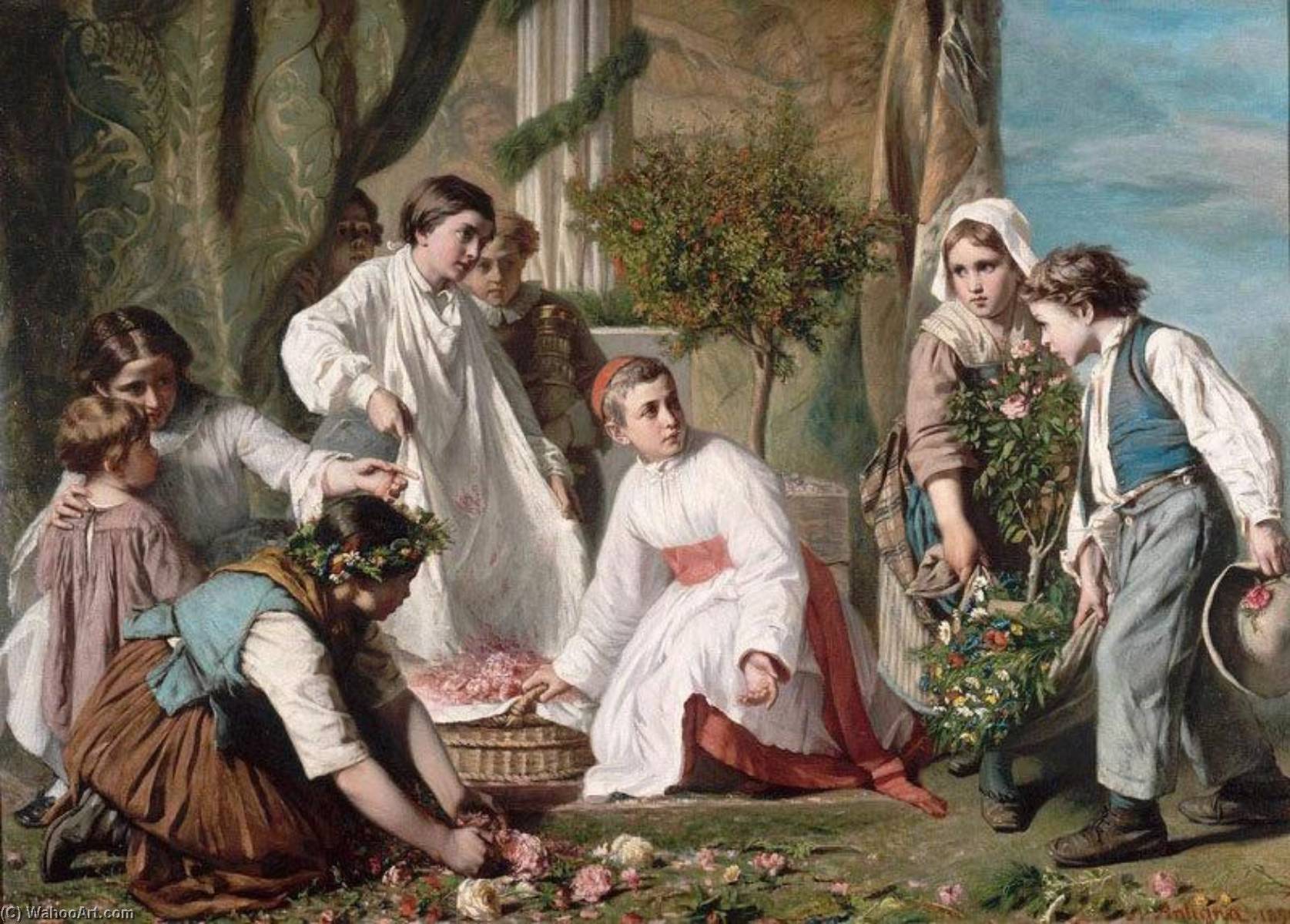
The oil on canvas titled La Fête Dieu was painted by Alexandre Antigna in 1855. This work measures 55 x 76 3/4 inches (140 x 195 cm). It captures a moment of preparation, where the weight of tradition meets the lightness of youth.
Stručně řečeno
Z všech originálů, které Alexandre Antigna zanechal, je nejslavnější La Fête Dieu. Hned za ním následují The Lightning (1848) a L'Eclair. Náš katalog obsahuje 21 děl umělce Alexandre Antigna; galerie si zachovala 21 děl, která obdivuje celý svět, přičemž každé je znázorněno s datem vzniku, názevem muzea a jeho příběhem.
The oil on canvas titled La Fête Dieu was painted by Alexandre Antigna in 1855. This work measures 55 x 76 3/4 inches (140 x 195 cm). It captures a moment of preparation, where the weight of tradition meets the lightness of youth.
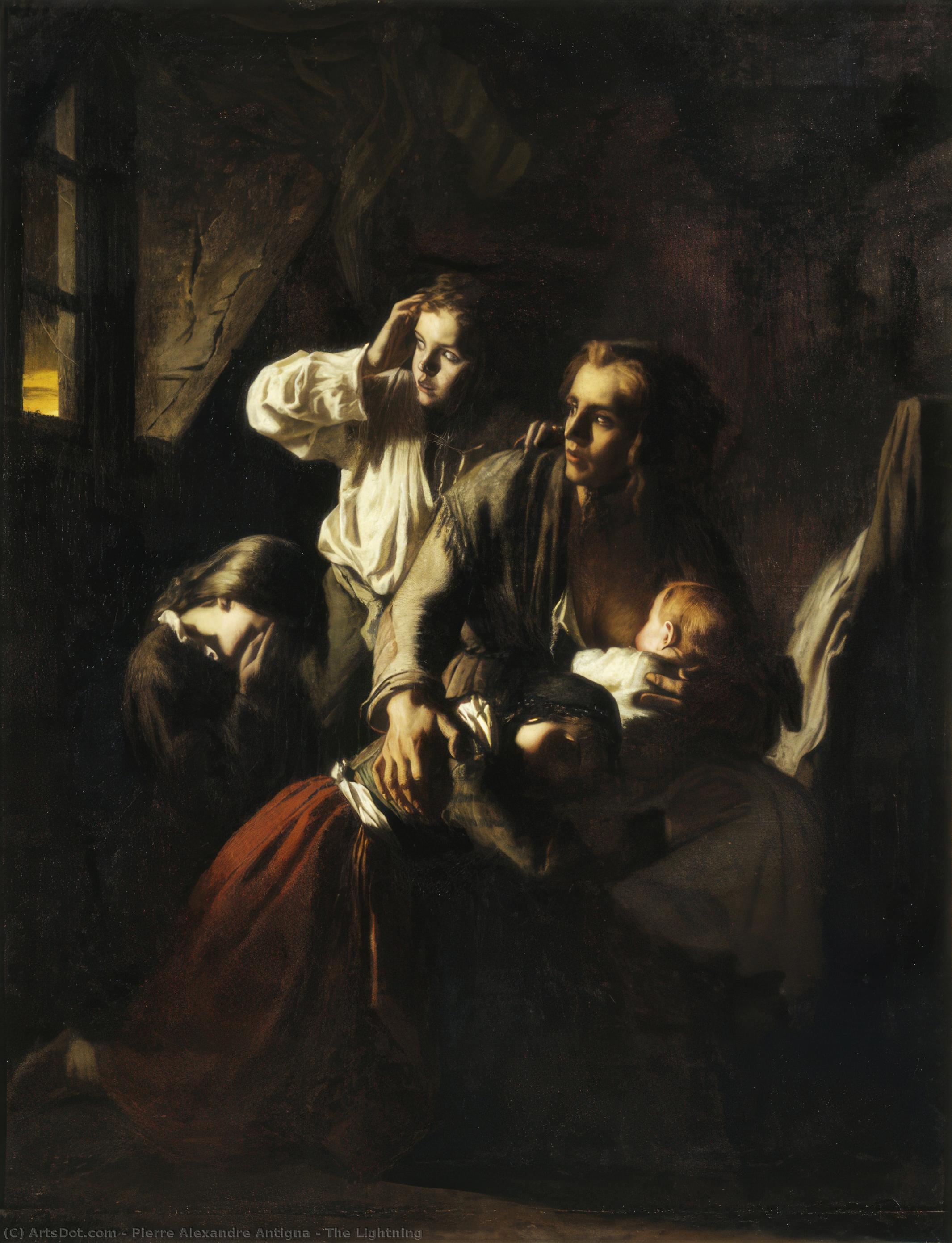
“The Lightning,” painted in 1848 by the French artist Pierre Alexandre Antigna, is more than just a depiction of a family huddled together during an electrical storm; it’s a poignant meditation on vulnerability, familial love, and the raw power of nature. Antigna, a key figure in Parisian Realism, masterfully captures a fleeting moment of intense emotion within a dimly lit interior, drawing the viewer into a scene brimming with both…
The oil on canvas titled L'Eclair was painted in 1848. This tableau captures a singular moment of tension. Alexandre Antigna, born in Orléans, France, in 1817, rendered the scene with a steady hand. The pigment settles into the weave of the fabric, holding a fragment of a storm within its fibers.
The air feels heavy with the scent of dry hay and sun-warmed earth as a group of children whirl in a rhythmic circle. They move through a wide, rural landscape, their small figures caught in a moment of pure, uninhibited joy. The composition pulls the eye into a continuous loop, following the sweep of outstretched arms and the swirling motion of colorful skirts. Reds, blues, and whites flash against the…
The sketch depicts a young girl captured in mid-stride, her body leaning slightly forward into the direction of her movement. She is positioned off-center to the right, creating a sense of momentum as she walks. Her head is tilted downward, eyes fixed upon an open book held in her outstretched hands. The figure is rendered from the mid-thigh upward, focusing the viewer's attention on the interaction between her posture and…
The light falls from the upper left, casting soft shadows across a gathering of Aragonese people. They sit upon weathered stone steps, framed by the deep green of a grapevine. A woman holds an infant, her chemise a bright white against the earthy tones of the scene. Beside them, a young boy cradles a musical instrument, his small hands poised in a moment of stillness. The air feels heavy with…
This oil painting presents a close-up portrait of a young girl, focusing tightly on her head and hands. The subject is positioned in a direct, eye-level view, her chin resting upon her hands in a pensive posture. A headscarf wraps around her face, creating organic folds that frame her features. The lighting originates from the upper left, casting shadows across her face and highlighting the specific expression in her eyes.…
A solitary woman rests in a dimly lit, rustic interior, her form surrendered to sleep. Positioned slightly to the left of center, she is balanced by the large, circular silhouette of a spinning wheel to the right. The composition is vertical, drawing the eye to the heavy, nocturnal atmosphere of the room. Deep, earthy tones of umber and sienna dominate the space, creating a sense of profound stillness. A sharp…
The oil painting titled Gypsy Girl presents a quiet, heavy moment captured on canvas. This work is the creation of Alexandre Antigna, an artist who emerged from the city of Orléans, France. Born in 1817, Antigna brings a specific, focused gaze to the subjects he encounters, often finding the weight of existence in the faces of those living on the margins of society.
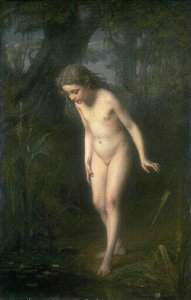
is an oil on canvas by the French painter Alexandre Antigna. The work presents a nude female figure wading into a body of water. This central subject is situated within a dense forest setting, where the natural environment forms a dark, enveloping backdrop around the form.
Čtyři témata, která se v těchto originálech nejčastěji objevují, z nichž každé má svůj nejlepší příklad.
6 muzea, v nichž je umístěno nejvíce obrazů z této stránky.
| Muzeum | Město | Díla autora Alexandre Antigna | Obrazy z tohoto seznamu |
|---|---|---|---|
| Paříž | 2 | The Lightning, L'Eclair | |
| Orléans | 2 | Aragonese of Anso, The Fire | |
| Limoux | 1 | Circle of children | |
| Worcester | 1 | Head of a Girl | |
| Saint-Brieuc | 1 | The sleeping spinner | |
| Ghent | 1 | Gypsy Girl |
Vyberte si dekádu a prohlédněte si originál, který ji definuje.
“The Lightning,” painted in 1848 by the French artist Pierre Alexandre Antigna, is more than just a depiction of a family huddled together during an electrical storm; it’s a poignant meditation on vulnerability, familial love, and the raw power of nature. Antigna, a key figure in Parisian Realism, masterfully captures a fleeting moment of intense emotion within a dimly lit interior, drawing the viewer into a scene brimming with both…
The air feels heavy with the scent of dry hay and sun-warmed earth as a group of children whirl in a rhythmic circle. They move through a wide, rural landscape, their small figures caught in a moment of pure, uninhibited joy. The composition pulls the eye into a continuous loop, following the sweep of outstretched arms and the swirling motion of colorful skirts. Reds, blues, and whites flash against the…
The light falls from the upper left, casting soft shadows across a gathering of Aragonese people. They sit upon weathered stone steps, framed by the deep green of a grapevine. A woman holds an infant, her chemise a bright white against the earthy tones of the scene. Beside them, a young boy cradles a musical instrument, his small hands poised in a moment of stillness. The air feels heavy with…
La Fête Dieu. Následují The Lightning (1848) a L'Eclair.
La Fête Dieu, The Lightning, L'Eclair, Circle of children, Girl striding out reading a book, Aragonese of Anso, Head of a Girl, The sleeping spinner, Gypsy Girl a Miroir des bois. Hodnocení výše uvádí rok a muzeum pro každé z nich.
Náš katalog obsahuje 21 děl umělce Alexandre Antigna z let 1848 až 1872.
Většinou v Musée d'Orsay (Paříž), Musée des Beaux-Arts (Orléans) a musée Petiet de Limoux (Limoux). V tabulce muzeí výše jsou vypsány všechny.
V období 1850s: 3 z celkem 21 děl na této stránce vzniklo právě tehdy, z toho Circle of children z nich.
Na této stránce je nejstarší dílo z The Lightning (1848) a nejnovější z Aragonese of Anso (1872).
Woman (8), Children (4) a Girl (4) napříč 21 díly na této stránce.
Oil On Canvas, u 15 z 21 děl na této stránce.
Romanticism, podle originálů na této stránce.
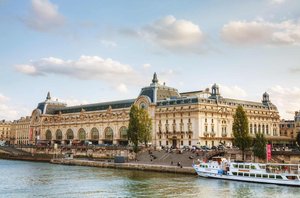
The Lightning a L'Eclair: muzeum Musée d'Orsay, Paříž má v obsluze 2 děl z této stránky.
V srdci devatenáctého století Francie, období definovaného hlubokými společenskými převraty a měnícími se uměleckými paradigmaty, se Jean Pierre Alexandre Antigna vyvinul jako malíř s bezprecedentní empatií. Narodil se v Orléans v roce 1817 a jeho raná umělecká cesta byla zakořeněna v tradičních krajinách jeho mládí, které mu formoval pod bdělým dohledem místního malíře François Salmona. Přitažlivost Paříže však byla neodolatelná. Po vstupu do prestižní École Nationale Supérieure des Beaux-Arts v roce 1837 se Antigna ocitl v náruči akademické rigoroznosti, kde studoval u mistrů jako Sébastien Norblin de la Gourdaine a slavný Paul Delaroche. Tato počáteční léta byla charakterizována zaměřením na náboženská témata a formální portrétní malbu, v souladu s tehdejšími ustálenými stylistickými konvencemi.
Skutečná metamorfóza Antignovy duše se však odehrála nikoliv v pozlacených sálech akademie, ale v zastíněných, úzkých uličkách ostrova Île Saint-Louis. Život v chudinských čtvrtích Paříže učinil z umělce svědka syrových, nefalšovaných zoufalství městské chudoby. Tato hluboká zkušenost s lidským trápením působila jako katalyzátor, který ho odvedl od idealizované náboženské ikonografie směrem k drsnému, nekompromisnímu realismu. V době, kdy revoluce roku 1848 zasáhla Francii, Antigna již plně přijal styl, který se snažil dokumentovat tíhu existence. Jeho plátna začala pulzovat těžkými břemeny a tichou odolností těch, kteří žili na okraji společnosti, vykreslenými pomocí texturovaného tahů štětcem a s emocionální hloubkou, která upoutala pozornost pařížského Salonu.
Jak jeho kariéra postupovala, umělecká vize Antigny se rozšířila i za městské hranice Paříže. Poháněn nesytnou zvědavostí o lidské kondici a přírodní společnosti, vydal se na rozsáhlé cesty skrze drsné krajiny Bretani a živé terény Španělska. Tyto pouť mu umožnily propojit jeho sociální vědomí s nastupujícím naturalismem. Kolem roku 1860 jeho dílo začalo odrážet meticulózní pozorování přírody, kde atmosférické kvality krajiny se staly stejně důležitým tématem jako lidé, kteří v ní žijí. Ať už zachycoval dramatické napětí bouře nebo tichou důstojnost venkovského dělníka, jeho technika zůstávala ukotvena v pocitu hlubokého soucitu.
Jeho mistrovství formálně uznala francouzská stát, když mu bylo v roce 1861 uděleno Legion of Honor, což byl milník, který upevil jeho postavení mezi významnými postavami jeho generace. I když se jeho styl vyvíjel směrem k naturalističtějším ztvárněním, jádrem jeho práce zůstávalo zkoumání zranitelnosti i síly. Významná díla, jako je Blesk, demonstrují tuto dualitu, kde rodina shlíhlá během elektrické bouře slouží jako dojmová meditace o rodinné lásce uprostřed děsivé síly přírody. Díky využití světla, stínu a impasto textur Antigna nezdečinoval pouze scény; on zachytil samotnou esenci přežití.
Historický význam, který v sobě nese Alexandre Antigna, spočívá v jeho schopnosti překlenout propast mezi romantickou emocí a realistickou pravdou. Nedíval se na chudobu pouze jako pozorovatel; obdaroval ji důstojností, která zpochybňovala tehdejší společenské hierarchie. Jeho život, který skončil v Paříži v roce 1878, zanechal po sobě dílo, které slouží jako vitální vizuální záznam devatenáctého století francouzského života. Jeho vliv lze vidět v tom, jak využíval následující prvky k pozvednutí svých témat:
Dnes je Antigna vzpominán nejen jako malíř scén, ale jako soucitný hlas své éry, umělec, který se podíval do temnoty městského boje a našel v ní neochvějné světlo lidského ducha.