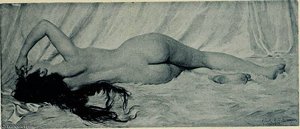
Portrét Albert Aublet

28 nejslavnějších obrazů autora Albert Aublet, výběr z galerie

Aktualizováno listopad 2026 · seřazeno podle našeho skóre popularity (vyhledávání, návštěvy a objednávky u každého díla) · 28 děl umělce Albert Aublet v našem katalogu

Stručně řečeno

Z všech originálů, které Albert Aublet zanechal, je nejslavnější On the Shingle (1883). Hned za ním následují Selene (1880) a Reading on the garden path (1883). Náš katalog obsahuje 28 děl umělce Albert Aublet; galerie si zachovala 28 děl, která obdivuje celý svět, přičemž každé je znázorněno s datem vzniku, názevem muzea a jeho příběhem.

1851 – 1938, Paříž Academic art Nejvíce děl: Petit Palais

10 nejlepších obrazů umělce Albert Aublet: výběr galerie

1
On the Shingle (1883) od Albert Aublet

On the Shingle

1883 · Oil

The composition is defined by a strong horizontal orientation, placing the horizon line high to emphasize the vastness of the sea and the shoreline. Under a bright, hazy sky, the scene captures a crowded beach populated by numerous figures. Some individuals stand, some sit, and others walk near the water's edge, their forms rendered with varying degrees of detail. Those in the foreground appear more defined, while the figures in…

2
Selene (1880) od Albert Aublet

Selene

1880 · Oil

In this vertical oil painting from 1880, a nude female figure occupies the center of a celestial scene. The subject is positioned in an S-shaped curve, appearing to drift through a pale, translucent moon that dominates the background. Her limbs are rendered with smooth textures and subtle shading to define the anatomical form. Her hair flows upward, merging into the edges of the lunar disc. The color palette consists of…

3
Reading on the garden path (1883) od Albert Aublet

Reading on the garden path

1883 · Oil On Canvas

A solitary woman occupies the center of a lush garden, her attention fixed entirely upon a book. She is framed by a dense arrangement of flora, where the soft white of her dress provides a focal point against the surrounding greenery. The scene captures a fleeting instance of stillness, where the subject is lost in thought amidst the natural world. Sunlight filters through the canopy, illuminating the textures of the…

5
Sketch for the Hall of Festivities of the Hôtel de Ville: Lights (1892) od Albert Aublet

Sketch for the Hall of Festivities of the Hôtel de Ville: Lights

1892 · Gouache · Petit Palais, Paříž

Three small, nude figures move through a pale, hazy space. They are putti, caught in a rhythmic, circular dance that suggests a celebration of light. The composition is shallow, like a carving in stone or a relief on a wall. Their bodies are defined not by hard lines, but by the gentle meeting of shadow and glow. A muted palette of dusty rose, mauve, and lavender wraps around their rounded…

6
Sketch for the Hall of Festivities of the Hôtel de Ville: Fruits (1892) od Albert Aublet

Sketch for the Hall of Festivities of the Hôtel de Ville: Fruits

1892 · Pastel · Petit Palais, Paříž

In this preparatory study, a group of five nude figures moves through a shallow, frieze-like space, their bodies caught in a graceful, circular motion. They gather around large bowls and baskets, their limbs reaching and twisting as they handle a bounty of fruit. The scene feels less like a static pose and more like a captured moment of rhythmic labor, intended to decorate the grand Hall of Festivities of the…

7
Sketch for the Salle des Fêtes of the Hôtel de Ville: Flowers (1892) od Albert Aublet

Sketch for the Salle des Fêtes of the Hôtel de Ville: Flowers

1892 · Gouache · Petit Palais, Paříž

This preparatory sketch, titled Sketch for the Salle des Fêtes of the Hôtel de Ville: Flowers, presents a composition of four nude human figures arranged in a circular, dance-like procession. The figures are rendered with soft, gestural lines that define their contours without the use of heavy shading or anatomical precision. They appear to move in a rhythmic sequence, interacting with a garland of flowers that loops through the center…

9
Sketch for the Hall of Festivities of the Hôtel de Ville: Drinks (1892) od Albert Aublet

Sketch for the Hall of Festivities of the Hôtel de Ville: Drinks

1892 · Pastel · Petit Palais, Paříž

A sense of rhythmic movement fills the space as a group of cherubic, nude figures, known as putti, engage in a spirited scene. They gather around a small cart or wheel, their bodies caught in a moment of playful celebration. The composition stretches horizontally, creating a frieze-like arrangement that pulls the eye across the page. Soft, rounded shapes define their limbs, giving the figures a voluminous, fleshy quality that suggests…

10
Une Beaute Orientale od Albert Aublet

Une Beaute Orientale

Oil

In this composition, we find ourselves in a private, shadowed space where a single figure commands the viewer's attention. The woman is captured in a moment of transition, her hands lifting a light blue drape over her head. There is a certain poise in her stance, a subtle bend at the knee that suggests a movement caught in mid-breath. The lighting is soft, falling from above to trace the gentle…

Výběr umělce Albert Aublet pokračuje, od 11 do 28

Motivy, které zaujaly Albert Aublet

Čtyři témata, která se v těchto originálech nejčastěji objevují, z nichž každé má svůj nejlepší příklad.

Muzea, v nichž jsou vystavena originálna umělce Albert Aublet

2 muzea, v nichž je umístěno nejvíce obrazů z této stránky.

Muzeum Město Díla autora Albert Aublet Obrazy z tohoto seznamu
Petit Palais, PařížPetit Palais Paříž 6 Sketch for the Salle des Fêtes of the Hôtel de Ville: Music, Sketch for the Hall of Festivities of the Hôtel de Ville: Lights, Sketch for the Hall of Festivities of the Hôtel de Ville: Fruits
Musée d'art et d'histoire de Narbonne, NarbonneMusée d'art et d'histoire de Narbonne Narbonne 3 Interior of the Rüstem Pacha Mosque of Constantinople, Les toits de Tunis, Devant la mosquée

Albert Aublet dekáda po dekádě: originální díla, která definují každou z nich

Díla podle dekád

Vyberte si dekádu a prohlédněte si originál, který ji definuje.

Otázky sběratelů o obrazech umělce Albert Aublet

Kterým dílem je Albert Aublet nejznámější?Odhalit odpověď

On the Shingle (1883). Následují Selene (1880) a Reading on the garden path (1883).

Kolik let bylo Albert Aublet, když bylo vytvořeno dílo On the Shingle?Odhalit odpověď

32 let: dílo On the Shingle pochází z roku 1883 a Albert Aublet se narodil/a v roce 1851.

Kterých deset nejslavnějších obrazů má Albert Aublet?Odhalit odpověď

On the Shingle, Selene, Reading on the garden path, Sketch for the Salle des Fêtes of the Hôtel de Ville: Music, Sketch for the Hall of Festivities of the Hôtel de Ville: Lights, Sketch for the Hall of Festivities of the Hôtel de Ville: Fruits, Sketch for the Salle des Fêtes of the Hôtel de Ville: Flowers, Sketch for the Hall of Festivities of the Hôtel de Ville: Cotillons, Sketch for the Hall of Festivities of the Hôtel de Ville: Drinks a Une Beaute Orientale. Hodnocení výše uvádí rok a muzeum pro každé z nich.

Kolik obrazů zanechal(a) Albert Aublet?Odhalit odpověď

Náš katalog obsahuje 28 děl umělce Albert Aublet z let 1880 až 1912.

Ve kterých muzeích jsou vystavena díla mistrovská umělce Albert Aublet?Odhalit odpověď

Většinou v Petit Palais (Paříž) a Musée d'art et d'histoire de Narbonne (Narbonne). V tabulce muzeí výše jsou vypsány všechny.

V jakých letech namaloval Albert Aublet svá nejznámější díla?Odhalit odpověď

V období 1890s: 6 z celkem 28 děl na této stránce vzniklo právě tehdy, z toho Sketch for the Salle des Fêtes of the Hôtel de Ville: Music z nich.

Jaká jsou první a poslední slavná originální díla umělce Albert Aublet?Odhalit odpověď

Na této stránce je nejstarší dílo z Selene (1880) a nejnovější z Les toits de Tunis (1912).

Jaká témata si Albert Aublet vybíral nejčastěji?Odhalit odpověď

Lavender (6), People (5) a Woman (5) napříč 28 díly na této stránce.

Kterou techniku používal(a) Albert Aublet nejčastěji?Odhalit odpověď

Oil, u 3 z 28 děl na této stránce.

K kterému uměleckému směru patří Albert Aublet?Odhalit odpověď

Academic art, podle originálů na této stránce.

Která díla umělce Albert Aublet jsou vystavena v Petit Palais?Odhalit odpověď

Sketch for the Salle des Fêtes of the Hôtel de Ville: Music, Sketch for the Hall of Festivities of the Hôtel de Ville: Lights a Sketch for the Hall of Festivities of the Hôtel de Ville: Fruits: muzeum Petit Palais, Paříž má v obsluze 6 děl z této stránky.

Albert Aublet: život a dílo

Zářivý odkaz Alberta Aubleta

Narodil se v srdci Paříže v roce 1851, Albert Aublet vyvstal z pulzujících a neustále se měnících vln francouzské umělecké scény během éry Belle Époque. Jeho cesta začala v prestižních sálech École des Beaux-Arts, kde si zdokonaloval svůj řemeslo pod bdělým dohledem mistrů, jako byli Claudius Jacquand a slavný Jean-Léon Gérôme. Tato přísná akademická základy mu poskytly technickou preciznost, která mu později posloužila jako základ pro jeho expresivnější výzkumy. Jeho první debut na Salonu v roce 1873 znamenal příchod významného talentu a přinesl mu okamžité uznání, když díla jako Intérieur de Boucherie au Tréport získali významní představitelé, například Alexandre Dumas Fils. V těchto formativních letech zachytil Aubletův štětec tichou důstojnost venkovského života a drsný krásu Normandy, čímž si vybudoval pověst v oblasti realismu, která rezonovala s tehdejší fascinací nefalšovanou pravdou.

Jak se jeho kariéra prohlubovala, Aubletův umělecký pohled se vzdal daleko za hranice Francie za světlem a kouzlem Orientu. Transformující cesta do Konstantinopole v roce 1881 zapálila celoživotní vášeň pro orientalistická témata, která navždy změnila trajektorii jeho díla. Tato fascinace nebyla pouze pohnutkou za exotikou, ale hlubokým, vědeckým zapojením do nového světla a kultury. Spolupracoval s contemporary jako Jean-Léon Gérôme a Alberto Pasini a prozkumával živé krajiny Alžírsky a Turecka, přetvářející rušné tržiště, architektonický grandióznost a atmosférické jemnosti Východu na plátno. Jeho práce se stala mostem mezi evropskou akademickou tradicí a smyslovou bohatostí severní Afriky a Osmanské říše, charakterizovanou ostrou citlivostí k luzu a mistrovským využitím tónových přechodů, které vdechovaly život každé scéně.

Mistrovství světla a tématu

Evoluce Aubletovy techniky viděla jeho plynulé pohyby mezi strukturovanými nároky akademického umění a fluidnějšími, emotivními kvalitami, které najdeme v jeho akvarelech a gouách. Disponoval vzácnou schopností zachytit prchavé okamžiky—způsob, jakým se sluneční světlo filtruje skrze závoj nebo jak se měkce rozzáří soumrak nad tunským dvorem. Toto mistrovství se promítlo i do jeho ztvárnění lidských postav, kde zkoumal jak graciliti aktů, tak intimní charakterové studie místních dignitářů i obyčejných lidí. Jeho pozdější roky byly hluboce provázány s kulturou Tunisu; po zakoupení velkolepého paláce Dar Ben Abdalah v roce 1905 se stal ústřední postavou místní umělecké komunity a dokonce působil jako předseda prvního místního uměleckého salonu. Tato hluboká imerze umožnila jeho dílu překročit pouhé pozorování a stát se hlubokou dokumentací světa v proměně.

Aubletovy úspěchy se dočaly významného mezinárodního uznání, které odráželo jeho status skutečného globálního umělce. Jeho přínos uměleckému světu byl vyznačen prestižními oceněními, která upevnila jeho postavení mezi elitou své doby:

  • Medaile ze Salonu z roku 1880: Rané uznání jeho rostoucí dovednosti a rostoucí významu v Paříži.
  • Zlatá medaile z Pařížské Světové výstavy 1889: Vrcholové osiągnięti, které oslavilo jeho schopnost očarovat světové publikum v době vrcholu Exposition Universelle.
  • Légion d'honneur (1890): Hluboký důkaz jeho kulturního dopadu a jeho služby francouzské umělecké tradici.

Dnes leží historický význam Alberta Aubleta v jeho schopnosti syntetizovat preciznost Akademie s evokativním duchem impresionismu. Jeho obrazy zůstávají živými okny do minulé éry, uchované v vážených sbírkách, jako je Musée National des Beaux-Arts de Québec a Philadelphia Museum of Art. Skrze jeho oči budeme i nadále svědky neustálého kouzla Orientu a nadčasové elegance francouzské tradice, vykreslené rukou, která rozuměla jak váze historie, tak lehkosti prolétajícího stínu.