1


Aktualizováno listopad 2026 · seřazeno podle našeho skóre popularity (vyhledávání, návštěvy a objednávky u každého díla) · 27 děl umělce Adriano De Sousa Lopes v našem katalogu
Stručně řečeno
Z všech originálů, které Adriano De Sousa Lopes zanechal, je nejslavnější Engano de alma, ledo e cego... (1901). Hned za ním následují Self-portrait (1907) a Portrait of Luciano Freire (c. 1915-1920) (1917). Náš katalog obsahuje 27 děl umělce Adriano De Sousa Lopes; galerie si zachovala 27 děl, která obdivuje celý svět, přičemž každé je znázorněno s datem vzniku, názevem muzea a jeho příběhem.


The Moulin Rouge, much represented at the time by the artists as a symbol of a Parisian bohemia, emerges from the city landscape. In a nocturnal atmosphere, which the colorist skillfully works, sensations of that zone of the city are represented through the planning of its structure and by marking, here and there, the human movement. Painted in Paris in the early nineties where Sousa Lopes was living as a…


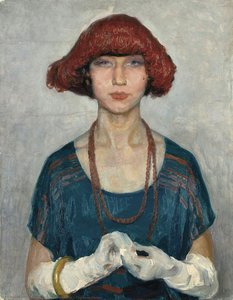 The blue blouse1928 · Národní muzeum současného umění - Museu do Chiado
12
 Saint-Tropez1929
13
 Untitled (ARD3AZ)1930 · Národní muzeum současného umění - Museu do Chiado
14
 Untitled (ARD3AX)1930
15
 Untitled (ARD3AT)1944
16
 Retrato de mulher sorrindoCentro de Arte Moderna Gulbenkian
17
 The brigade of Minho inCentro de Arte Moderna Gulbenkian
18
 Paisagem com árvoresCentro de Arte Moderna Gulbenkian
19
 Very LightCentro de Arte Moderna Gulbenkian
20
 Pequena capela circularCentro de Arte Moderna Gulbenkian
21
 Two ordenances of Infantry 11Centro de Arte Moderna Gulbenkian
22
 A patrulhaCentro de Arte Moderna Gulbenkian
23
 O episódio de 9 de AbrilCentro de Arte Moderna Gulbenkian
24
 Soldiers leaning over the parapetCentro de Arte Moderna Gulbenkian
25
 Uma sepultura portuguesa na terra de ninguémCentro de Arte Moderna Gulbenkian
26
 Retrato do pintor CormonCentro de Arte Moderna Gulbenkian
27
 Retrato de homem com longo bigode e lunetas, segurando uma caneta de aparoCentro de Arte Moderna Gulbenkian
Čtyři témata, která se v těchto originálech nejčastěji objevují, z nichž každé má svůj nejlepší příklad.
4 muzea, v nichž je umístěno nejvíce obrazů z této stránky.
| Muzeum | Město | Díla autora Adriano De Sousa Lopes | Obrazy z tohoto seznamu |
|---|---|---|---|
 Centro de Arte Moderna Gulbenkian |
Lisabon | 13 | Dismantled cannon, Retrato de mulher sorrindo, The brigade of Minho in |
 Národní muzeum současného umění - Museu do Chiado |
Lisabon | 7 | Portrait of Luciano Freire (c. 1915-1920), Self-portrait, The Moulin Rouge (nighttime) |
 Calouste Gulbenkian Museum |
Lisbon | 1 | Self-portrait |
 Národní muzeum Soares dos Reis |
Porto | 1 | Self-Portrait |
Vyberte si dekádu a prohlédněte si originál, který ji definuje.
Engano de alma, ledo e cego... (1901). Následují Self-portrait (1907) a Portrait of Luciano Freire (c. 1915-1920) (1917).
22 let: dílo Engano de alma, ledo e cego... pochází z roku 1901 a Adriano De Sousa Lopes se narodil/a v roce 1879.
Engano de alma, ledo e cego..., Self-portrait, Portrait of Luciano Freire (c. 1915-1920), Self-portrait, At the park, The Moulin Rouge (nighttime), Self-Portrait, Boat, Dismantled cannon a Untitled (ARD3AV). Hodnocení výše uvádí rok a muzeum pro každé z nich.
Náš katalog obsahuje 27 děl umělce Adriano De Sousa Lopes z let 1901 až 1944.
Většinou v Centro de Arte Moderna Gulbenkian (Lisabon), Národní muzeum současného umění - Museu do Chiado (Lisabon) a Calouste Gulbenkian Museum (Lisbon). V tabulce muzeí výše jsou vypsány všechny.
V období 1920s: 5 z celkem 27 děl na této stránce vzniklo právě tehdy, z toho At the park z nich.
Na této stránce je nejstarší dílo z Engano de alma, ledo e cego... (1901) a nejnovější z Untitled (ARD3AT) (1944).
Black and white (4), Man (3) a Portrait (2) napříč 27 díly na této stránce.
Etching, u 3 z 27 děl na této stránce.
Modernism, podle originálů na této stránce.
Dismantled cannon, Retrato de mulher sorrindo a The brigade of Minho in: muzeum Centro de Arte Moderna Gulbenkian, Lisabon má v obsluze 13 děl z této stránky.
Adriano Sousa Lopes (1879 – 1944) stands as a pivotal figure in the trajectory of Portuguese art, embodying the spirit of modernist experimentation while simultaneously grounding his artistic vision within the traditions of his homeland. Born in Portugal during a period marked by significant social and cultural transformations—the burgeoning Belle Époque and the dawn of the 20th century—Lopes’s artistic journey unfolded against a backdrop of intellectual ferment and artistic innovation, shaping him into one of the most influential painters of his era.
His formative years were spent studying at the Academia Real de Belas Artes in Lisbon, where he honed his skills under Veloso Salgado and Luciano Freire, absorbing the stylistic precepts of Academic painting alongside explorations of design principles. This initial grounding proved invaluable as he embarked on a transformative voyage to Paris in 1903, fueled by a stipend from the Legado do Visconde de Valmor—a charitable endowment dedicated to nurturing artistic talent and fostering cultural enrichment. Within the vibrant Parisian art scene, Lopes immersed himself in the tutelage of Pierre Bonnard and Édouard Vuillard at École des Beaux-Arts and Académie Julian, encountering luminaries like Fernand Cormon who profoundly impacted his aesthetic sensibilities.
Lopes's Parisian engagement was not merely academic; it was deeply experiential. He actively participated in the Salon d’Automne from 1904 to 1912, documenting the dynamism of urban life and engaging with fellow artists grappling with new artistic paradigms. His work during this period often reflected a fascination with light and atmosphere, drawing clear inspiration from the Impressionist masters. One of his most evocative works, The Moulin Rouge (nighttime), serves as a testament to this era; painted in Paris, it captures the nocturnal essence of the city through a skillful use of color and structure that reveals a profound influence from Claude Monet.
Through his explorations, Lopes mastered the ability to blur outlines and manipulate media screens between the viewer and the subject, creating a sense of movement and sensation. This period also saw him expanding his horizons beyond France; a brief excursion into Italy in 1907 exposed him to Italian Impressionism, fostering a comparative understanding of stylistic approaches that would later enrich his unique visual language.
While his paintings captured the ephemeral beauty of light, Lopes also demonstrated a remarkable command over the more structured and somber medium of engraving. As a skilled engraver, he possessed the ability to convey intense emotion and historical weight through black and white compositions. His etchings often delved into more poignant, even haunting, subject matter, ranging from portraits of his mentors to scenes of profound human struggle.
His graphic works are characterized by their ability to capture tension and atmosphere:
The legacy of Adriano Sousa Lopes is one of bridge-building between the old world and the new. He successfully navigated the transition from the rigid structures of Academicism to the fluid, emotive possibilities of Modernism. By integrating the lessons learned in the studios of Paris with the cultural identity of Portugal, he helped define a new era for his nation's art. His work remains a vital record of the early 20th century, capturing everything from the bohemian energy of Parisian nightlife to the somber reflections on war and mortality, ensuring his place as a cornerstone of European art history.