Portrét Adolfo Hohenstein

24 nejslavnějších obrazů autora Adolfo Hohenstein, každý naprosto unikátní

Aktualizováno listopad 2026 · seřazeno podle našeho skóre popularity (vyhledávání, návštěvy a objednávky u každého díla) · 25 děl umělce Adolfo Hohenstein v našem katalogu

Stručně řečeno

Gnà Lola (mezzo soprano) (1890) je obraz autora Adolfo Hohenstein, který přitahuje nejvíce pohledů. Poté se zrak přesouvá k Mimi's Costume For Act I Of La Boheme For The Premiere Performance a Set Design For Act 2 Of Puccini's Opera Tosca. Z 25 děl umělce Adolfo Hohenstein v našem katalogu je těchto 24 těch nejznámějších; každé z nich je unikátním originálem s uvedením roku vzniku, muzea a důvodu jeho nesmrtelnosti.

1854 – 1928, Petrohrad Art nouveau Nejvíce děl: Teatro dell'Opera di Roma

Top 10 obrazů autora Adolfo Hohenstein podle výběru galerie

1
Gnà Lola (mezzo soprano) (1890) od Adolfo Hohenstein

Gnà Lola (mezzo soprano)

1890 · Watercolor

Gnà Lola (mezzo soprano) is a costume design sketch by Adolfo Hohenstein. Created about 1890, the work functions as a visual blueprint for the character of the same name, a mezzo soprano. The sketch provides a detailed study of the attire intended for the stage, specifically tailored to the requirements of theatrical performance.

2
Mimi's Costume For Act I Of La Boheme For The Premiere Performance od Adolfo Hohenstein

Mimi's Costume For Act I Of La Boheme For The Premiere Performance

Painting

The scene unfolds through Mimi's Costume For Act I Of La Boheme For The Premiere Performance, a work that captures a specific moment of theatrical history. This piece is the creation of Adolfo Hohenstein, an artist whose life began in Saint Petersburg, Russia, in 1854. His creative spirit traveled through the cultural landscapes of Vienna and Milan, eventually leading him to become a central figure in the visual language of…

3
Set Design For Act 2 Of Puccini's Opera Tosca od Adolfo Hohenstein

Set Design For Act 2 Of Puccini's Opera Tosca

Watercolor

Set Design For Act 2 Of Puccini's Opera Tosca is a watercolor illustration by Adolfo Hohenstein. The work functions as a visual blueprint for the theatrical environment, focusing on purely architectural and decorative elements. It establishes the physical parameters of the stage through a detailed rendering of an opulent interior space.

4
Tosca - Sketch of Act III (1899) od Adolfo Hohenstein

Tosca - Sketch of Act III

1899 · Drawing · Teatro dell'Opera di Roma, Řím

In the delicate, evocative strokes of Adolf Hohenstein’s 1899 sketch for Act III of Tosca, we are transported to a moment where theatrical drama meets the timeless majesty of the Eternal City. This piece is far more than a mere preparatory study; it is a window into the soul of Puccini’s operatic masterpiece. Hohenstein, a master of capturing the intersection between human emotion and architectural scale, presents a panoramic view…

Slavná díla umělce Adolfo Hohenstein, čísla 11 až 24

Slavná díla Adolfo Hohenstein podle jednotlivých období

Motivy, které zaujaly Adolfo Hohenstein

Čtyři témata, která se v těchto originálech nejčastěji objevují, z nichž každé má svůj nejlepší příklad.

Muzea, v nichž jsou vystavena originálna umělce Adolfo Hohenstein

Muzeum s největším počtem obrazů na této stránce.

Muzeum Město Díla autora Adolfo Hohenstein Obrazy z tohoto seznamu
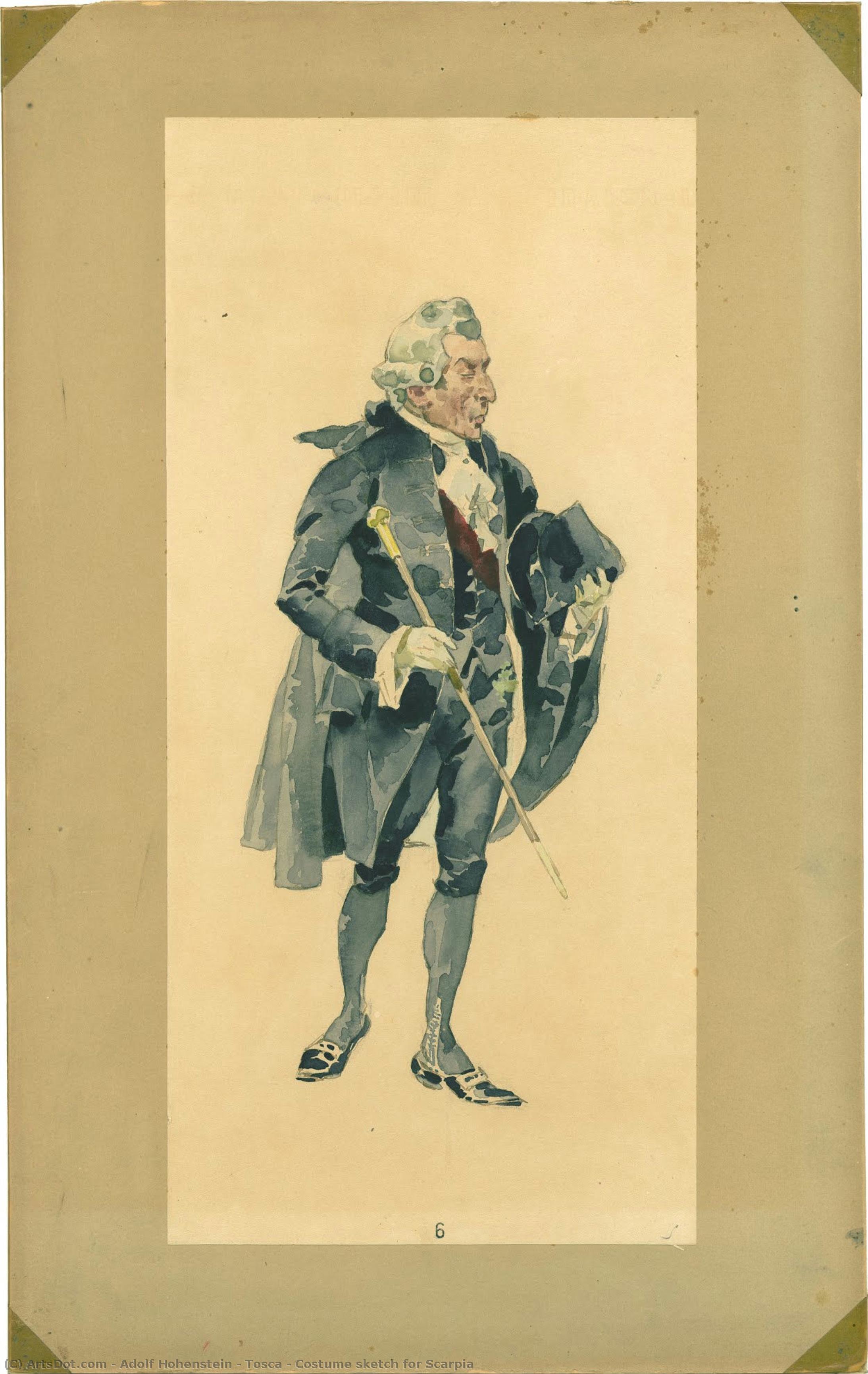
Teatro dell'Opera di Roma, ŘímTeatro dell'Opera di Roma Řím 3 Tosca - Sketch of Act III, Tosca - Costume sketch for Scarpia, Tosca - Costume sketch for Floria Tosca

Adolfo Hohenstein v průběhu let: unikátní originály každého díla

Originální díla s datováním Adolfo Hohenstein, která jsou zde zobrazena, pokrývají období zhruba deseti let, od 1890 do 1899: oko je sleduje rok po roce.

Díla podle roku

Vyberte rok a prohlédněte si originály.

Obrazy umělce Adolfo Hohenstein: dotazy pro galerii

Kterým nejznámějším dílem je Adolfo Hohenstein?Odhalit odpověď

Gnà Lola (mezzo soprano) (1890). Následují Mimi's Costume For Act I Of La Boheme For The Premiere Performance a Set Design For Act 2 Of Puccini's Opera Tosca.

V jakém věku vytvořil(a) Adolfo Hohenstein dílo Gnà Lola (mezzo soprano)?Odhalit odpověď

36 let: dílo Gnà Lola (mezzo soprano) pochází z roku 1890 a Adolfo Hohenstein se narodil/a v roce 1854.

Kterých deset obrazů autora Adolfo Hohenstein je nejznámějších?Odhalit odpověď

Gnà Lola (mezzo soprano), Mimi's Costume For Act I Of La Boheme For The Premiere Performance, Set Design For Act 2 Of Puccini's Opera Tosca, Tosca - Sketch of Act III, A Square, on the right the exterior of Osteria della Giarrettiera, Tosca - Costume sketch for Scarpia, Tosca - Costume sketch for Floria Tosca, Costume design for a servant girl from the Opera, The Image Describe A Poster Drawn By Adolf Hohenstein a Le Villi Act Ii. Hodnocení výše uvádí rok a muzeum pro každé z nich.

Kolik známých děl má autor Adolfo Hohenstein?Odhalit odpověď

Náš katalog obsahuje 25 děl umělce Adolfo Hohenstein z let 1890 až 1899.

Kde lze vidět nejznámější originály umělce Adolfo Hohenstein?Odhalit odpověď

Většinou v Teatro dell'Opera di Roma (Řím). V tabulce muzeí výše jsou vypsány všechny.

V jakém období vytvořil(a) Adolfo Hohenstein svá nejznámější obrazy?Odhalit odpověď

V období 1899: 3 z celkem 24 děl na této stránce vzniklo právě tehdy, z toho Tosca - Sketch of Act III z nich.

Který slavný obraz od Adolfo Hohenstein je nejstarší a který nejnovější?Odhalit odpověď

Na této stránce je nejstarší dílo z Gnà Lola (mezzo soprano) (1890) a nejnovější z Tosca - Sketch of Act III (1899).

Jakým tématům se Adolfo Hohenstein věnoval/a nejčastěji?Odhalit odpověď

Poster (4), Urban landscape (2) a Clothing (2) napříč 24 díly na této stránce.

Jaké materiály používal(a) Adolfo Hohenstein nejčastěji?Odhalit odpověď

Watercolor, u 2 z 24 děl na této stránce.

K kterému směru patří dílo umělce Adolfo Hohenstein?Odhalit odpověď

Art nouveau, podle originálů na této stránce.

Jaká originální díla Adolfo Hohenstein mohu vidět v Teatro dell'Opera di Roma?Odhalit odpověď

Tosca - Sketch of Act III, Tosca - Costume sketch for Scarpia a Tosca - Costume sketch for Floria Tosca: muzeum Teatro dell'Opera di Roma, Řím má v obsluze 3 děl z této stránky.

Adolfo Hohenstein: portrét umělce

The Architect of Italian Elegance

Born in Saint Petersburg, Russia, to German parents, Adolf Hohenstein emerged as a transformative figure whose creative reach extended far beyond the boundaries of a single medium. Though his roots were in the Russian Empire, his artistic soul was forged in the vibrant cultural landscapes of Vienna and Milan. As a painter, illustrator, advertiser, and set designer, he possessed a rare ability to weave together the theatrical and the graphic, ultimately earning him the prestigious title of the father of Italian poster art. His journey from the imperial atmosphere of his birthplace to the heart of the Italian Stile Liberty—the local expression of Art Nouveau—is a testament to a life lived at the intersection of diverse European traditions.

Hohenstein’s career was defined by an extraordinary versatility that allowed him to command both the grand stage and the intimate printed page. His early years in Vienna provided a foundation of classical training, while his travels through India offered him unique perspectives on decoration and ornamentation. However, it was his move to Milan in 1879 that would forever alter the course of graphic design history. Settling in this burgeoning metropolis, he became an essential collaborator for the legendary musical publisher Giulio Ricordi. Within the Ricordi Graphical Workshops, Hohenstein acted as a visionary, translating the soaring emotions of opera into striking visual narratives. His hand was instrumental in creating the iconic posters for masterpieces such as Puccini’s Tosca and Madama Butterfly, works that required a delicate balance of dramatic tension and aesthetic grace.

A Legacy of Line and Light

The artistry of Hohenstein is characterized by a profound command over atmosphere and the evocative power of the line. Whether he was designing elaborate costumes and sets for La Scala or crafting advertisements for brands like Campari, his work breathed with a rhythmic vitality. In his poster designs, one finds a masterful use of flowing, organic shapes and a vibrant color palette that could capture the public's imagination instantly. He had a singular talent for world-building; even in a single sketch or a promotional print, he could evoke the heavy, cloud-swept skies of Rome or the glamorous allure of a modern cityscape.

His contributions to the visual language of his era cannot be overstated. Beyond the realm of fine art, his work as an advertiser and illustrator helped define the commercial aesthetic of the early 20th century. His achievements include:

  • Pioneering Graphic Design: Establishing the foundations of the Italian poster movement through highly decorative and emotionally resonant illustrations.
  • Theatrical Mastery: Creating immersive environments for opera through meticulous set and costume designs that complemented the musical drama of composers like Verdi and Puccini.
  • Art Nouveau Exponent: Serving as a leading figure of the Stile Liberty, integrating classical revivalism with the modern, flowing aesthetics of the period.

Ultimately, Adolf Hohenstein remains a seminal figure whose influence resonated through the evolution of graphic design in Italy and beyond. His ability to bridge the gap between high culture—the opera house and the theater—and the everyday experience of the public through posters and postcards ensures his place in the pantheon of great illustrators. He did not merely decorate the world; he redesigned how it was seen, leaving behind a legacy of elegance, drama, and enduring beauty.