


1

White Pine
The artwork titled White Pine is an oil on canvas painting by the artist A. J. Casson. This specific work measures 76 x 101.3 cm. The creation of this piece is dated to about 1957.

Aktualizováno listopad 2026 · seřazeno podle našeho skóre popularity (vyhledávání, návštěvy a objednávky u každého díla) · 14 děl umělce Alfred Joseph Casson v našem katalogu
Stručně řečeno
Z všech originálů, které Alfred Joseph Casson zanechal, je nejslavnější White Pine (1957), který se nachází ve sbírce McMichael Canadian Art Collection, Vaughan. Hned za ním následují Church and Graveyard (1933) a Shore Pattern (1960). Náš katalog obsahuje 14 děl umělce Alfred Joseph Casson; galerie si zachovala 10 děl, která obdivuje celý svět, přičemž každé je znázorněno s datem vzniku, názevem muzea a jeho příběhem.
The artwork titled White Pine is an oil on canvas painting by the artist A. J. Casson. This specific work measures 76 x 101.3 cm. The creation of this piece is dated to about 1957.

is a painting by A. J. Casson. The work was created about 1933. It captures a specific moment of stillness within the Canadian landscape, focusing on the quiet intersection of a steeple and the earth.

In the quietude of Shore Pattern, we are invited into a sanctuary of light and stillness, where the boundary between the forest and the water dissolves into a rhythmic dance of nature. Painted in 1960 by the esteemed Canadian master Alfred Joseph Casson, this work serves as a profound meditation on the tranquility of the landscape. The composition draws the eye through a lush, verdant corridor of tall trees that…
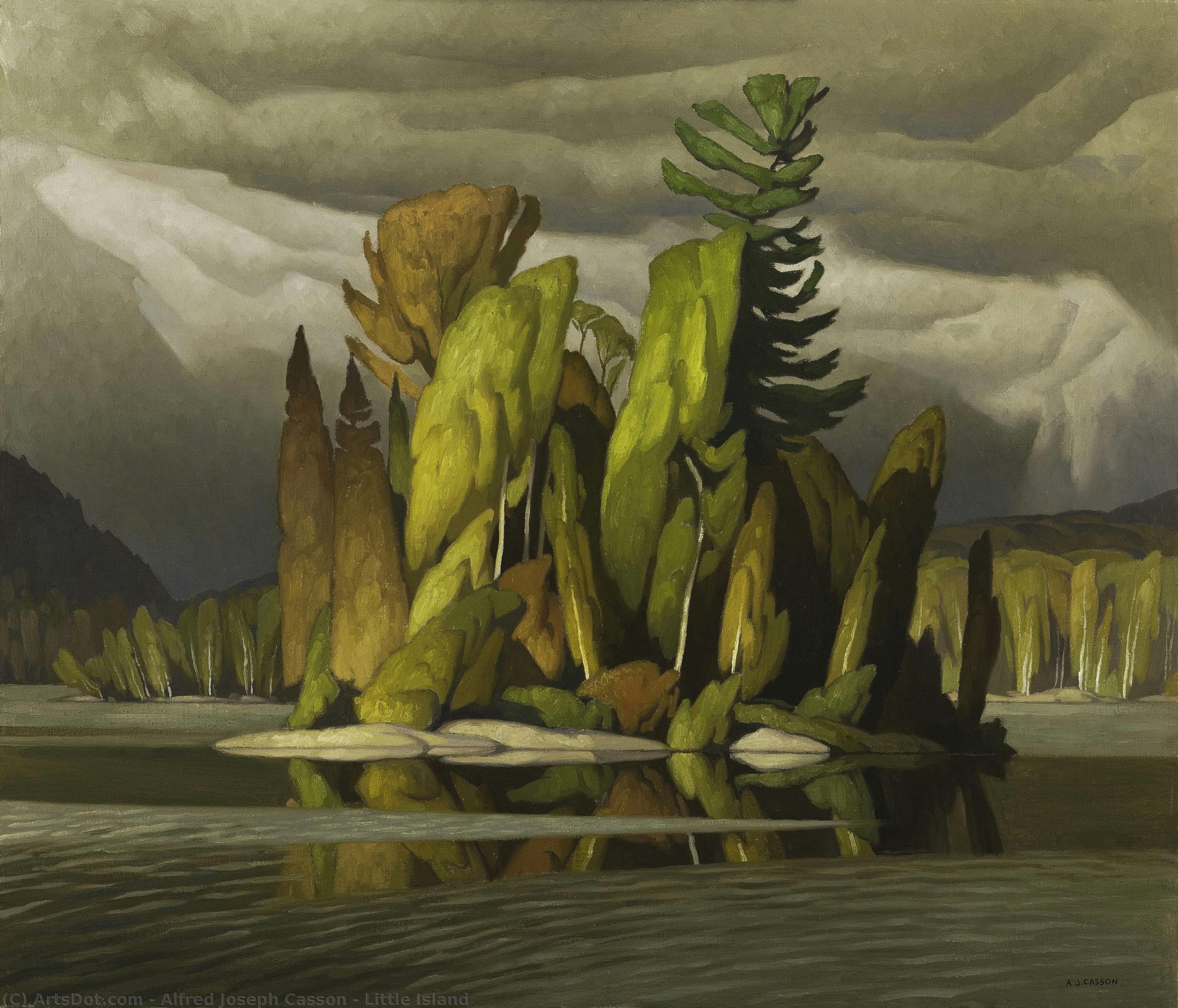
In the quietude of Little Island, created in 1965 by the esteemed Canadian master Alfred Joseph Casson, we find ourselves transported to a moment of profound stillness. The painting serves as a window into a secluded world, where a solitary patch of earth rests peacefully amidst the gentle ripples of a lake or river. This is not merely a depiction of geography, but an invitation to pause and breathe alongside…


Alfred Joseph Casson: Mill at Cobaconk – Adaptace Alfred Casson byl kanadský malíř skupiny Seven, který se narodil roku 1898 v Torontu a jeho cestou začal mimo akademické prostředí, ale mezi praktickými nároky školení na Hamilton Technical School. Tento raný zážitek ho naučil pozornosti k detailům a porozumění vizuálním procesům – dovednostem, které později využil při překládání svého obrazového vidění na plátno. Už tyto počáteční zkušenosti byly podporovány formálními lekcemi…
Čtyři témata, která se v těchto originálech nejčastěji objevují, z nichž každé má svůj nejlepší příklad.
2 muzea, v nichž je umístěno nejvíce obrazů z této stránky.
| Muzeum | Město | Díla autora Alfred Joseph Casson | Obrazy z tohoto seznamu |
|---|---|---|---|
 McMichael Canadian Art Collection |
Vaughan | 8 | White Pine, Church and Graveyard, Shore Pattern |
 The Robert McLaughlin Gallery |
Oshawa | 1 | Old House - Parry Sound |
Vyberte si dekádu a prohlédněte si originál, který ji definuje.
Alfred Joseph Casson: Mill at Cobaconk – Adaptace Alfred Casson byl kanadský malíř skupiny Seven, který se narodil roku 1898 v Torontu a jeho cestou začal mimo akademické prostředí, ale mezi praktickými nároky školení na Hamilton Technical School. Tento raný zážitek ho naučil pozornosti k detailům a porozumění vizuálním procesům – dovednostem, které později využil při překládání svého obrazového vidění na plátno. Už tyto počáteční zkušenosti byly podporovány formálními lekcemi…
is a painting by A. J. Casson. The work was created about 1933. It captures a specific moment of stillness within the Canadian landscape, focusing on the quiet intersection of a steeple and the earth.
The artwork titled White Pine is an oil on canvas painting by the artist A. J. Casson. This specific work measures 76 x 101.3 cm. The creation of this piece is dated to about 1957.
In the quietude of Shore Pattern, we are invited into a sanctuary of light and stillness, where the boundary between the forest and the water dissolves into a rhythmic dance of nature. Painted in 1960 by the esteemed Canadian master Alfred Joseph Casson, this work serves as a profound meditation on the tranquility of the landscape. The composition draws the eye through a lush, verdant corridor of tall trees that…
White Pine (1957), McMichael Canadian Art Collection, Vaughan. Následují Church and Graveyard (1933) a Shore Pattern (1960).
59 let: dílo White Pine pochází z roku 1957 a Alfred Joseph Casson se narodil/a v roce 1898.
White Pine, Church and Graveyard, Shore Pattern, Little Island, Old House - Parry Sound, In The Village of Markham, Tom Thomson, Below Ragged Falls, Oxtongue River, Hillside near Nashville, Ontario a Mlýn u Cobaconku - Adaptace. Hodnocení výše uvádí rok a muzeum pro každé z nich.
Náš katalog obsahuje 14 děl umělce Alfred Joseph Casson z let 1924 až 1965.
Většinou v McMichael Canadian Art Collection (Vaughan) a The Robert McLaughlin Gallery (Oshawa). V tabulce muzeí výše jsou vypsány všechny.
V období 1930s: 3 z celkem 10 děl na této stránce vzniklo právě tehdy, z toho Church and Graveyard z nich.
Na této stránce je nejstarší dílo z Mlýn u Cobaconku - Adaptace (1924) a nejnovější z Little Island (1965).
Trees (4), Landscape (4) a Water (3) napříč 10 díly na této stránce.
Oil, u 6 z 10 děl na této stránce.
Canadian realism, podle originálů na této stránce.
White Pine, Church and Graveyard a Shore Pattern: muzeum McMichael Canadian Art Collection, Vaughan má v obsluze 8 děl z této stránky.


