Introduction
To step into the world of Neoclassicism is to enter a realm of profound order, where the chaotic emotions of the Rococo era are replaced by the serene dignity of antiquity. Imagine walking through a gallery where every brushstroke serves a higher purpose—to evoke the stoic virtues, the heroic sacrifices, and the balanced grace of ancient Greece and Rome. This was not merely an aesthetic shift; it was a cultural rebirth, a movement born from the Enlightenment's pursuit of reason, clarity, and moral integrity.
Emerging in the mid-18th century, Neoclassicism arose as a powerful reaction against the perceived frivolity of the aristocracy. As excavations at Pompeii and Herculaneum unveiled the buried splendors of the Roman world, artists felt a renewed calling to capture that lost grandeur. They sought to translate the architectural precision of Doric columns and the sculptural perfection of marble into the language of oil on canvas. Through disciplined compositions, a restrained palette, and an emphasis on linear clarity, these masters created works that functioned as visual manifestos for civic duty and intellectual rigor.
Today, these masterpieces remain deeply resonant. In an age often characterized by digital fragmentation, there is a timeless solace to be found in the structural permanence of Neoclassical art. These paintings do more than depict historical scenes; they capture the eternal struggle between passion and principle, offering a window into the human soul through the lens of idealized perfection. They remind us that beauty is most potent when it is anchored by truth and stability.
In the following curation, we invite you to journey through ten definitive works that embody this era's unparalleled sophistication. From the dramatic tension of revolutionary canvases to the quiet, luminous portraits of the elite, each selection represents a pinnacle of craftsmanship—a testament to an age when art sought to elevate humanity toward the sublime.
The Coronation of the Emperor and Empress - Jacques-Louis David
 The Coronation of the Emperor and Empress - Jacques-Louis David
To stand before Jacques-Louis David’s The Coronation of the Emperor and Empress is to feel the very pulse of history. It is a breathtaking moment frozen in time, where the heavy scent of incense and the shimmer of gold leaf seem to drift from the canvas itself. This monumental work earns its place among the top 10 masterpieces of the Neoclassical style through its unparalleled ability to transform political propaganda into pure, cinematic grandeur. David orchestrates a visual symphony of crimson velvets, imperial golds, and the solemn architecture of Notre-Dame, capturing the precise second Napoleon asserts his divine right to rule.
The painting’s enduring influence lies in its masterful command of scale and classical precision, inviting us to witness the birth of an empire. At OriginalUniqueArt, we believe such profound emotion should not be confined to museum halls. Our hand-painted oil reproductions meticulously preserve David's legendary brushwork and rich tonal range, allowing you to bring this era of imperial glory and Neoclassical splendor into your own private collection with authentic, museum-grade craftsmanship.
Mars and Venus - Nicolas Poussin
 Mars and Venus - Nicolas Poussin
In Mars and Venus , Nicolas Poussin captures a profound stillness, where the heavy, armored presence of the god of war meets the luminous, soft grace of the goddess of love. The gaze shared between these deities is not one of conflict, but of a transformative, quiet surrender. As part of our exploration into the Top 10 Masterpieces That Defined the Neoclassical Style Art Movement , this 1628 work serves as a masterclass in emotional equilibrium and classical restraint.
Poussin utilizes a sophisticated palette—the striking crimson of Venus’s drapery against a serene, sun-drenched landscape—to weave an allegory of love conquering strife. The playful intervention of Cupids adds a layer of psychological depth, reminding us of the delicate balance between passion and peace. For the discerning collector, integrating such a monumental work into a private residence does more than decorate a wall; it invites a sense of timeless order and intellectual calm. Displaying this masterpiece can transform a personal sanctuary into a space for profound reflection, echoing the harmonious ideals that define the very essence of Neoclassicism.
Andromache Mourning Hector - Jacques-Louis David
 Andromache Mourning Hector - Jacques-Louis David
In Jacques-Louis David’s 1783 masterpiece, Andromache Mourning Hector , the viewer is immediately drawn to the breathtakingly subtle tonal gradations and the sculptural clarity of the figures. To observe this work is to witness the transition from Rococo decadence to Neoclassical austerity; notice how the light falls across the marble-like skin of the fallen Hector, rendered with an anatomical precision that feels almost tactile. David utilizes a masterful application of chiaroscuro , directing the eye toward the raw, emotional epicenter: the sorrowful face of Andromache as she cradles her son amidst the tragedy of Troy.
This painting stands as a pillar of the Neoclassical movement, defining the era through its heroic gravity and disciplined brushwork. At OriginalUniqueArt.com, we believe such profound history deserves more than a flat digital image. Our hand-painted oil reproductions are meticulously crafted to preserve this very essence—capturing the visible brushstrokes, the depth of the pigment, and the three-dimensional texture that allows the heavy atmosphere of grief to breathe within your own collection. We bring the soul of the Académie Royale into the modern home, ensuring the monumental dignity of David's legacy remains a tangible reality.
Jacobus Blauw - Jacques-Louis David
 Jacobus Blauw - Jacques-Louis David
Imagine stepping into a quiet, sun-drenched study where the frantic energy of the French Revolution fades into a profound, scholarly stillness. In Jacques-Louis David’s 1795 masterpiece, Jacobus Blauw , we encounter more than a mere portrait; we enter a moment of pure Enlightenment contemplation. The air feels heavy with the weight of intellect, captured through David's masterful use of light and a serene, blue-dominated palette that evokes deep stability.
As one of the top 10 masterpieces defining the Neoclassical style, this work stands as a pillar of the movement’s rejection of Rococo excess. By focusing on the dignified, writing figure of Blauw—flanked by symbols of erudition like leather-bound books—David champions the virtues of reason and moral clarity. The precision of his brushwork and the balanced composition serve as a visual manifesto for an era seeking order amidst chaos. Bringing such a piece into a modern home does more than decorate a wall; it introduces a sense of timeless permanence and intellectual grace, inviting a much-needed moment of reflection and serenity into our contemporary lives.
Portrait of Gaspar Mayer - Jacques-Louis David
 Portrait of Gaspar Mayer - Jacques-Louis David
Step into the quietude of a late 18th-century study, where the air is heavy with the scent of aged parchment and the profound stillness of intellectual pursuit. In Jacques-Louis David’s Portrait of Gaspar Mayer , we encounter more than a mere likeness; we witness the very soul of the Neoclassical movement—a period defined by an unwavering devotion to reason, order, and dignified restraint. As your eyes wander across the meticulous textures of Mayer’s crimson jacket and the soft, scholarly shadows cast upon scattered volumes, you feel the pulse of the Enlightenment.
This masterpiece earns its place among the greatest Neoclassical works through David's unparalleled ability to marry technical precision with emotional gravity. The balanced composition and cool, luminous palette evoke a sense of stability amidst the historical turbulence of post-Revolutionary France. To possess such a work in a modern interior is to invite a sense of timeless serenity and intellectual depth into one’s home, transforming a living space into a sanctuary of cultured reflection and enduring grace.
Self-Portrait - Jacques-Louis David
 Self-Portrait - Jacques-Louis David
What if I told you that Self-Portrait by Jacques-Louis David was born from a moment of profound introspection—a quiet defiance against the decorative excesses of the past? This masterpiece does not merely capture a likeness; it serves as a psychological manifesto of the Neoclassical era. In this work, David strips away the frivolous ornamentation of the Rococo, replacing it with a sculpted clarity and a muted, earthy palette that commands respect through restraint.
Its inclusion in our selection of the Top 10 Masterpieces That Defined the Neoclassical Style is essential, as it embodies the movement's core values: dignity, structural precision, and an unwavering commitment to classical ideals. The artist’s gaze, steady and intellectually charged, invites us into a world where light and shadow define character rather than mere decoration.
At OriginalUniqueArt.com, we believe such profound history should not be confined to the halls of the Uffizi. Imagine this commanding presence gracing your study or private library, transforming a simple wall into a sanctuary of intellectual prestige. Bringing this piece into your home is more than decor; it is an invitation to live amidst the enduring strength of the Old Masters.
Marat Assassinated - Jacques-Louis David
 Marat Assassinated - Jacques-Louis David
In Marat Assassinated by Jacques-Louis David, one is immediately struck by the haunting stillness that follows a moment of profound violence. The painting captures the French Revolutionary leader in a state of tragic, quiet dignity; though his life has been extinguished, his gaze—and the papers clutched in his hand—suggest an unfinished mission. This masterpiece of the Neoclassical style transcends its 1793 historical context, offering a universal mirror of human vulnerability and the heavy cost of conviction.
David masterfully employs a muted, somber palette, where the stark whites of the linens contrast with the visceral, crimson wound, creating a psychological depth that is both unsettling and deeply moving. The composition rejects Rococo excess for a disciplined, sculptural clarity that commands respect. For the discerning collector, integrating such an emotionally charged work into a private study or gallery space can transform a room into a sanctuary for profound reflection. It serves as a powerful focal point, inviting guests to contemplate the intersection of heroism, sacrifice, and the enduring weight of history.
Christ on the Cross - Jacques-Louis David
 Christ on the Cross - Jacques-Louis David
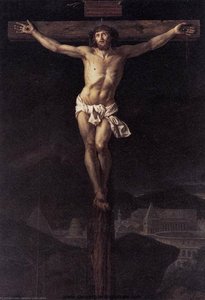
In Christ on the Cross by Jacques-Louis David, there is a gaze that follows you—not with judgment, but with profound understanding . Executed in 1782, this masterpiece serves as more than a religious icon; it is a mirror reflecting the spiritual and social anxieties of a France on the precipice of revolution. David eschews the frivolous ornamentation of the Rococo era, instead employing a rigorous, sculptural precision inspired by Michelangelo to render Christ’s physical suffering and divine grace.
The composition is anchored by an austere, pyramidal structure, where luminous skin tones and meticulous anatomical detail emerge from deep, dramatic shadows. As you stand before this work, the interplay of light and shadow evokes a sense of quiet prestige and monumental gravity. This painting does not merely depict a moment in history; it invites you into a meditation on sacrifice and resilience. Now, imagine that solemn gaze in your own space. Not watching you, but reminding you : you are seen. You are part of this enduring story of human emotion and classical beauty.
Farewell to Socrates by his wife Xanthippe - Jacques-Louis David
 Farewell to Socrates by his wife Xanthippe - Jacques-Louis David
Before Jacques-Louis David became the definitive painter of the French Revolution, he was a young scholar immersed in the intellectual fervor of Rome, seeking to capture the very soul of antiquity. In Farewell to Socrates by his wife Xanthippe , David achieved a monumental conceptual leap, moving away from Baroque theatricality toward a profound, Stoic stillness. The canvas presents a masterclass in Neoclassical restraint; through a sophisticated use of chiaroscuro, David illuminates the tender, somber moment where Xanthippe cradles their child, contrasting the innocence of new life against Socrates’ resolute acceptance of his impending death.
The technical precision—the smooth, deliberate brushwork and the rigorous adherence to classical balance—transforms a private domestic tragedy into a universal meditation on virtue. This painting does more than depict history; it commands a sense of moral gravity. For the discerning collector, such a masterpiece serves as an anchor of intellectual depth. Integrating a work of this caliber into a modern home office or study fosters an atmosphere of focused contemplation and sophisticated resilience, mirroring the unwavering strength of the philosopher himself.
The Lictors Returning to Brutus the Bodies of his Sons - Jacques-Louis David
 The Lictors Returning to Brutus the Bodies of his Sons - Jacques-Louis David
In The Lictors Returning to Brutus the Bodies of his Sons by Jacques-Louis David, there is a heavy, palpable silence that follows you—not with judgment, but with a profound, somber understanding . This masterpiece does not merely depict a historical tragedy from Roman antiquity; it acts as a mirror to the human soul, reflecting the agonizing tension between private grief and public duty.
David employs a masterful use of tenebrism , where stark, dramatic light pierces through deep shadows to illuminate the rigid, stoic posture of Brutus. The palette is restrained, favoring monochromatic tones of grey, earth, and bone, which heightens the emotional gravity of the scene. As you observe the geometric precision of the architectural elements and the heavy folds of drapery, you feel the weight of the Republic's sacrifice. Its place among the top 10 masterpieces that defined the Neoclassical style is a testament to its power to make the invisible struggle of conscience visible. Now, imagine this profound gravity in your own space—not watching you, but reminding you : even in our darkest moments, there is a monumental strength to be found.
Conclusion
As the light fades on our journey through the Neoclassical era, we are reminded that these masterpieces are far more than mere relics of a bygone age; they are living, breathing presences that continue to pulse with the same clarity, order, and profound human emotion that first captivated the world centuries ago. To stand before a work of such disciplined beauty is to experience a timeless dialogue between history and the present moment, a connection that transcends the canvas to touch the very soul of our contemporary aesthetic.
At OriginalUniqueArt.com , we believe that this enduring legacy should not be confined to the silent halls of museums, but rather integrated into the spaces where life unfolds. We serve as a dedicated creative partner for interior designers, architects, and hospitality visionaries who seek to infuse hotels, private villas, and refined estates with a sense of historical gravity and grace. Whether you are curating a bespoke multi-panel installation for a grand foyer or seeking a single, commanding portrait to anchor a study, our atelier provides the bridge between historical reverence and modern luxury.
Through our meticulous hand-painted oil reproductions, we offer more than just decor; we provide the opportunity to transform any architectural project into an enduring artistic statement. From professional digital mockups that allow you to visualize a composition within your specific design palette to custom commissions that reimagine classical motifs for a modern setting, our commitment is to authenticity and craftsmanship. We invite you to explore our full collection and discover how the structured elegance of Neoclassicism can become the heartbeat of your next extraordinary space.