

Introduction
There is a profound, quiet intimacy found in the stroke of a graphite pencil—a medium that requires no grand gesture, only the delicate dance of carbon against paper. To witness a true masterpiece rendered in graphite is to observe a masterclass in restraint; it is where light is not merely painted, but coaxed from the shadows through meticulous layering and the subtle manipulation of pressure. While we often gravitate toward the vibrant, sweeping textures of oil on canvas, it is within the monochromatic realm of pencil that the very essence of form, soul, and atmosphere is most purely distilled.
Historically, the evolution of graphite has mirrored the evolution of human perception itself. From the early sketches of Renaissance masters capturing the anatomical precision of the human spirit to the hyper-realistic triumphs of the modern era, the pencil has served as the fundamental tool for the artist’s most private contemplations. These works were often born in the quiet solitude of a studio, far from the public eye, serving as the raw, unadorned blueprints of art history. They represent moments of pure discovery, where the artist grapples with the stark duality of black and white to simulate the infinite complexities of the visible world.
Today, these legendary works remain deeply resonant because they strip away the distraction of color, forcing us to confront the raw emotion of the subject. Whether it is the haunting depth of a portrait's gaze or the architectural grandeur of a landscape rendered in silver-grey tones, graphite possesses an unparalleled ability to evoke nostalgia and timelessness. These pieces do not just depict reality; they capture the weight of a moment and the texture of a memory.
As we journey through this curated selection, prepare to encounter ten transformative works that redefined the boundaries of what a simple pencil could achieve. We will explore the technical brilliance and emotional depth of pieces that transitioned from mere studies into eternal icons, forever altering the trajectory of fine art.
Salisbury cathedral - John Constable
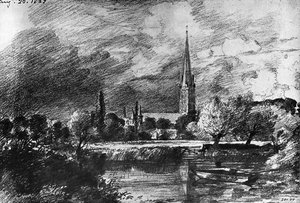 Salisbury cathedral - John Constable
In Salisbury Cathedral , John Constable transcends the boundaries of a mere sketch, inviting us into a world where architectural grandeur meets the quiet pulse of nature. This monochromatic masterpiece stands as a cornerstone in our selection of the top 10 legendary graphite pencil masterpieces because of its profound ability to evoke the sublime through nothing more than light and shadow. Through meticulous hatching and delicate line work, Constable captures the soaring Gothic spire not just as stone, but as a symbol of spiritual aspiration rising from a tranquil, riverbank landscape.
The artwork’s refined monochrome palette offers a timeless elegance that remains incredibly relevant for contemporary interior design. Its ability to introduce texture, depth, and a sense of historical reverence makes it an exquisite focal point for sophisticated homes or luxury hospitality spaces, seamlessly bridging the gap between 19th-century Romanticism and modern minimalist aesthetics. To behold this work is to experience a moment of pure, contemplative stillness, where the interplay of graphite tones creates a lasting emotional resonance that continues to inspire collectors worldwide.
Girl Kneeling in Front of a Cradle - vincent willem van gogh
 Girl Kneeling in Front of a Cradle - vincent willem van gogh
In the quiet, monochromatic depths of "Girl Kneeling in Front of a Cradle" by Vincent van Gogh , we encounter a sanctuary of domestic devotion that transcends the simple boundaries of a sketch. While the world celebrates Van Gogh for his explosive, sun-drenched oils, this 1883 graphite masterpiece earns its place among the top legendary pencil works through its profound, introspective intimacy. It is a triumph of expressive linework , where rhythmic hatching and energetic strokes breathe life into the textures of wood, fabric, and hair, creating a palpable sense of maternal reverence.
This work is indispensable to our collection because it captures the raw, emotional heartbeat of the artist's early period—finding extraordinary beauty in the humble rituals of care. The piece possesses a sophisticated, grounded warmth that serves as a soulful focal point for any curated space. At OriginalUniqueArt.com, we believe in democratizing such profound beauty; through our meticulous hand-painted oil reproductions, you can bring this transformative, historical presence into your own home, office, or private gallery, preserving the master's legacy within your modern interior.
Studies of a horse - Leonardo da Vinci
 Studies of a horse - Leonardo da Vinci
To gaze upon Studies of a Horse by Leonardo da Vinci is to witness the very heartbeat of the Renaissance captured in graphite. At OriginalUniqueArt.com, we believe in democratizing such profound beauty, ensuring that the raw, intellectual energy of the Old Masters is never confined to museum archives. This work earns its place among the top ten legendary graphite masterpieces through its unparalleled fusion of scientific inquiry and poetic grace. It is not merely a sketch; it is a rhythmic exploration of anatomy, where every delicate line and subtle hatch mark reveals Leonardo’s obsession with the mechanics of life.
The piece transcends simple illustration, offering a masterclass in sfumato through tonal gradations that breathe volume into muscle and sinew. For the modern connoisseur, these studies offer a sophisticated, academic aesthetic that brings a sense of historical gravity and intellectual depth to any contemporary space. Whether adorning a private study or a grand hotel lobby, the transformative presence of Da Vinci’s meticulous vision can be brought into your own collection through our high-fidelity, hand-painted oil reproductions, allowing you to live alongside the genius of history.
Houses by the Sea - Claude Monet
 Houses by the Sea - Claude Monet
Before the vibrant explosions of color that defined his career, Claude Monet captured the soul of the coast through the quiet, rhythmic language of graphite. In Houses by the Sea (1864), we witness a master in the making, using delicate pencil strokes to orchestrate a dance of light and shadow. There is a cinematic stillness here; the way the textured hatching mimics wind-swept grass and the soft, diffused light clings to the coastal architecture evokes a profound sense of nostalgia.
Monet’s mastery of tonal range—moving from deep, velvety blacks to luminous, paper-white highlights—transforms a simple architectural study into an atmospheric journey. This piece does not merely depict buildings; it captures the ephemeral breath of the seaside. For the discerning collector, integrating such a work into a contemporary interior offers more than mere decoration. It introduces a meditative focal point, a window into the dawn of Impressionism that invites reflection and brings a sophisticated, tranquil energy to any curated space.
Standing pair of Lovers, Seen from the Side - Gustav Klimt
 Standing pair of Lovers, Seen from the Side - Gustav Klimt
In the quiet, evocative lines of Gustav Klimt’s “Standing Pair of Lovers, Seen from the Side,” we encounter a profound exploration of human connection that transcends mere sketchwork. As one of the most poignant entries in our collection of legendary graphite pencil masterpieces , this 1908 work strips away the distractions of color to focus entirely on the tender geometry of two souls in embrace. The monochrome palette creates a sanctuary of intimacy, where the subtle interplay of light and shadow reveals a delicate tension between protection and vulnerability.
Klimt’s technical brilliance lies in his ability to breathe life into simple materials; through meticulous hatching, he renders the tactile reality of skin and drapery with an almost sculptural depth. This piece remains a vital cultural talking point in modern curated spaces, as its Art Nouveau motifs—swirling, organic patterns that symbolize the interconnectedness of life—resonate deeply with today's desire for soulful, organic aesthetics. For the discerning collector, this work is not merely a drawing, but a timeless narrative of affection captured through the masterful precision of graphite.
Woman with Hat, Coat and Pleated Dress - vincent willem van gogh
 Woman with Hat, Coat and Pleated Dress - vincent willem van gogh
Before the world knew him for the sun-drenched yellows of Arles, Vincent van Gogh was a master of shadow and silver. In 1882, long before his signature palette exploded, he produced "Woman with Hat, Coat and Pleated Dress," a work that proves his genius was forged in the quiet intensity of graphite. This piece stands as a cornerstone of our list of the Top 10 Legendary 'Graphite Pencil' Masterpieces That Changed Art Forever , showcasing a profound technical leap in how texture can substitute for color.
Through rhythmic hatching and cross-hatching , Van Gogh breathes life into the heavy drape of a coat and the delicate, structural pleats of a dress. There is no pigment here, yet one can almost feel the cool Parisian air and hear the rustle of fabric against the pavement. The energetic, spontaneous lines create a palpable sense of movement, capturing a fleeting moment of urban solitude. For the modern professional, such focused, monochromatic mastery serves as a profound inspiration; hanging a work of this caliber in a home office or study fosters an atmosphere of deep concentration, quiet prestige, and the disciplined pursuit of excellence.
El Vagabundo - Pablo Picasso
 El Vagabundo - Pablo Picasso
In the somber, charcoal-toned depths of El Vagabundo by Pablo Picasso , we encounter a profound meditation on the human condition. The monochrome palette, dominated by heavy graphite shadows and silvery grays, establishes an atmosphere of quiet introspection and melancholic beauty. This mastery of light and shadow—achieved through dense hatching and expressive line work—is precisely why this piece stands as one of the Top 10 Legendary 'Graphite Pencil' Masterpieces That Changed Art Forever . Picasso eschews color to focus on the raw, tactile texture of a life lived on the margins, using the stark contrast of the medium to evoke themes of solitude and resilience.
For the discerning interior designer or collector, integrating such a powerful monochrome work can anchor a modern living space with architectural strength. The piece’s neutral, dramatic tones are perfect for curating an emotional lighting scheme in a minimalist study or a sophisticated dining room, providing a focal point that invites silent dialogue. Its presence adds a layer of historical gravity and understated luxury, transforming a contemporary wall into a gallery-grade sanctuary of thought.
Bench with Three Persons - vincent willem van gogh
 Bench with Three Persons - vincent willem van gogh
Before the world witnessed the celestial, swirling golds of The Starry Night , there existed a Vincent van Gogh of profound stillness and quiet observation. Bench with Three Persons (1882) is a breathtaking testament to this era of contemplative mastery. In this graphite pencil work, Van Gogh captures a universal moment of human connection—three figures resting beneath a protective canopy, their identities softened by the delicate dance of hatching and cross-hatching . It belongs among the greatest graphite masterpieces because it reveals the artist's foundational ability to find spiritual resonance in the mundane through rhythmic, expressive lines and velvety tonal depths.
The drawing does not shout; it invites you to lean in and share in its tranquil, monochromatic atmosphere. At OriginalUniqueArt.com, we believe such evocative emotions should transcend museum walls. Our master artists meticulously recreate the tactile soul of these early works, using hand-painted techniques that preserve every expressive pencil stroke and silver-gray shadow. Bringing a faithful reproduction of this Van Gogh treasure into your home allows you to curate a space of timeless peace and historical elegance.
Untitled (95) - Pablo Picasso
 Untitled (95) - Pablo Picasso
In Untitled (95) by Pablo Picasso, the graphite medium transcends mere sketching to become a visceral exploration of structural tension and emotional depth. Created in 1936 amidst the shadows of the Spanish Civil War, this masterpiece utilizes a complex geometry of interlocking forms to evoke a sense of profound psychological weight. Picasso employs bold, angular lines and meticulous cross-hatching to define three intertwined female figures, whose bodies overlap in a tightly compressed tableau that denies traditional spatial depth.
The composition’s balance is found not in symmetry, but in the rhythmic interplay of organic curves and sharp, fractured edges. This deliberate use of fragmented shapes creates a hauntingly beautiful equilibrium, where the muted palette of blue-gray and charcoal tones grounds the work in a somber, atmospheric stillness. For the discerning collector, this piece exemplifies how the raw energy of graphite can mirror the principles of modern minimalist design—using stripped-back, essential forms to command a room. It remains a legendary pillar of the graphite pencil tradition, offering a timeless aesthetic that resonates within any sophisticated, contemporary interior.
Fisherman with Sou'wester, head - vincent willem van gogh
 Fisherman with Sou'wester, head - vincent willem van gogh
To encounter Fisherman with Sou'wester, head is to witness the raw, unadorned soul of Vincent van Gogh before the vibrant explosions of his later color palettes. This 1883 graphite masterpiece serves as a profound study in texture and human resilience, capturing a moment of quiet, weathered dignity that remains unparalleled in the history of pencil drawing.
What secures its place among the world’s most legendary graphite works is Van Gogh’s virtuosic use of hatching and cross-hatching. Through these meticulous strokes, he breathes life into the heavy fabric of the sou'wester hat and the rugged, salt-sprayed skin of his subject. The monochromatic depth creates a dramatic interplay of light and shadow, evoking an atmosphere of maritime solitude and contemplative sorrow.
For the discerning collector or interior designer, this piece offers more than mere historical significance; it provides a sophisticated anchor for refined spaces. Its tonal range and organic textures bring a sense of timeless, academic prestige to modern luxury interiors, embodying a legacy of emotional intelligence and the enduring beauty of the human spirit captured in silver and lead.
Conclusion
As we draw the curtain on this journey through shadow and light, we are reminded that these graphite masterpieces are far more than mere historical artifacts preserved in silent galleries. They are living, breathing presences—vibrant echoes of human emotion that transcend the centuries to meet us exactly where we are. Each delicate line and meticulously rendered gradient serves as a bridge between the soul of the master and the heart of the modern admirer, proving that the dialogue between artist and observer is never truly broken.
To hold these works in one's space is to invite a timeless conversation into the home. Whether it is the profound depth of a Renaissance study or the fleeting energy of a modern sketch, these drawings continue to shape our interiors and inspire our deepest creative impulses, reminding us that even the simplest medium can capture the infinite complexity of the human experience. We invite you to continue this exploration and find your own connection within our full collection , where every stroke remains a testament to the enduring power of art to move, to haunt, and to inspire.


