Decoding Dalí: The Paranoiac-Critical Method and His Secret Symbols
Unveil the mysteries of Salvador Dalí. Explore his revolutionary Paranoiac-Critical Method and decode the profound psychological symbols within his surrealist masterpieces through an expert art-historical lens.
A Life Submerged in Dreams: The World of Salvador Dalí Salvador Domingo Felipe Jacinto Dalí i Domènech, a name synonymous with surrealism, was born on May 11, 1904, in the sun-drenched town of Figueres, Spain. His existence was destined to be anythin...
To step into the world of Salvador Dalí is to abandon the safety of the waking mind and surrender to a landscape where logic dissolves like wax under a summer sun. Born in 1904 in the sun-drenched, evocative town of Figueres, Spain, Dalí’s very existence was destined to be an exploration of the subconscious rendered visible through startling imagery and technical brilliance. His life, much like his art, was meticulously crafted as a performance, deeply influenced by early traumas—most notably the shadow of his deceased older brother, also named Salvador, a loss that would permeate his work with themes of duality and replacement.
Dalí did not merely join the Surrealist revolution; he became its most recognizable icon. While his early training at the San Fernando Academy of Fine Arts in Madrid introduced him to the precision of Renaissance masters and the light of the Impressionists, it was his journey to Paris in 1926 that truly ignited his spirit. Immersed in the heart of the avant-garde, he found kinship with figures such as André Breton, Pablo Picasso, and Joan Miró. He emerged not just as a painter, but as an architect of dreams, capable of translating the most ephemeral flickers of the human psyche into enduring, tangible masterpieces that challenge our very perception of time, space, and identity.
The Paranoiac-Critical Method: Navigating the Logic of Irrationality
The paranoiac-critical method is a surrealist technique developed by Salvador Dalí in the early 1930s. He employed it in the production of paintings and other artworks, especially those that involved optical illusions and other multiple images. The t...
At the core of Dalí’s revolutionary contribution to art history lies a technique as provocative as his imagery: the paranoiac-critical method. Developed in the early 1930s, this was not merely a stylistic choice but a profound psychological tool designed to induce and then analyze hallucinatory states. Unlike the passive "automatic writing" of other Surrealists, Dalí’s method involved an active, systematic process of irrational knowledge. He sought to invoke a state of paranoia—the unsettling fear that one's reality is being manipulated or controlled—to unlock the hidden connections between seemingly unrelated objects.
This method allowed for the creation of multiple images and optical illusions, where a single form could be perceived as two or more distinct entities. By utilizing this "spontaneous method of irrational knowledge," Dalí could present the results of delirious phenomena with a startling, almost clinical objectivity. The result is a deconstruction of identity; through his eyes, subjectivity becomes the primary aspect of the artwork. He invites the viewer to participate in the hallucination, making the act of looking an intellectual and psychological journey into the very mechanics of perception itself.
A Language of Shadows: Decoding Recurring Symbols and Motifs
A Surrealist Echo: Decoding Dali’s ‘Figure with Flag’ Salvador Dalí's “Figure with Flag,” an illustration for André Breton’s seminal 1968 publication, *Mad Mad Mad Minerva*, stands as a testament to the enduring legacy of Surrealism and its profound ...
To gaze upon a Dalí canvas is to read a complex, cryptic text where every element carries a weight of profound symbolic resonance. His work is a tapestry woven with recurring motifs that act as portals to his inner world. Consider the iconic melting clocks, which serve as a poignant meditation on the fluidity and decay of time, stripping away the rigid structures of the rational world. Or perhaps the presence of the starfish, often seen in works like Figure with Flag, symbolizing regeneration and the blurring of boundaries between organic life and inorganic form.
Dalí’s symbolism often touches upon the most intimate human anxieties and desires. He frequently employed imagery that suggested fragmentation and dissociation, reflecting the intellectual ferment of a post-war era marked by disillusionment. Even his use of landscape—the desolate, sun-bleached plains of Catalonia—serves as more than a backdrop; it is a psychological stage where shadows stretch into impossible shapes, mirroring the expansion of the subconscious mind. To decode Dalí is to recognize that no object is merely an object; each is a phantom, an extension of the subjective self waiting to be interpreted through the lens of the irrational.
The Landscape of the Subconscious: From Catalonia to the Dreamscape
A Descent into Dream Logic: Exploring Salvador Dalí’s “Mediumnistic-Paranoiac Image” “Mediumnistic-Paranoiac Image,” painted in 1935, stands as a cornerstone of Surrealist art and a testament to Salvador Dalí's unparalleled ability to translate the s...
The geography of Dalí’s imagination is deeply rooted in the physical world, specifically the rugged, luminous landscapes of his native Spain. The Catalan coast, with its stark cliffs and Mediterranean light, provides the foundational texture for much of his most profound work. In masterpieces such as Mediumnistic-Paranoiac Image, we see a beach landscape that is undeniably striking yet serves to delve into profound psychological territory. This setting becomes a canvas for the irrational, where the familiar topography of the earth is fractured by dream logic and distorted perception.
This transition from the real to the surreal is seamless in Dalí’s hands. He utilizes the vastness of these landscapes to create a sense of infinite space, allowing his bizarre imagery to float within a vacuum of existential contemplation. By anchoring his most unsettling hallucinations in recognizable, earthbound settings, he creates a tension that is uniquely disquieting. The viewer is caught between the comfort of the known landscape and the terror of the encroendo dream, making the act of viewing an immersive descent into the depths of the human psyche.
Technical Brilliance: The Intersection of Renaissance Mastery and Surrealism
Surrealism is an art and cultural movement that developed in Europe in the aftermath of World War I in which artists aimed to allow the unconscious mind to express itself, often resulting in the depiction of illogical or dreamlike scenes and ideas. I...
While his subject matter was radical, Dalí’s technique remained deeply rooted in the traditions of the Old Masters. He possessed a technical skill and precise draftsmanship that commanded respect even from those who found his themes repulsive. His approach to painting defies conventional realism by prioritizing a meticulously crafted illusion; he employed smooth, velvety brushstrokes and sophisticated glazing techniques—applying thin, translucent layers over opaque underlayers—to achieve a luminous, almost supernatural glow.
This mastery of light and shadow, reminiscent of the Renaissance, provided the necessary "reality" to make his distortions believable. By rendering impossible objects with such painstaking detail and accurate perspective, he forced the viewer to accept the dream as truth. This juxtaposition of hyper-realistic execution with illogical content is what gives his work its enduring power. He used the tools of the past—the precision of the academy and the depth of oil glazing—to build a bridge to the future of psychological expression, ensuring that his visions were not merely seen, but felt with a visceral, tactile intensity.
Legacy in Stone and Canvas: The Enduring Impact of Dalí’s Hallucinations
A Surreal Labyrinth: Stepping into Dalí’s Living Dream To enter the Dalí Theatre and Museum in Figueres is not merely to visit an exhibition, but to surrender oneself to a meticulously crafted hallucination. Located in the heart of the Spanish town w...
The legacy of Salvador Dalí extends far beyond the boundaries of the canvas, manifesting in a total environment of artistic expression. His final, most ambitious masterpiece, the Dalí Theatre and Museum in Figueres, stands as a self-portrait rendered in stone, glass, and theatrical illusion. This monumental structure is a labyrinth designed to disorient the rational mind, where architecture itself becomes an extension of his surrealist philosophy. It is a space where the boundaries between art and reality dissolve entirely, much like the themes found within his paintings.
Today, Dalí’s influence continues to resonate through the halls of museums and the private collections of connoisseurs worldwide. From the Reynolds Morse Foundation in Cleveland to the profound impact of his work on contemporary pop culture, his ability to challenge our perceptions of identity and existence remains unparalleled. He taught us that art is not merely a reflection of what we see, but an exploration of what we feel in the hidden, unmapped corners of our own minds. His life, submerged in dreams, remains a permanent testament to the transformative power of the human imagination.
For those seeking to bring the profound textures and emotional depth of historical masters into their own collections, explore our curated selection of hand-painted oil reproductions at OriginalUniqueArt.com.
Prozkoumejte 10 ikonických surrealistických děl od Dalího, Magritta a dalších. Objevte příběhy za obrazy plnými snů a podvědomí. Reprodukce obrazů nejvyšší kvality pro váš interiér na OriginalUniqueArt.com – inspirace a luxusní dekorace online!
Explore the profound depths of Surrealism with our expert guide. Discover the history, symbolism, and psychological mastery behind iconic works by Dalí and others. Perfect for art historians and collectors seeking a deep understanding of the dreamlike subconscious in fine art.
Master the complexities of Salvador Dalí’s genius. Explore an expert analysis of the Paranoiac-Critical Method and the profound symbolism within his Surrealist masterpieces for the discerning art collector.
Explore the captivating world of Salvador Dalí! Discover his surrealist masterpieces, profound connection to Freud's theories, and lasting impact on art & culture. A deep dive into a visionary artist.
Prozkoumejte 10 ikonických děl surrealismu od Dalího, Magritta a dalších. Objevte příběhy za snovými obrazy, techniky a inspiraci pro váš interiér. Reprodukce obrazů v nejvyšší kvalitě na OriginalUniqueArt.com.

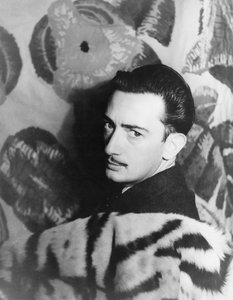 Salvador Dalí
 Figure with Flag. Illustration for 'Memories of Surrealism', circa 1971
 Mediumnistic-Paranoiac Image, 1935
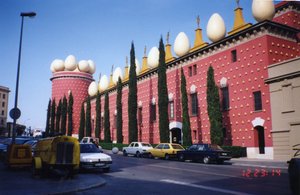 Dalí Theatre and Museum