The Genesis of Expressionism: A Revolt Against Convention
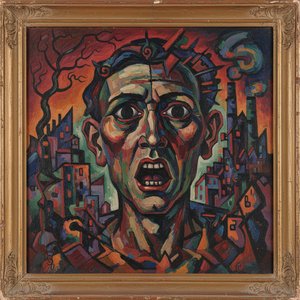 The Raw Emotion of Expressionism: A Revolution in 20th-Century Art
Explore the revolutionary world of Expressionism with . Discover key artists like Kirchner & Nolde, understand its emotional impact, and learn how to collect this influential art movement.
The dawn of the 20th century witnessed a seismic shift in artistic sensibilities, a rebellion against the established order that birthed Expressionism. More than just a style, it was a visceral reaction to the rapidly changing world – industrialization’s alienation, burgeoning psychological theories probing the depths of the human psyche, and the looming anxieties of a continent poised on the brink of war. Artists felt increasingly disconnected from traditional representation, finding it inadequate to convey the raw intensity of their inner experiences. The Impressionists had sought to capture fleeting moments of light and perception; Expressionists aimed for something far more profound – the articulation of emotional truth, even if that meant distorting reality itself. This wasn’t about *what* was seen, but *how* it felt. The movement didn't emerge from a vacuum, however. Romanticism’s emphasis on subjective experience and the Symbolists’ exploration of inner worlds laid crucial groundwork, but Expressionism took these ideas to an unprecedented extreme.
Color as Emotion: The Language of Inner Turmoil & Joy
 The Chromatic Spectrum of Feeling: Exploring Color & Emotion in Art History
Explore the fascinating relationship between color and emotion in art history. Discover how master artists used color to evoke feelings & cultural meanings, plus the psychology behind it all.
Central to understanding Expressionism is recognizing color not merely as a descriptive element, but as a potent carrier of emotion. Artists abandoned naturalistic palettes in favor of hues chosen for their psychological impact. Wassily Kandinsky, a pioneer of abstract art and a key figure within the *Der Blaue Reiter* group, theorized extensively about the spiritual resonance of color. He believed that each shade possessed an inherent emotional quality – blue evoking depth and spirituality, red signifying passion and energy, yellow representing exuberance but also potential instability. Mark Rothko, decades later, would push this exploration even further with his iconic Color Field paintings. His large-scale canvases, often featuring layered rectangles of intensely saturated color, aimed to create immersive experiences that bypassed rational thought and spoke directly to the viewer’s subconscious. Consider Red and Orange, a work where the very act of looking becomes an emotional encounter; the colors aren't depicting anything *but* feeling itself. This wasn’t simply about preference; it was a deliberate attempt to construct a visual language capable of expressing the inexpressible.
Distortion and Form: Conveying Subjective Reality
 Ernst Ludwig Kirchner
Ernst Ludwig Kirchner (1880-1938): A leading German Expressionist & Die Brücke founder. Explore his bold, emotive paintings of urban life, nudes, and landscapes – a powerful voice of early 20th-century art.
If color served as the emotional bedrock, distortion became the primary tool for dismantling conventional representation. Expressionist artists didn’t seek to replicate the external world faithfully; they aimed to project their internal states onto it. Figures were elongated, faces contorted, landscapes fractured – all in service of conveying a sense of unease, anxiety, or spiritual turmoil. Ernst Ludwig Kirchner, a leading member of *Die Brücke*, exemplifies this approach in his depictions of urban life. His paintings often feature angular figures and jarring perspectives that reflect the alienation and fragmentation of modern society. The streets aren’t rendered as places of beauty or comfort, but as claustrophobic spaces teeming with psychological tension. This deliberate rejection of academic realism wasn't arbitrary; it was a conscious effort to break free from the constraints of objective observation and embrace the power of subjective experience. The world, they argued, isn’t experienced as neat lines and perfect forms, but as a chaotic swirl of emotions and sensations.
Key Masters of Expressionism: Kirchner, Kandinsky, and Rothko
 Wassily Kandinsky
Discover Wassily Kandinsky (1866-1944), the pioneer of abstract art! Explore his vibrant expressionism, spiritual themes & Bauhaus legacy through stunning reproductions.
While Expressionism encompassed a diverse range of artists, certain figures stand out for their groundbreaking contributions. Ernst Ludwig Kirchner, with his raw depictions of Berlin street life, captured the anxieties of a rapidly modernizing world. His use of bold colors and distorted forms created a uniquely unsettling aesthetic that continues to resonate today. Wassily Kandinsky, driven by spiritual concerns and a fascination with music, pioneered abstract art, believing it held the key to unlocking deeper emotional truths. His compositions, often devoid of recognizable objects, are instead built upon the interplay of color, line, and form. Mark Rothko, though emerging later in the movement’s trajectory, became synonymous with Color Field painting. His monumental canvases, characterized by layered rectangles of saturated color, aimed to create immersive experiences that evoked profound emotional responses. Each artist, while distinct in their approach, shared a common goal: to express the inner life – its joys, sorrows, and anxieties – with uncompromising honesty.
The Enduring Legacy of Expressionism in Modern Art
Expressionism’s influence extends far beyond the early 20th century. Its emphasis on subjective experience paved the way for Abstract Expressionism in post-war America, where artists like Jackson Pollock and Willem de Kooning embraced spontaneous gesture and emotional intensity. The movement also profoundly impacted cinema, with films like *The Cabinet of Dr. Caligari* utilizing distorted sets and dramatic lighting to create a uniquely unsettling atmosphere. Even today, contemporary artists continue to draw inspiration from Expressionism’s bold colors, distorted forms, and unflinching exploration of the human condition. The legacy isn't simply about stylistic imitation; it’s about a fundamental shift in artistic priorities – a recognition that art’s primary purpose is not to replicate reality but to express the complexities of inner life. The willingness to confront difficult emotions, to embrace imperfection, and to prioritize subjective experience remains as relevant today as it was over a century ago.
Collecting Expressionism: Identifying Authentic Emotional Resonance
For the discerning collector, acquiring an Expressionist work is not merely purchasing an object; it’s investing in a powerful emotional encounter. Authenticity is paramount, of course, but equally important is identifying a piece that genuinely resonates with your own sensibilities. Look beyond the name and consider the artist's technique – the visible brushstrokes, the layering of paint, the intensity of color. Marc Chagall’s “Song of Songs IV” (1958), for example, showcases a vibrant watercolor capturing raw emotion & spiritual themes. Explore this Expressionist masterpiece's dynamic composition & symbolic depth. Consider the emotional impact of the work – does it evoke a sense of unease, joy, or contemplation? Does it speak to your own inner experiences? OriginalUniqueArt.com offers a curated selection of high-quality reproductions and original works, allowing you to explore this influential movement from the comfort of your home. Our team of art experts can provide personalized guidance, helping you navigate the complexities of the market and select pieces that align with your aesthetic vision. Ultimately, the most valuable Expressionist work is one that speaks directly to your soul.