

From Herbals to Healing: The Earliest Roots of Botanical Depiction
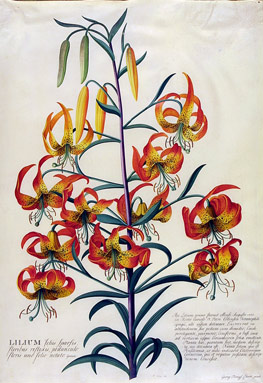 Wikipedia: Botanical illustration
Botanical illustration is the art of depicting the form, color, and details of plant species. They are generally meant to be scientifically descriptive about subjects depicted and are often found printed alongside a botanical description in books, m...
Before the advent of photography, the faithful rendering of plant life was not merely a pursuit of aesthetic beauty; it was an essential act of scientific documentation and, often, survival. The earliest botanical illustrations weren’t born in artist studios but within the practical needs of herbalism and medicine. Ancient civilizations – Egyptians, Greeks, Romans – meticulously recorded plants for their healing properties, culinary uses, and even ritualistic significance. These early depictions, found adorning papyrus scrolls and illuminated manuscripts, often prioritized clarity over artistic finesse. The Vienna Dioscurides, a stunningly preserved 6th-century copy of the Greek pharmacopoeia, exemplifies this focus; while beautiful in its own right, its illustrations served primarily as identification guides for apothecaries. The stylized forms and limited color palettes reflect a desire to convey essential characteristics rather than photorealistic detail. Similarly, medieval herbals, painstakingly crafted by monks within cloistered gardens, reveal a deep connection between observation, faith, and the natural world. These early works laid the foundation for a tradition where art and science were inextricably linked.
The Renaissance Bloom: Art, Science, and the Rise of Floral Still Life
 sydenham teast edwards
Explore the exquisite botanical art of Sydenham Teast Edwards (1768-1819). Welsh artist known for detailed floral paintings, including roses & lobelias. Discover his work!
The Renaissance sparked a renewed interest in classical learning, which extended to the study of botany. However, it was during the 17th and 18th centuries that botanical illustration truly blossomed into an art form. Flemish painter Jan van Kessel the Elder, descended from the renowned Brueghel family, epitomized this era’s meticulous approach. His floral still lifes weren't simply decorative; they were exercises in precise observation, capturing the delicate textures of petals, the intricate patterns of leaves, and even the subtle imperfections of insects that inhabited these botanical worlds. Van Kessel’s work reflects a growing scientific curiosity – an attempt to categorize and understand the natural world through detailed visual representation. This period also saw the rise of elaborate flower paintings commissioned by wealthy patrons, often imbued with symbolic meaning. Each bloom carried a specific connotation—roses for love, lilies for purity—transforming bouquets into coded messages. The demand for accuracy fueled the development of new techniques in watercolor painting and engraving, allowing artists to reproduce botanical specimens with unprecedented fidelity.
The Age of Exploration & Discovery: Documenting New Worlds Through Botanical Illustration
As European explorers ventured further afield, they brought back a wealth of previously unknown plant species. Botanical illustration became crucial for cataloging this biodiversity. Artists accompanied expeditions, risking life and limb to sketch and paint exotic flora in their natural habitats. These illustrations weren’t just scientific records; they were windows into distant lands, fueling curiosity and expanding the known world. The work was often challenging – artists had limited resources, harsh conditions, and a constant need for accuracy. The resulting images, however, are remarkable feats of observation and artistry. They provided vital information to botanists back home, enabling them to classify new species and understand their potential medicinal or economic value.
Victorian Precision: Scientific Accuracy and Aesthetic Sensibility in 19th-Century Art
 Victorian Botanical Painting: Science, Art & Aesthetic Sensibility
Explore the exquisite world of Victorian botanical art! Discover the science & artistry behind stunning floral illustrations by Gould, Muckley & more. Learn about collecting, value & investment at OriginalUniqueArt.
The 19th century witnessed a shift towards even greater scientific rigor in botanical illustration. Artists were increasingly employed by botanists and explorers to document newly discovered plant species from around the globe. Robert Havell Jr., renowned for his exquisite illustrations of North American wildflowers, exemplifies this trend. His work on John Torrey’s *Flora of North America* set a new standard for botanical accuracy and artistic quality. Havell's watercolors weren’t merely copies of nature; they were interpretations informed by careful study of plant morphology—the structure and form of plants. The precision extended to the composition itself, often showcasing multiple stages of a plant’s life cycle or highlighting key identifying features. This era also saw the emergence of botanical illustration as a distinct profession, with artists undergoing formal training in both art and botany. The goal was no longer simply to create beautiful images but to produce scientifically valuable records that could be used for taxonomic classification.
Women Artists and the Legacy of Botanical Painting
 emma beach thayer
Emma Beach Thayer (1849-1924) was an American artist renowned for her detailed floral paintings & scientific studies of camouflage in nature, notably for 'Concealing Coloration in the Animal Kingdom.' Discover her unique botanical and zoological artw
While historically dominated by men, the field of botanical illustration also saw remarkable contributions from women artists. Mary Morris Vaux Walcott, often dubbed the “Audubon of Botany,” dedicated her life to documenting North American flora for the Smithsonian Institution. Her watercolors are celebrated for their exquisite detail and scientific accuracy, capturing the delicate beauty of wildflowers with unparalleled skill. Marianne North, a prolific Victorian artist, traveled extensively around the world, painting over 800 botanical subjects in oil on location. She fearlessly ventured into remote regions, documenting plants that had never before been scientifically illustrated. Her paintings, now housed at Kew Gardens, offer a unique glimpse into the flora of diverse ecosystems. Jane Loudon, though less widely known, produced detailed illustrations for her influential gardening books, demonstrating a keen eye for botanical detail and a passion for wildflowers.
Collecting Botanical Art Today: Value, Investment, and Appreciation
Today, botanical art continues to captivate collectors and enthusiasts alike. Original works by renowned artists like Walcott, North, and Havell command high prices in the art market. However, beautiful reproductions are readily available, allowing a wider audience to appreciate these stunning images. The value of botanical art lies not only in its aesthetic appeal but also in its historical significance. These illustrations offer a glimpse into the past—a time when art and science were inextricably linked. Collecting botanical prints or paintings is an investment in both beauty and knowledge. When selecting pieces, consider the artist’s reputation, the rarity of the subject matter, and the overall quality of the artwork. Whether you are a seasoned collector or simply appreciate the beauty of nature, botanical art offers a timeless source of inspiration and wonder. At OriginalUniqueArt.com, we offer a curated selection of museum-quality reproductions, allowing you to bring the flourishing canvas into your home.



