Introduction: The Power of Emotional Resonance in Art
From the earliest cave paintings to the most contemporary installations, art has always been a conduit for emotion. But certain works transcend mere representation; they possess an undeniable power to stir something profound within us – a sense of awe, unease, or even spiritual awakening. This capacity stems not simply from subject matter, but from the masterful manipulation of visual elements, particularly those that evoke drama and intensity. The ability to connect with art on this deeper level is often rooted in understanding how artists have historically harnessed light, shadow, composition, and narrative to create works that resonate across centuries.
Chiaroscuro: Mastering Light and Shadow for Dramatic Effect
In art, chiaroscuro (English: kee-AR-ə-SKOOR-oh, -SKURE-, Italian: [ˌkjaroˈskuːro]; lit. 'light-dark') is the use of strong contrasts between light and dark, usually bold contrasts affecting a whole composition. It is also a technical term used by ...
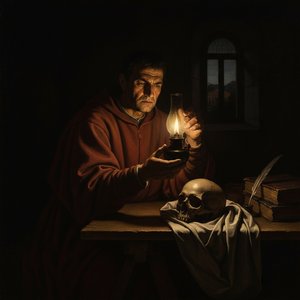
At the heart of much dramatic art lies a technique known as chiaroscuro – an Italian term meaning ‘light-dark.’ More than just a method of depicting illumination, chiaroscuro is a powerful tool for sculpting form, creating atmosphere, and directing the viewer’s gaze. Originating in Renaissance drawing, where artists used colored paper to create subtle gradations of tone, it blossomed into a full-fledged painting technique during the 16th and 17th centuries. Leonardo da Vinci's pioneering use of sfumato – a delicate blurring of edges – laid the groundwork for this approach, but it was artists like Caravaggio who truly revolutionized its application. By employing stark contrasts between intensely lit areas and deep shadows, they didn’t merely represent light; they *created* it on the canvas, imbuing their scenes with a palpable sense of realism and emotional weight. The effect isn't simply visual; it’s psychological. Shadows conceal as much as they reveal, hinting at hidden depths and unspoken narratives.
The Baroque Period: A Flourishing of Dramatic Expression
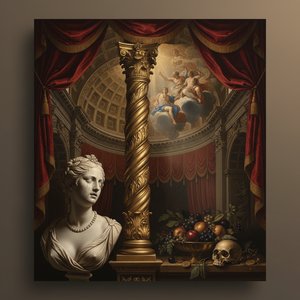 The Dramatic Flourish of Baroque Art: History, Characteristics & Enduring Influence
Explore the dramatic world of Baroque art! Discover its history, defining characteristics, and lasting influence on painting, sculpture & architecture. A comprehensive guide for art lovers.
While the seeds of dramatic art were sown during the Renaissance, it was the Baroque period (roughly 1600-1750) that witnessed its full flowering. Born from a desire to inspire religious fervor and evoke powerful emotions in response to the Counter-Reformation, Baroque artists embraced grandeur, dynamism, and theatricality. This era saw a shift away from the balanced compositions of the High Renaissance towards more complex, asymmetrical arrangements filled with movement and energy. The dramatic flourish wasn’t merely aesthetic; it was intended to overwhelm the senses and draw viewers into the scene. Painting, sculpture, and architecture all converged in an effort to create immersive experiences that appealed not just to intellect but also to feeling. This period prioritized emotional impact above all else.
Iconic Masters of Drama: Caravaggio, Velázquez & El Greco
 San Luigi dei Francesi
Visit San Luigi dei Francesi in Rome to see stunning Baroque art, including Caravaggio's masterpieces like The Calling of St. Matthew. Discover this French national church renowned for its historic and artistic significance.
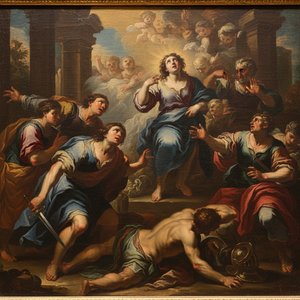
Several artists stand out as exemplars of this dramatic style. Caravaggio (Michelangelo Merisi da Caravaggio) is perhaps the most iconic figure, known for his intensely realistic depictions of religious scenes and everyday life. His use of tenebrism – an extreme form of chiaroscuro where darkness dominates – creates a sense of immediacy and raw emotion in works like “The Calling of St. Matthew.” Diego Velázquez, though working within the Spanish court, also masterfully employed chiaroscuro to convey psychological depth and social commentary, as seen in his poignant painting “Christ After the Flagellation Contemplated by the Christian Soul”. And then there’s El Greco (Domenikos Theotokopoulos), whose elongated figures and dramatic lighting create a sense of spiritual ecstasy and otherworldly tension, particularly evident in “The Agony in the Garden.” Each artist, while distinct in style, shared a commitment to using light and shadow as tools for emotional expression. Giovanni del Campo, influenced by Caravaggio, further explored these themes in his religious scenes, demonstrating the widespread impact of this artistic movement.
Beyond Technique: Psychological Depth and Narrative Power
The power of dramatic art extends beyond mere technical skill; it lies in its ability to convey complex psychological states and compelling narratives. Artists like Caravaggio didn’t simply depict biblical stories; they presented them as intensely human dramas, filled with vulnerability, doubt, and struggle. Velázquez's portraits are not just representations of physical likeness but insightful explorations of character and social status. Even Goya, later in the Romantic period, utilized dramatic chiaroscuro – evident in works like “Tristes Presentimientos” – to express profound anxieties and psychological turmoil. The use of light and shadow becomes a metaphor for inner conflict, moral ambiguity, and the complexities of the human condition. Gerard de Lairesse, with his emotive scenes, further exemplifies this focus on emotional depth.
Cultivating a Dramatic Aesthetic in Your Collection
When seeking to cultivate a dramatic aesthetic in your art collection, consider works that prioritize emotional impact and visual storytelling. Look for paintings that employ strong contrasts of light and shadow, dynamic compositions, and compelling narratives. Artists from the Baroque period – Caravaggio, Velázquez, El Greco, Ludovico Carracci – are excellent starting points. However, don’t limit yourself to a single era or style; explore how contemporary artists continue to utilize these techniques to create works that resonate with modern sensibilities. At OriginalUniqueArt, we offer meticulously hand-painted reproductions of masterpieces from across art history, allowing you to bring the power and beauty of dramatic art into your own home. Explore our collection today and discover a world of emotional intensity and visual splendor.