The Enlightenment's Aesthetic Response: Moving Beyond Rococo Excess
 Neoclassical Art: The Timeless Elegance of Order, Virtue, and Classical Grace
The Renaissance of Reason: Defining the Neoclassical Movement To understand the profound impact of Neoclassicism, one must first envision a world emerging from the ornate, often overwhelming excesses of the Rococo period. As the Enlightenment began t...
To understand the profound impact of Neoclassicism, one must first envision a world emerging from the ornate, often overwhelming excesses of the Rococo period. For much of the early 18th century, European taste was captivated by the whimsical, the asymmetrical, and the overtly decorative. The Rococo style, with its swirling pastel flourishes and lighthearted subject matter, celebrated the ephemeral and the sensual. However, as the intellectual currents of the Enlightenment began to reshape the landscape of Europe, a new aesthetic hunger arose—a longing for clarity, restraint, and the unadorned truth found in the ancient worlds of Greece and Rome.
This was not merely a change in decorative preference; it was a profound philosophical shift. The movement sought to strip away the frivolous flourishes of the previous century, replacing them with a disciplined pursuit of truth through the lens of order and reason. As thinkers began to champion logic over emotion and civic virtue over aristocratic indulgence, art responded by seeking a more permanent, universal language. This era of transition marked the beginning of a deliberate intellectual movement that viewed the classical past not merely as a collection of weathered ruins, but as a living blueprint for an elevated existence.
The Pillars of Neoclassicism: Harmony, Clarity, and Moral Gravity
Neoclassicism in the arts is an aesthetic attitude based on the art of Greece and Rome in antiquity, which invokes harmony, clarity, restraint, universality, ...
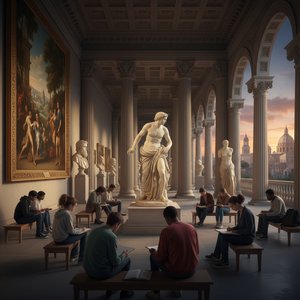
Neoclassical art is defined by an aesthetic attitude rooted in harmony, clarity, and universality. It is an era that invites the viewer to leave behind the frantic energy of a changing age and enter a sanctuary of profound logic and historical reverence. At its very core, Neoclassicism functioned as a necessary reaction against perceived chaos. Where previous eras embraced experimentation and emotional spontaneity, Neoclassicism championed a return to the fundamental truths of form. It was an aesthetic that believed true beauty is found not in the accidental or the raw, but in the carefully structured and the mathematically harmonious.
This pursuit of grandeur extended deeply into portraiture and historical painting. In the realm of Neoclassical portraiture, artists sought to restore a sense of moral gravity to the canvas. By looking toward the stoic ideals of antiquity, painters aimed to capture the essence of their subjects through a lens of timelessness, elevating the individual portrait from a simple likeness to a monumental statement of character and civic duty. The visual vocabulary was one of rigorous discipline; it emphasized the supremacy of line over color, utilizing sharp, precise contours to create a sense of permanence that resisted the fleeting whims of fashion.
Architectural Grandeur: The Revival of Greek and Roman Symmetry
 Neoclassical architecture
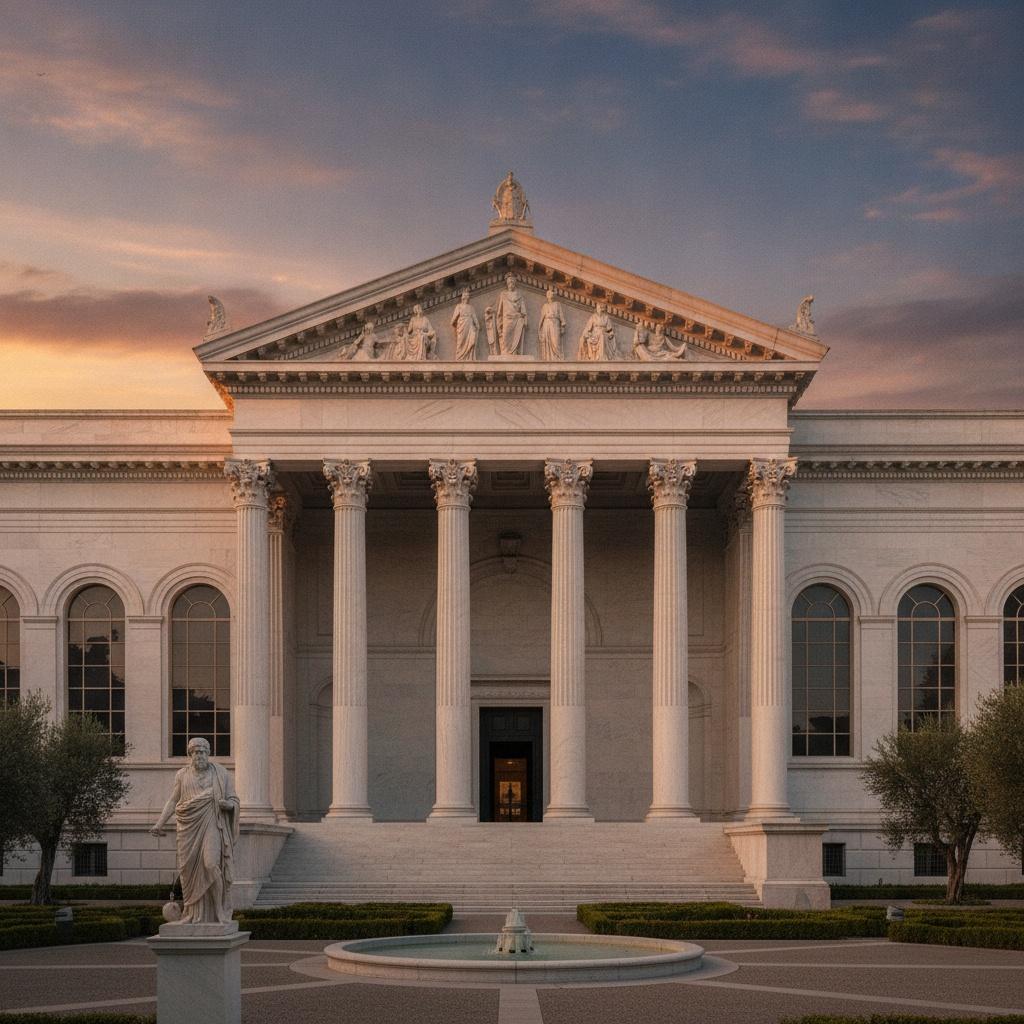
Neoclassical architecture, sometimes referred to as Classical Revival architecture, is an architectural style produced by the Neoclassical movement that began in the mid-18th century in Italy, France and Germany. It became one of the most prominent a...
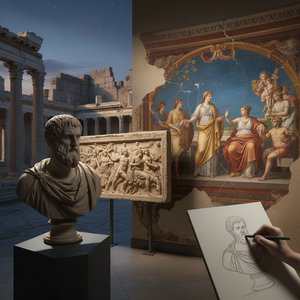
The Neoclassical movement found its most enduring physical expression in architecture, often referred to as Classical Revival. While the Renaissance and Baroque periods had already attempted partial revivals of ancient Roman and Greek styles, the Neoclassical movement aimed for something more authentic and pure. It sought to strip away the Late Baroque excesses and return to a more complete, unadentified classical style adapted for modern purposes. This architectural revolution was fueled by the burgeoning field of archaeology; the rediscovery of Pompeii and Herculaneum provided tangible, breathtaking connections to a lost world of grace.
Neoclassical architecture is characterized by its emphasis on the wall rather than dramatic light and shadow, favoring symmetry, simple geometry, and social demand over ornamental complexity. The style is manifested in its meticulous details—a reaction against the naturalistic ornament of the Rococo—and in its use of classical architectural vocabulary such as columns, pediments, and domes. From the grand public buildings of Europe to more intimate structures like the Petit Trianon, this movement established a sense of stability and order that continues to define the prestigious landscapes of many Western cities today.
Masters of the Classical Narrative: From Gavin Hamilton to Anton Raphael Mengs
 Anton Raphael Mengs
A Bridge Between Worlds: The Life and Art of Anton Raphael Mengs Anton Raphael Mengs emerged during a fascinating period in European art, a time when the ornate flourishes of the Rococo were beginning to yield to a renewed appreciation for classical ...
The true soul of Neoclassicism resided in the hands of its master painters, men who acted as both artists and scholars. Figures like Gavin Hamilton stand as singular icons of this era. A man inextricably linked to the pursuit of classical antiquities, Hamilton’s life was a fascinating blend of Scottish heritage and Italian scholarship. His work, often depicting monumental scenes from Greek and Roman mythology, was profoundly influenced by his direct exploration of Roman ruins. He did not merely paint from secondhand accounts; he interpreted ancient narratives through a deep, almost obsessive dedication to uncovering the authentic vestiges of antiquity.
Similarly, Anton Raphael Mengs emerged as a vital bridge between worlds. His artistic journey, shaped by the intellectual currents of the Enlightenment, saw him move from the ornate influences of his youth toward a profound reverence for classical form and composition. His work, such as the celebrated Parnassus at the Villa Albani, demonstrated an ability to synthesize grand narratives with elegant figures and subtle power. Alongside Italian painters like Paolo Borroni, who brought a sense of realism to religious and classical motifs, these masters established a new standard for what art could achieve: it was no longer enough to merely delight the eye; art was tasked with instructing the soul.
The Enduring Legacy: How Neoclassical Principles Shape Modern Taste
--- title: Neoclassicism - The Metropolitan Museum of Art author: Cybele Gontar url: https://www.metmuseum.org/essays/neoclassicism hostname: metmuseum.org description: The Neoclassical style arose from first-hand observation and reproduction of anti...
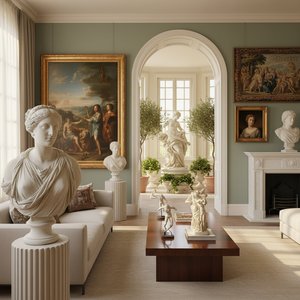
Though the era of Neoclassicism eventually yielded to the more emotive Romantic movement, its influence remains an indelible part of our cultural DNA. The principles of order, clarity, and structural integrity continue to resonate in contemporary design, architecture, and fine art. We see its echoes in any space that prioritizes balance and timelessness over trend-driven decoration. The Neoclassical era taught us that beauty is not found in the superficial, but in the enduring strength of well-defined form and the intellectual depth of a well-told story.
For the modern collector or history enthusiast, the works of this period offer more than just aesthetic pleasure; they offer a connection to the very foundations of Western civilization. Whether through a meticulously researched historical painting or a grand architectural detail, Neoclassicism continues to provide a sanctuary of logic in an often unpredictable world. It remains a testament to the human desire to find permanence within the ephemeral and to seek truth through the lens of classical perfection.
At OriginalUniqueArt.com, we celebrate this enduring legacy by bringing the masters of history into the modern home. Our collection features hand-painted oil reproductions of these canonical masterpieces, created by artists trained in the highest academic traditions. From the precise lines of Neoclassical portraiture to the grand narratives of mythological scenes, each piece is a labor of passion, meticulously layered on cotton canvas to ensure the depth and texture of the original era. We invite you to explore our library and find a piece of history that brings the timeless elegance of order and reason to your own walls.