
The Alchemy of Twilight: Understanding the Historical Allure of Sunset Motifs
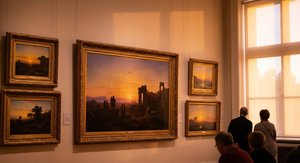 Golden Hours: Sunset Motifs in Western Art History
The Allure of Twilight: A Historical Introduction Wikipedia: Impressionism Impressionism was a 19th-century art movement characterized by visible brush strokes, open composition, emphasis on accurate depiction of light in its changing qualities (ofte...
Since the earliest eras of human expression, humanity has been profoundly captivated by the transition between day and night. There is a primal, almost spiritual resonance in the way the sun descends, marking the cyclical dance of shadow and light. In the annals of Western art history, the sunset has never been merely a meteorological event; it is a potent symbol of mortality, spirituality, and the sublime power of the natural world. Before the 18th century, depictions of twilight were often relegated to the periphery of larger compositions, serving as atmospheric backdrops rather than focal points. However, as the centuries progressed, the sunset ascended from a mere observation of nature to a profound vessel for human emotion.
The allure of the golden hour lies in its inherent instability. It is a moment defined by disappearance—the light that is present one second is irrevocably altered the next. This fleeting quality invites a sense of contemplation and even melancholy, reminding the viewer of the ephemeral nature of existence. In the Dutch Golden Age, artists like Jacob van Ruisdael began to weave dramatic skies into their landscapes, yet these works remained largely grounded in a meticulous realism. It was not until the subsequent movements that the sunset truly became an autonomous subject, capable of conveying the deepest reaches of the human soul through color and atmosphere alone.
Impressionism and the Ephemeral Moment: Capturing Light on the Seine and Beyond
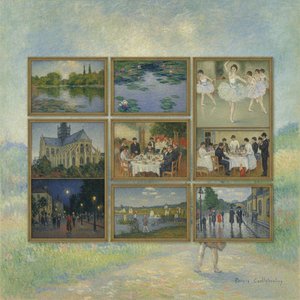 10 Iconic Impressionist Landscapes That Changed Art Forever
Introduction Close your eyes for a moment and imagine the world not as a collection of fixed lines and rigid shapes, but as a shimmering dance of light and atmosphere. Imagine the way a morning mist clings to the reeds of a pond, or how the setting s...
The late 19th century witnessed a radical revolution that forever altered our perception of the landscape. A group of visionaries, including Claude Monet, Pierre-Auguste Renoir, and Camille Pissarro, stepped out from the controlled, dim confines of the studio to embrace en plein air painting. Their mission was not to document the world with photographic precision, but to capture the impression—that breathless, transient moment before the light shifts and shadows lengthen. To step into an Impressionist landscape is to abandon rigid boundaries and embrace a shimmering dance of atmosphere.
Consider the works of Claude Monet, particularly his depictions such as Sunset on the Seine. In these canvases, the horizon often dissolves into a soft, violet haze, where the water becomes a mirror for the sky's shifting palette. The artist does not merely paint a river; he paints the way light breathes upon it. Through loose, expressive brushwork, Monet captures the tranquil atmosphere of a peaceful waterway, where boats rest as soft silhouettes against a backdrop of warm oranges and cool lavary colors. This technique allows the viewer to experience the sensory immediacy of the scene, making the ephemeral beauty of dusk feel vividly alive.
From Sublime to Sensory: The Evolution of Sunset in Romantic and Impressionist Eras
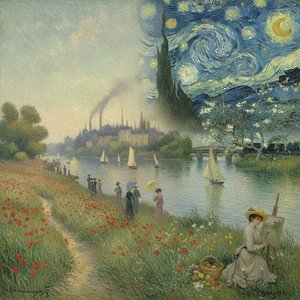 10 Iconic Impressionist Landscapes That Changed Art Forever
Introduction To step into the world of Impressionist landscapes is to abandon the rigid boundaries of reality and embrace the fleeting dance of light and atmosphere. Imagine standing on the banks of the Seine or amidst a sun-drenched meadow in Givern...
The transition from the Romantic era to Impressionism represents a fundamental shift in how art engages with the concept of the sublime. For the Romantics, such as J.M.W. Turner and Caspar David Friedrich, the sunset was a spectacle of divine power and awe-inspiring grandeur. Turner’s later works, characterized by swirling brushstrokes and intense, almost abstract color palettes, sought to convey an overwhelming emotional experience—the feeling of being small in the face of nature's infinite energy. For these artists, the sunset was a window into the transcendent.
In contrast, the Impressionists moved toward a more sensory and immediate experience. While they retained the emotional resonance of the light, their focus shifted to the everyday and the observable. They traded the somber, academic shadows of the past for a vibrant, luminous palette that celebrated the textures of the modern world. This evolution allowed the sunset to move from a symbol of cosmic terror or divinity to a celebration of the beauty found in the mundane. Whether it is the bustling activity of a harbor at twilight or the quiet reflection of clouds on a pond, the movement transformed the canvas into a living, breathing record of human perception.
Technique and Texture: How Master Artists Rendered the Golden Hour
 Quay in Rouen: Sunset
A Symphony of Light and Industry: Camille Pissarro’s Quay in Rouen The painting “Quay in Rouen: Sunset” by Camille Pissarro isn't merely a depiction of a harbor scene; it’s an embodiment of Impressionism itself—a movement that sought to capture the f...
The mastery of the sunset in oil painting relies heavily on the sophisticated manipulation of color temperature and texture. To achieve the "glow" of the golden hour, artists employ a delicate balance of complementary colors. In Camille Pissarro’s Quay in Rouen: Sunset, one can observe the masterful use of orange and crimson against deep violets to intensify the visual impact of the setting sun. This technique does not rely on fine detail but rather on short, broken strokes that allow colors to mingle and merge organically on the canvas.
The physical application of paint—the impasto—is equally vital. A true masterpiece possesses a tactile depth that a mere print cannot replicate. The visible, energetic brushstrokes suggest the movement of clouds and the shimmering surface of water, creating a sense of rhythm within the composition. At OriginalUniqueArt.com, our artists utilize these classical techniques, applying 100% hand-painted oils on cotton canvas to ensure that the light-drenched atmosphere of the original masters is preserved. This depth of texture and tonal range is what allows a reproduction to truly capture the soul of the Impressionist movement, inviting the viewer to touch the very light that once graced the banks of the Seine.
Bringing the Golden Hour Home: Curating Timeless Sunset Masterpieces for Modern Interiors
 Still Life. Life golden sunset
Experience 'Still Life. Life golden sunset' by Hovsep Pushman (1877-1966). A stunning golden hour masterpiece, meticulously hand-painted in a classic style. Elevate your space with this timeless art reproduction.
Integrating these historical masterpieces into a contemporary space offers more than just decoration; it provides a window into a world of profound beauty and historical significance. A well-placed sunset landscape can serve as an anchor for a room, providing a sense of calm, reflection, and architectural elegance. For the discerning enthusiast, selecting a piece involves considering how the color palette of the artwork interacts with the existing light of the home.
Whether you are drawn to the vast, dramatic vistas of the Romantic tradition or the soft, atmospheric tranquility of Monet’s landscapes, these works offer a timeless way to connect with art history. For those looking to elevate their collection, we offer bespoke services to bring these legends to life. From Handmade Oil Reproductions that capture every textured brushstroke to custom "remixed" commissions where you can see your own memories rendered in the style of the masters, the possibilities for curation are endless. By choosing a high-quality, hand-painted reproduction, you ensure that the legacy of the world's most iconic sunsets continues to illuminate your personal sanctuary for generations to come.


