Early Life & Academic Foundations: The Valencia Roots of a Master
 Wikipedia: Manuel Benedito
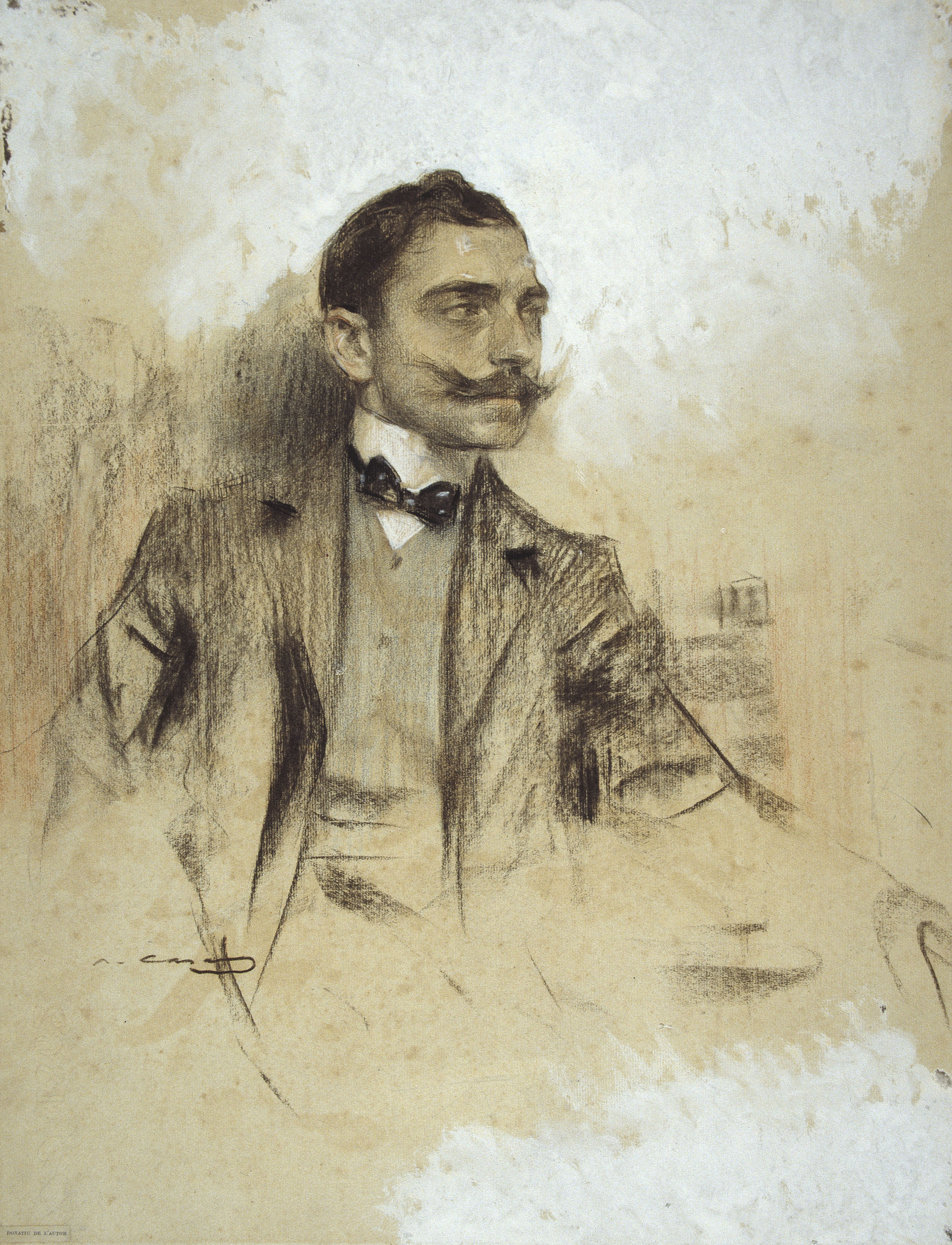
Manuel Benedito Vives (25 December 1875 – 20 June 1963) was a Spanish painter. He was born in Valencia on Christmas 1875. His father was a taxidermist, and his brother was a musician. At age 13, he was enrolled in the San Carlos School of Fine Arts, ...
Manuel Benedito Vives, born on Christmas Day 1875 in the vibrant city of Valencia, Spain, emerged from a family steeped in artistic sensibility – his father a taxidermist with an eye for detail and his brother a musician attuned to harmony and form. This early exposure undoubtedly shaped the young artist’s perception of the world, fostering a keen observational skill and an appreciation for aesthetic nuance. At the remarkably young age of thirteen, Benedito enrolled at the prestigious San Carlos School of Fine Arts in Valencia, embarking on a rigorous six-year program that laid the groundwork for his future success. His dedication was immediately apparent, quickly distinguishing him as a promising talent within the school’s walls. It wasn't merely technical proficiency he sought; even then, Benedito demonstrated an innate desire to capture not just *what* he saw, but *how* it felt – a pursuit that would define his artistic journey.
Sorolla’s Influence & the Embrace of Luminism
 Manuel Benedito Vives
Manuel Benedito Vives (1875-1963) was a celebrated Spanish painter known for his masterful portraits of high society, landscapes & still lifes. Influenced by Sorolla, he became a favorite artist of the Spanish Royal Family and a key figure in Valenci
Upon graduating from San Carlos, Benedito was fortunate enough to join the workshop of Joaquín Sorolla, arguably Spain's most celebrated Impressionist painter. This mentorship proved pivotal. Sorolla wasn’t simply a teacher; he was an exemplar of capturing light and atmosphere with breathtaking immediacy. Benedito absorbed Sorolla’s techniques – the broken brushstrokes, the vibrant palette, the emphasis on plein air painting – but didn’t merely imitate them. Two years later, a journey to Madrid alongside Sorolla broadened his horizons, exposing him to new artistic circles and further solidifying his commitment to Luminism. This wasn't about replicating reality; it was about conveying the *impression* of light, the fleeting moments of brilliance that define our perception. Benedito’s early works clearly bear Sorolla’s mark, but he soon began to develop a distinctive voice, infusing his paintings with a unique emotional resonance.
Portraits of High Society: Benedito’s Rise to Prominence
While initially recognized for his landscapes, Benedito's career trajectory shifted dramatically towards portraiture. By the early 20th century, he had become the favored artist of Madrid’s elite – a testament not only to his technical skill but also to his ability to capture the personality and social standing of his sitters. He possessed an uncanny knack for conveying both outward elegance and inner character, rendering portraits that were simultaneously flattering and psychologically insightful. This talent quickly garnered him commissions from prominent families and, crucially, the Spanish Royal Family itself. Painting Alfonso XIII multiple times cemented Benedito’s reputation as a master portraitist, elevating his status within the artistic community and securing his financial stability. These weren't simply likenesses; they were statements of power, prestige, and refined taste.
Landscapes and Maritime Scenes: Capturing the Essence of Spain
 Pescador
Discover 'Pescador' by Manuel Benedito Vives – a vibrant Post-Impressionist oil painting of a sailor at dusk. Explore its bold colors, expressive brushwork & maritime themes.
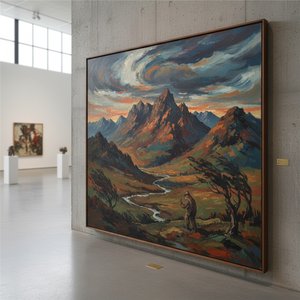
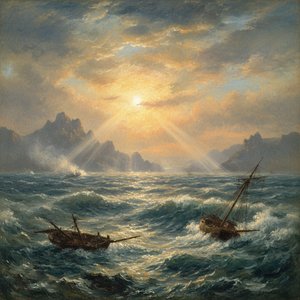
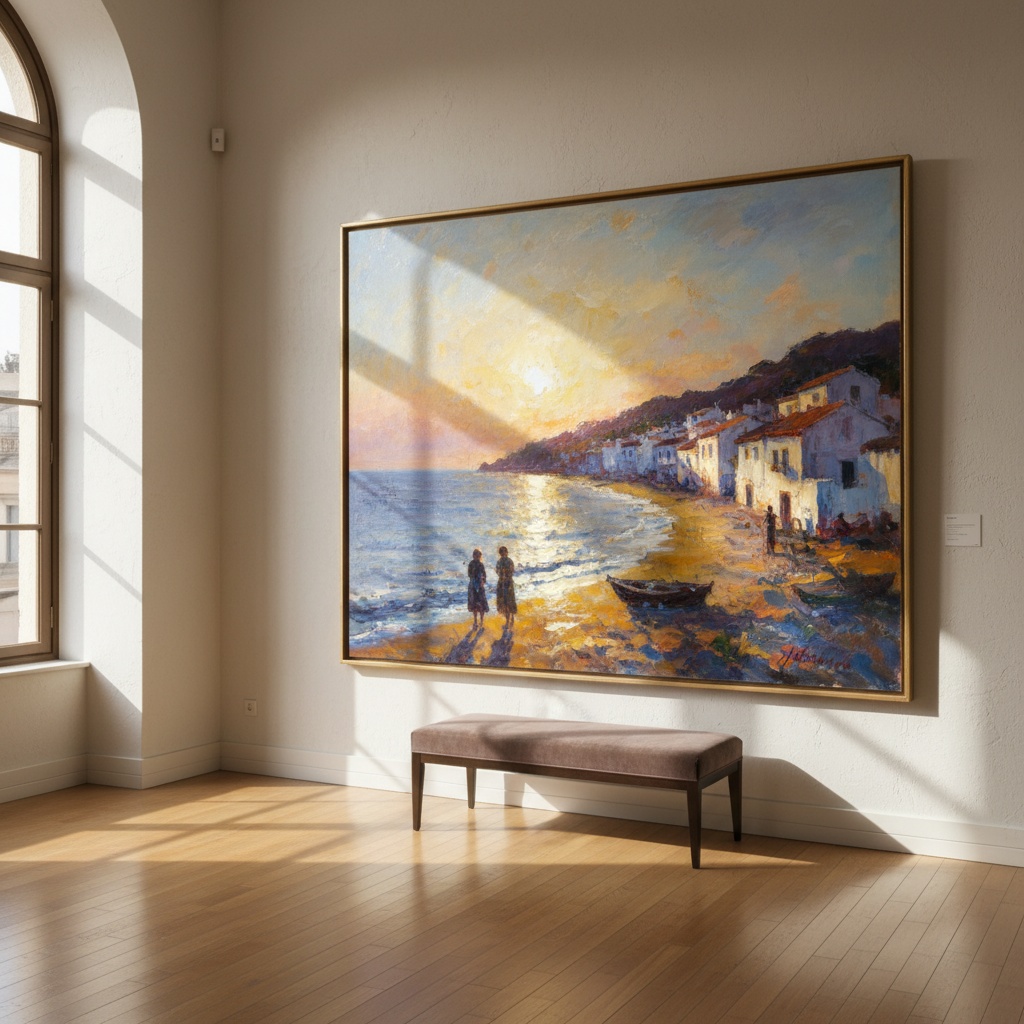
Despite his success with portraits, Benedito never abandoned his passion for landscapes and maritime scenes. His depictions of the Spanish coastline – particularly those inspired by a transformative trip to Brittany in France – reveal a deep connection to the natural world. Paintings like “Venecia,” with its serene canals and architecture bathed in Impressionistic light, exemplify his ability to evoke atmosphere and mood. Similarly, “Pescador” captures the rugged beauty of a sailor at dusk, employing bold colors and expressive brushwork to convey both the physical hardship and inherent dignity of maritime life. “Carros En La Playa,” a vibrant scene brimming with energy, showcases his skill in capturing everyday Spanish life – a dynamic interplay of light, color, and movement. These works demonstrate Benedito’s versatility and his commitment to portraying the diverse facets of Spain's cultural landscape.
The Emotional Palette: Analyzing Benedito’s Use of Color and Brushwork
Benedito’s paintings are characterized by a masterful use of color – not merely as a descriptive element, but as a vehicle for conveying emotion. He employed a warm, luminous palette, often utilizing subtle gradations of tone to create depth and atmosphere. His brushwork is equally significant; while influenced by Impressionism's broken strokes, Benedito’s application is more deliberate, creating textures that add richness and complexity to his compositions. Consider the interplay of light and shadow in his portraits – how he uses color to highlight facial features and convey psychological states. Or observe the vibrant hues in his landscapes, capturing the warmth of the Spanish sun or the cool tranquility of a coastal evening. This wasn’t simply about technical skill; it was about harnessing the power of color and brushwork to evoke feeling and create an immersive experience for the viewer.
Benedito's Legacy & Continued Appreciation in Modern Collections
Manuel Benedito Vives passed away in Madrid in 1963, leaving behind a substantial body of work that continues to captivate audiences today. His paintings are held in numerous Spanish state museums, including the Museo Nacional del Prado and the Museo Reina Sofía, as well as private collections worldwide. The Fundación Manuel Benedito, established by his niece Vicenta Benedito in 2020, serves as a testament to his enduring legacy, preserving his studio and showcasing his art to new generations. Benedito’s influence can be seen in the work of subsequent Spanish painters who embraced Luminism and sought to capture the essence of their surroundings with similar sensitivity and skill. His paintings are not merely historical artifacts; they are windows into a bygone era – vibrant expressions of Spanish life, culture, and artistic sensibility that continue to resonate with collectors and art enthusiasts alike. OriginalUniqueArt.com is proud to offer high-quality reproductions of Benedito Vives’s masterpieces, allowing you to experience the beauty and emotional power of his work firsthand.