The Dawn of Distortion: Transitioning from Renaissance Harmony to Mannerist Tension
For decades, the High Renaissance stood as a monument to equilibrium, where the mathematical precision of Leonardo and the balanced grace of Raphael offered a world of predictable beauty. However, as the sixteenth century progressed, a subtle tremor began to unsettle this classical stability. The serene landscapes and anatomically perfect figures started to yield to something far more restless. This was the birth of Mannerism, an era where the pursuit of perfection was abandoned in favor of the pursuit of expression.
The transition was not merely a change in subject matter but a fundamental reimagining of space and form. Where the Renaissance sought to capture the truth of nature through proportion, Mannerism sought to transcend it through tension. The once-solid foundations of perspective began to tilt, introducing a sense of vertigo that mirrored the growing complexities of the human experience. The era of harmony was fading, replaced by a deliberate, beautiful instability.
The Aesthetic of Ambiguity: Elongated Forms and Unnatural Palettes
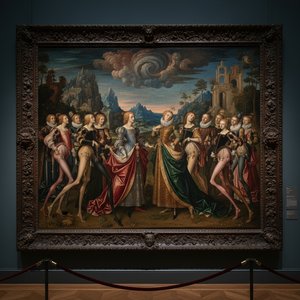
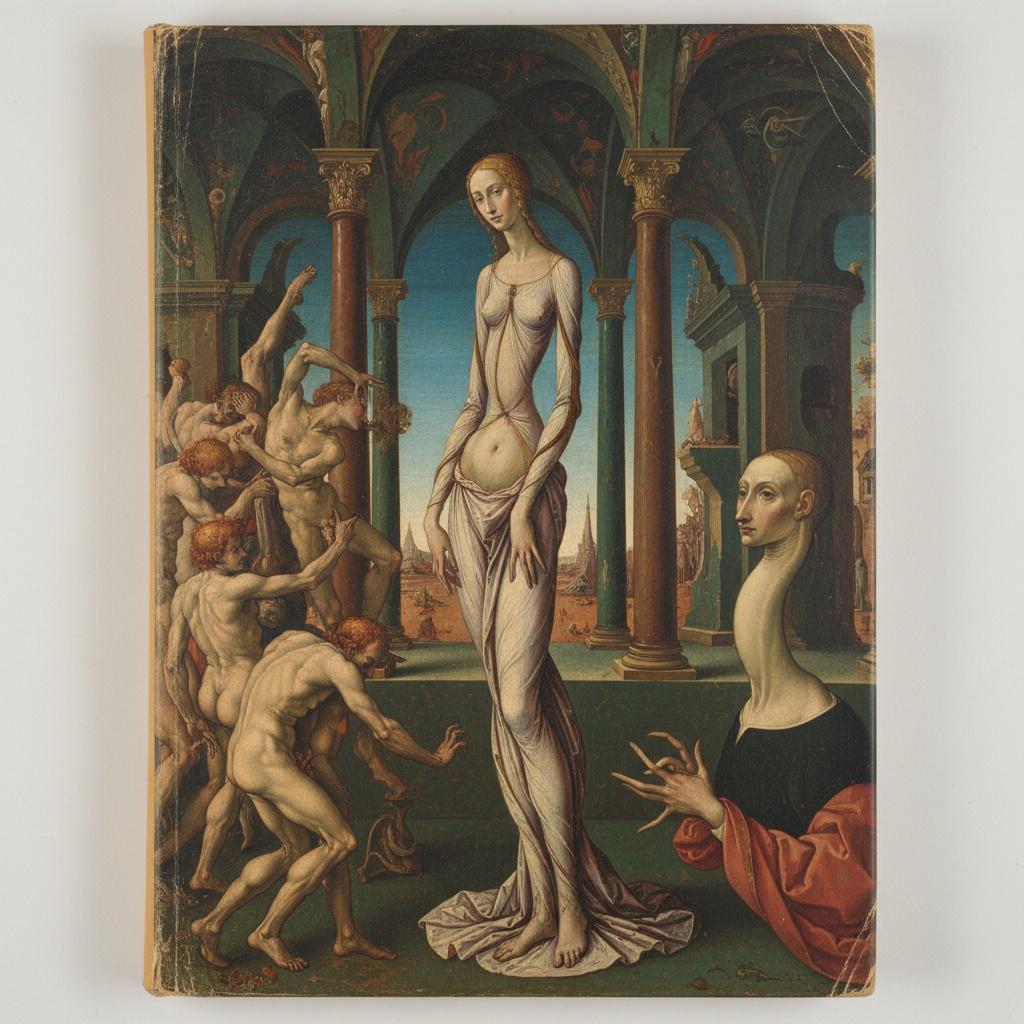
To gaze upon a Mannerist canvas is to enter a realm of beautiful uncertainty. The hallmark of this style lies in its departure from naturalism, most notably through the use of elongated limbs and serpentine postures known as figura serpentinata. Figures no longer rest comfortably within their environments; instead, they stretch toward an unseen spiritual or emotional zenith, their bodies twisting in ways that defy anatomical logic but satisfy a deeper, more visceral aesthetic.
This distortion was further amplified by a revolutionary approach to color. The harmonious, blended tones of the previous era were replaced by clashing, acidic, and often unnaturally bright palettes. These shimmering silvers, bruised purples, and sharp yellows served to distance the viewer from reality, creating an atmosphere that felt both dreamlike and profoundly unsettling. It was a deliberate use of ambiguity, where color and form worked in tandem to evoke mystery rather than clarity.
Visionaries of the Uncanny: Exploring the Works of El Greco and His Contemporaries
Among the most profound voices of this movement was El Greco, whose work epitomizes the spiritual intensity of the age. In masterpieces such as Christ as Saviour, we see a departure from the physical world into a realm of pure, ethereal light and elongated, ghostly forms. His brushwork does not merely depict a scene; it vibrates with a divine, restless energy that pulls the soul upward.
This uncanny vision was shared by other masters who navigated the boundaries of the strange and the sublime. Artists like Benvenuto Garofalos brought a refined, almost idyllic quality to religious scenes, yet even within their elegance, one could sense the underlying Mannerist tension. Whether through the subtle shifts in Giulio Cesare Amidano’s landscapes or the vibrant, complex compositions of others, the movement was united by a shared fascination with the extraordinary and the supernatural.
Spiritual and Secular Upheaval: The Historical Catalyst for Artistic Innovation
The visual instability of Mannerism did not emerge from a vacuum; it was the artistic mirror to a world in profound upheaval. The sixteenth century was defined by the seismic shifts of the Reformation and the subsequent Counter-Reformation, which challenged the very foundations of religious and political authority. As the certainty of the Church was contested, the art of the period reflected this loss of spiritual equilibrium.
The tension between the sacred and the profane, the old world and the new, found its expression in the distorted figures and clashing colors of the canvas. The political instability across the Italian peninsula and the broader European landscape provided a backdrop of uncertainty that made the Mannerist aesthetic feel not just appropriate, but inevitable. Art became a vessel for the anxieties of an age caught between tradition and transformation.
The Enduring Legacy: How Mannerism Paved the Way for Baroque Grandeur
While some viewed Mannerism as a period of decadence or deviation, its legacy is one of profound influence. The movement’s emphasis on drama, emotional intensity, and theatricality served as the essential precursor to the Baroque era. Without the experimental distortions of the Mannerists, the sweeping, cinematic grandeur of Caravaggio or the breathtaking sculptures of Bernini might never have achieved their full power.
Mannerism taught artists that the canvas could be a space for psychological depth and emotional truth, far beyond the mere imitation of nature. It broke the rules of proportion to find the truths of the spirit. At OriginalUniqueArt.com, we celebrate this enduring legacy by preserving the beauty of these historical transitions. Through our meticulous hand-painted reproductions and museum-quality prints, we ensure that the captivating mystery of Mannerism remains accessible to collectors and enthusiasts worldwide, allowing the elegant distortions of the past to continue inspiring the modern world.