The Rise of Boterismo: A Revolutionary Aesthetic
Magical realism, magic realism, or marvelous realism is a style or genre of fiction and art that presents a realistic view of the world while incorporating magical elements, often blurring the lines between speculation and reality. Magical realism is...
Fernando Botero’s name is synonymous with volume, a characteristic so defining it birthed an entire artistic movement – “Boterismo.” But to reduce Botero solely to his figures' generous proportions would be a profound disservice. His emergence in the Colombian art scene of the 1950s wasn’t merely about aesthetic preference; it was a deliberate rebellion against established norms, a playful yet potent challenge to academic traditions and prevailing artistic sensibilities. Initially met with skepticism, Botero’s style quickly gained traction, resonating with an audience hungry for something fresh, something that dared to celebrate the human form in all its fullness. He wasn't simply depicting “fat people,” as some early critics suggested; he was exploring space, sensuality, and a uniquely Colombian perspective on beauty and proportion. This exploration began with his meticulous study of Renaissance masters during his time in Europe – a foundation upon which he built a distinctly personal visual language. The influence of artists like Goya and Velázquez is palpable in his early works, but Botero didn’t merely imitate; he reinterpreted, exaggerating forms to create a new kind of realism—one that was both humorous and deeply affecting.
Beyond Volume: Exploring Botero's Social Commentary & Narrative Power
 scene de famille
Explore Fernando Botero’s ‘scene de famille,’ a darkly humorous oil painting in American Realism. Captivating textures & figures evoke social commentary. A unique, striking piece by the Colombian master.
While the sheer size of Botero’s figures is immediately striking, it’s the underlying narrative and social commentary woven into his canvases that truly elevate his work. His paintings are often populated with scenes of everyday life – families gathered for meals, dancers lost in rhythm, musicians absorbed in their craft – yet these seemingly idyllic moments are frequently imbued with a subtle irony, a gentle critique of societal norms and political power structures. “Scene de Famille,” for example, presents a darkly humorous tableau that invites viewers to question the complexities of familial relationships and the often-hidden tensions beneath the surface of domestic tranquility. Botero’s use of vibrant colors and meticulous detail further enhances this narrative depth, drawing the eye to specific elements within the composition and prompting deeper contemplation. He masterfully employs symbolism – a crown on an otherwise ordinary figure, for instance – to suggest hidden authority or societal aspirations. This isn't art that simply *shows* you something; it *tells* you a story, often with layers of meaning waiting to be uncovered.
Botero’s Colombian Roots: Identity, History, and Artistic Inspiration
 Wikipedia: Fernando Botero
Fernando Botero Angulo (19 April 1932 – 15 September 2023) was a Colombian figurative artist and sculptor. His signature style, also known as "Boterismo", depicts people and figures in large, exaggerated volume, which can represent political criticis...
To understand Botero is to understand Colombia – its history, its culture, and its people. He self-styled himself “the most Colombian of Colombian artists,” and this national pride permeates his entire oeuvre. Growing up in Medellín, he was surrounded by a rich artistic tradition rooted in Baroque churches and the vibrant energy of city life. This early exposure instilled in him a deep appreciation for form, color, and storytelling. His art often reflects the complexities of Colombian society – its political turmoil, its social inequalities, and its enduring spirit. “Dancing in Colombia,” with its lively café scene and oversized figures, is not merely a depiction of a festive gathering; it’s a celebration of Colombian identity, a vibrant testament to the country's resilience and cultural richness. He frequently revisited themes of violence and injustice, using his art as a platform for social commentary and a means of preserving collective memory. His connection to his homeland isn’t simply thematic; it’s deeply personal, informing his artistic vision and shaping his unique aesthetic.
Sculptural Innovations: From Resin to Bronze – Expanding the Boterismo Universe
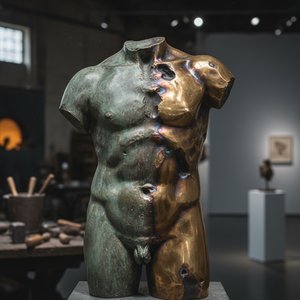
Botero's exploration wasn't limited to canvas. His foray into sculpture in the 1970s marked a significant turning point in his career, allowing him to fully realize the voluminous forms that defined his style. Initially hampered by financial constraints and the limitations of available materials – early sculptures were crafted from acrylic resin and sawdust – he persevered, driven by an unwavering vision. The transition to bronze proved transformative, enabling him to create monumental works that occupied public spaces around the world. These sculptures aren’t merely three-dimensional representations of his paintings; they are independent artworks in their own right, inviting viewers to interact with his figures on a visceral level. The sheer scale and tactile quality of these bronzes amplify the sense of volume and sensuality that characterizes Boterismo. From Park Avenue in New York City to the Champs-Élysées in Paris, Botero’s sculptures have become iconic landmarks, bringing his art directly into the public sphere.
Collecting Botero: Investment Potential and Enduring Legacy
Acquiring a Fernando Botero artwork is more than simply purchasing a beautiful object; it's investing in a cultural icon, a piece of Latin American history, and an artist whose influence continues to grow. His works have consistently demonstrated strong appreciation in value, commanding impressive prices at auction houses worldwide. The enduring appeal of Boterismo – its unique aesthetic, its social commentary, and its celebration of the human form – ensures that Botero’s art will remain highly sought after by collectors for generations to come. “Untitled (6237),” with its captivating depiction of a nude man with a crown, exemplifies the style that has captivated audiences globally. Beyond financial considerations, owning a Botero is about connecting with an artist who dared to challenge conventions and celebrate life in all its fullness. His paintings and sculptures are not merely decorative; they are conversation starters, thought-provoking statements, and enduring symbols of artistic innovation.
Botero's Influence on Latin American Art & Global Recognition
Fernando Botero’s impact extends far beyond his native Colombia, profoundly shaping the landscape of Latin American art and earning him global recognition. He paved the way for a new generation of artists to explore themes of identity, social commentary, and cultural heritage with boldness and originality. His distinctive style – Boterismo – has become synonymous with Latin American artistic expression, inspiring countless painters and sculptors across the continent. Botero’s work is featured in prestigious museums around the world, including the Museum of Modern Art (MoMA) in New York and the Louvre in Paris, solidifying his position as a major figure in modern art history. He wasn't just an artist; he was a cultural ambassador, bringing the vibrancy and richness of Latin America to a global audience. His legacy continues to inspire, challenging us to see the world – and ourselves – with fresh eyes.