
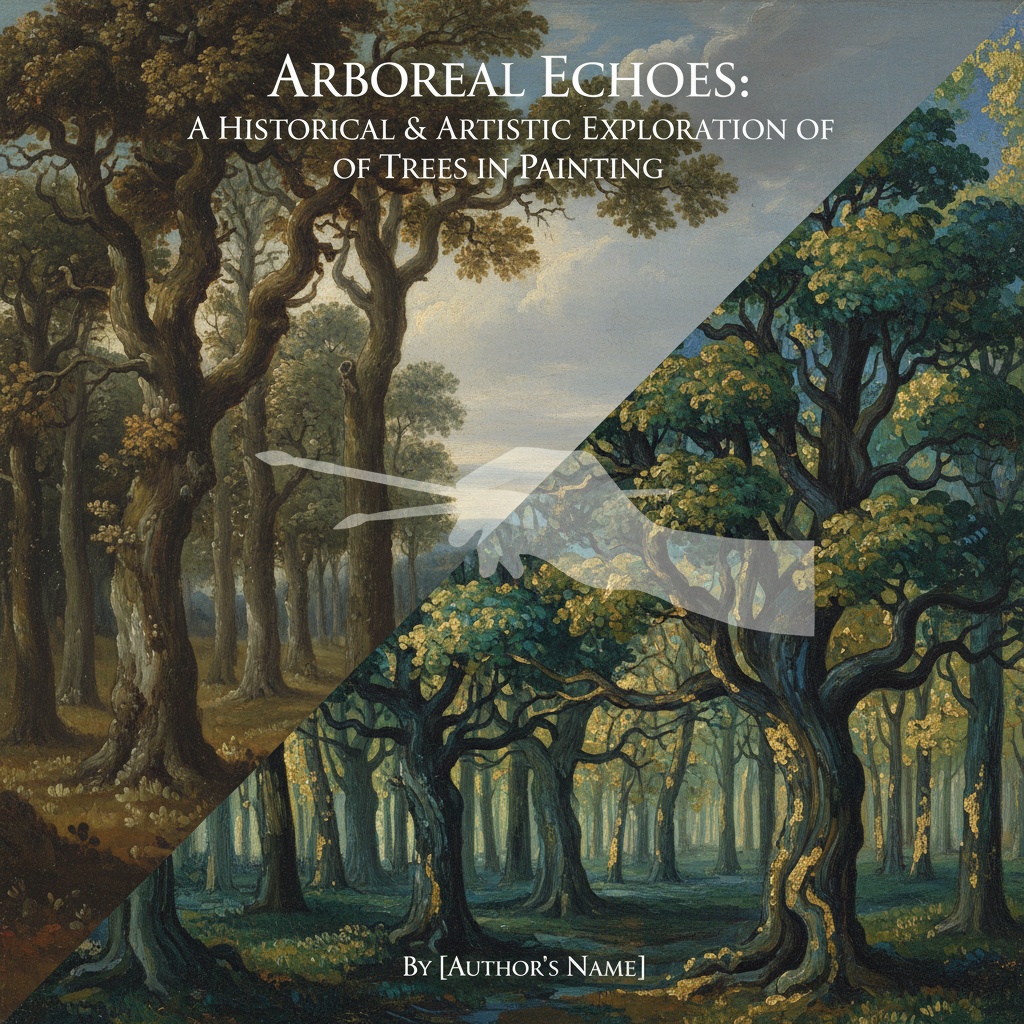
The Ancient Roots: Trees as Sacred Symbols
Long before landscape painting emerged as a distinct genre, trees held profound significance for humankind. They weren’t merely components of the natural world; they were embodiments of life itself, connecting the earthly realm to the divine. In ancient cultures across the globe – from the sacred groves venerated in Greece and Rome to the cosmic tree motifs found in Mesopotamian mythology – trees served as axis mundi, points of connection between heaven, earth, and the underworld. The very longevity of these silent witnesses fostered a sense of reverence; their rings chronicled the passage of time, offering a tangible link to ancestors and the cyclical rhythms of existence. Early artistic representations weren’t focused on realistic depictions but rather on conveying the tree's spiritual power – often stylized and imbued with symbolic meaning related to fertility, protection, or ancestral wisdom. The Egyptians associated specific trees, like the sycamore, with deities, further solidifying their sacred status. This deep-rooted connection between trees and spirituality laid the groundwork for their eventual prominence in Western art.
Landscape & Spirituality: The Rise of Tree-Focused Painting
Landscape painting, also known as landscape art, is the depiction in painting of natural scenery such as mountains, valleys, rivers, trees, and forests, especially where the main subject is a wide view—with its elements arranged into a coherent compo...
The development of landscape painting as a recognized genre coincided with a growing appreciation for nature’s inherent beauty and its capacity to evoke emotional responses. While earlier artworks often featured trees as background elements, the 17th and 18th centuries witnessed a shift towards celebrating them as central subjects. This wasn't simply about aesthetic representation; it was intertwined with philosophical currents that emphasized observation, feeling, and the sublime. Artists began to meticulously study tree forms, capturing their unique textures, branching patterns, and responses to light. Reverend William Gilpin, an influential artist and cleric, eloquently described trees as “earth’s grandest productions,” highlighting their inherent majesty. This period saw a burgeoning interest in the picturesque – landscapes that weren't necessarily idealized but rather possessed a certain rugged charm and emotional resonance. Trees became crucial elements in constructing these evocative scenes, acting as framing devices, focal points, or symbols of solitude and contemplation.
Caspar David Friedrich and the Romantic Tree
 Caspar David Friedrich
Caspar David Friedrich (1774-1840): German Romantic painter of evocative landscapes & symbolic art exploring nature, spirituality & the sublime. Pioneer of the movement.
No artist embodies the profound connection between trees and spirituality quite like Caspar David Friedrich. A pioneer of German Romanticism, Friedrich elevated landscape painting to a new level of emotional intensity. His works aren’t merely depictions of nature; they are meditations on mortality, faith, and the sublime power of the natural world. The Solitary Tree, for example, is a masterpiece of atmospheric perspective and symbolic depth, capturing the isolation and vulnerability of an individual against the vastness of the cosmos. Similarly, Village Landscape in Morning Light (The Lone Tree) presents a scene imbued with quiet contemplation, where a single tree stands as a testament to resilience and enduring spirit. Friedrich’s trees are often stark and skeletal, yet they possess a haunting beauty that speaks to the cyclical nature of life and death. His monumental Cross in the Mountains (Tetschen Altar) further exemplifies his use of trees to convey spiritual themes, with the cross emerging from a dramatic landscape as a symbol of redemption and hope.
Symbolism in Bloom: Decoding the Language of Trees
The Romantic era saw an explosion of symbolic meaning attached to trees. Artists weren’t simply painting what they saw; they were imbuing their works with layers of hidden significance. Blasted trees, often depicted with fractured limbs and clinging leaves, represented the cycle of life and death, a poignant reminder of nature's fragility. Lone trees symbolized survival, endurance, and the individual’s struggle against adversity. Dead trees, frequently found in cemetery scenes, served as memento mori – reminders of mortality and the transience of earthly existence. The entwined branches of two trees could represent familial bonds or harmonious relationships. Even the specific species held symbolic weight; pines were often associated with immortality, while oaks represented strength and resilience. As critic John Ruskin observed, this period was characterized by a “modern-day cloud worship,” but equally potent was the reverence for trees and their ability to evoke profound emotional responses.
Beyond Representation: Trees as Metaphor and Emotion
The power of trees lies not only in their physical form but also in their capacity to serve as metaphors for human experience. Artists used trees to explore themes of longing, loss, hope, and spiritual awakening. A tree reaching towards the sky could symbolize aspiration or a connection to the divine, while a forest shrouded in mist might represent uncertainty or the unknown. The choice of color palette further enhanced these emotional undertones – pastel hues evoking tranquility, dark tones suggesting melancholy, and vibrant colors conveying vitality. Contemporary artists continue to explore this rich symbolism, often blending it with personal narratives and social commentary. Virginia Wilcox’s work, for example, captures the “scraggly poetic life” of Los Angeles trees, revealing a melancholic meditation on coexistence in an urban landscape. The tree, therefore, transcends its literal form, becoming a vessel for expressing complex emotions and philosophical ideas.
The Enduring Legacy: Trees in Modern Art
While the Romantic era may have been the pinnacle of tree symbolism in painting, their presence continues to resonate in modern art. From Gustav Klimt’s ornate Tree of Life, incorporating Art Nouveau flourishes and golden hues, to Piet Mondrian's progression from realistic tree studies towards abstraction, artists continue to find inspiration in these majestic forms. Even abstract works often echo the branching structures and organic rhythms found in nature. The enduring appeal of trees lies in their universal symbolism – representing growth, interconnectedness, and the cyclical nature of existence. At OriginalUniqueArt.com, you can explore a vast collection of tree paintings spanning centuries and styles, allowing you to connect with this timeless subject on a deeper level. Whether you seek a classic Romantic masterpiece or a contemporary interpretation, the world of arboreal art offers a rich tapestry of beauty, emotion, and philosophical insight.



