difference between tenebrism and chiaroscuro
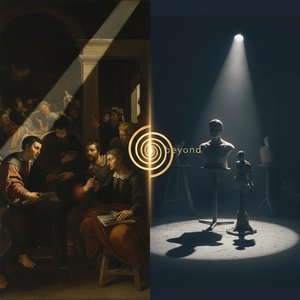
Chiaroscuro is a broad technique using light and shadow to model three-dimensional volume and depth. Tenebrism is a specialized, extreme subtype of chiaroscuro where intense, violent contrasts occur, allowing deep darkness to dominate the composition and isolate subjects through a dramatic, theatrical spotlight effect.
Chiaroscuro, from the Italian chiaro (light) and scuro (dark), acts as an architectural tool. It uses gradual tonal transitions to build volume in figures and objects. In these works, shadows are rarely absolute; they hold enough reflected light to keep the background and objects detectable and legible.
Tenebrism, derived from tenebroso (dark, gloomy, or mysterious), pushes this contrast to a breaking point. Darkness is an active, heavy presence that swallows the periphery of the canvas. It compresses the action, leaving only specific figures caught in sudden, sharp illumination, often creating a stage-like drama.
What is the difference between tenebrism and chiaroscuro?
The primary technical difference lies in the intensity of contrast and the role of darkness. Chiaroscuro uses light to sculpt anatomy and create depth while maintaining a readable setting. Tenebrism uses darkness to stage a scene, where the background disappears into an inky, impenetrable void.
When evaluating a canvas for procurement or decoration, look for these structural indicators:
- Chiaroscuro: Features soft, moderate gradations; the room or setting remains spatially continuous and legible.
- Tenebrism: Features violent, sudden shifts between light and shadow; the space beyond the lit area becomes difficult to measure.
A painting can possess strong chiaroscuro without ever reaching the level of tenebrism. For example, Vermeer’s Girl with a Pearl Earring uses strong chiaroscuro for presence and concentration; while the background is dark, it does not reach the total, engulfing darkness characteristic of true tenebrism.
How do these two lighting techniques differ in their application?
Chiaroscuro uses light as a tool for modeling and realism, creating soft transitions to suggest weight and three-dimensionality. Tenebrism uses light as a surgical or theatrical tool, striking subjects with a concentrated beam to create high-impact drama and emotional shock.
The distinction is found in the function of the shadows. Chiaroscuro can be soft, gradual, or moderately strong, used to turn a face or hand to show its shape. Tenebrism uses abrupt, engulfing darkness to create shock or revelation. While chiaroscuro seeks to define the shape of an object, tenebrism seeks to isolate a moment of high drama through sudden, piercing light against a black background.
Which artists are most associated with tenebrism and chiaroscuro?
 Artemisia Gentileschi
. A Baroque master known for Judith Slaying Holofernes. Discover her powerful works today.
Caravaggio is the master of tenebrism, a style also championed by Artemisia Gentileschi and Orazio Gentileschi. Chiaroscuro is a broader term used across various movements, from Renaissance modeling to the works of the Utrecht School and the candlelight traditions of artists like Gerrit van Honthorst.
Key figures in these traditions include:
- Tenebrism: Caravaggio, Artemisia Gentileschi, Francisco Ribalta, and the Flemish tenebrist Adam de Coster.
- Candlelight Tradition: Georges de La Tour, Trophime Bigot, and Gerrit van Honthorst.
- Variations: Rembrandt, a Dutch artist who used very dark passages without making the picture fully tenebrist.
The influence of Caravaggio's tenebrism was widespread, affecting the Caravaggisti across Europe, including the Netherlands, France, and Spain. Notable works demonstrating these intense lighting effects include Caravaggio's Crucifixion of Saint Peter and the Martyrdom of Saint Andrew.
Frequently asked questions
What is tenebrism?
Tenebrism is a specialized, extreme subtype of chiaroscuro, also known as dramatic illumination.
Is tenebrism a type of chiaroscuro?
Yes, every tenebrist painting is technically a chiaroscuro painting.
Who practiced tenebrism in the Utrecht School?
The Utrecht School consisted of Dutch painters who practiced tenebrism.
Who was a key figure in the candlelight tradition?
Georges de La Tour was a key figure in the candlelight tradition.
Learn more
- 1571 – 1610CaravaggioExplore the master who pioneered the intense spotlight effect of tenebrism.
- 1593 – 1653Artemisia GentileschiExamine the dramatic and powerful tenebrist works of Artemisia Gentileschi.
- 1563 – 1639Orazio GentileschiView the evolution from Mannerism to dramatic, naturalistic compositions.