Decoding Impasto: The Power and Texture of Van Gogh's Brushstrokes
Explore the visceral power of Van Gogh's impasto technique. Discover how thick, textured brushstrokes convey raw emotion and transform canvas into sculpture. An expert guide to the artistry and enduring legacy of Post-Impressionism's most iconic textures.
Impasto is a technique used in painting where paint is laid on an area of the surface thickly, usually thick enough that the brush or painting-knife strokes are visible. Paint can also be mixed right on the canvas. When dry, impasto provides texture;...
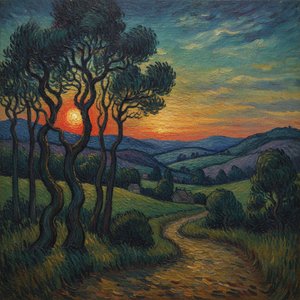
To encounter the works of Vincent van Gogh is not merely to view a landscape, but to witness a physical struggle rendered in pigment. At the very heart of this visceral experience lies impasto, an Italian term meaning mixture or dough, derived from the verb impastare, which translates to knead or paste. This technique transcends the traditional two-dimensional plane, as paint is laid upon the surface with such density that the brush or palette knife strokes remain visible and tactile. When dry, this heavy application provides a structural texture where the paint appears to emerge from the canvas itself, creating a sculptural relief that catches the light in unpredictable, dramatic ways.
While masters like Rembrandt and Vermeer utilized impasto to highlight the delicate shimmer of jewels or the folds of fine linen, Van Gogh pushed the medium toward a new frontier of expression. For him, the thickness of the paint was not just a decorative element but a fundamental component of his visual language. By manipulating the viscosity of his oils, he transformed the canvas into a topographical map of emotion. This method allows for a unique interplay of light and shadow, as the raised ridges of dried oil create miniature landscapes of peaks and valleys across the painting's surface, ensuring that the artwork remains dynamic regardless of the viewing angle.
The Emotional Language of Texture: How Van Gogh Used Movement to Convey Turmoil
A Glimpse into Tranquility: Vincent van Gogh’s *The Little Stream* Painted in 1890 during his prolific yet turbulent stay in Auvers-sur-Oise, France, *The Little Stream* is a captivating example of Vincent van Gogh's Post-Impressionist mastery. This ...
Van Gogh’s brushwork serves as a direct conduit to his internal state, a window into a soul that wrestled with beauty and despair in equal measure. In his most celebrated works, the impasto technique is used to create swirling, rhythmic patterns that suggest a world in constant motion. These are not merely descriptive marks; they are energetic traces of the artist's hand. When observing a piece like his 1889 Self-Portrait, one can sense the restless, agitated energy through the thick, undulating strokes that seem to vibrate around his features. The texture does not just represent movement—it embodies it.
This expressive application of paint allows the viewer to feel the strength and speed with which the artist worked. The heavy, rhythmic application of color creates a sense of urgency, mirroring the turbulent period of his life in places like Saint-Rémy. In landscapes such as The Little Stream, the thick applications of green, yellow, and blue do not simply depict vegetation and water; they convey a profound emotional connection to nature. The texture provides a weight to the color, making the lushness of the foliage feel tangible and the flow of the stream feel inevitable, turning a fleeting moment of tranquility into an enduring, heavy presence.
Technical Mastery: The Role of Oil Mediums and Palette Knives in Post-Impressionism
Oil painting is a painting method involving the procedure of painting with pigments combined with a drying oil as the binder. It has been the most common technique for artistic painting on canvas, wood panel, or copper for several centuries. The adva...
The success of such a demanding technique relies heavily on the chemistry of the medium. Oil paint remains the quintessential choice for impasto due to its inherent thickness, slow drying time, and rich, dense color. This slow evaporation allows Van Gogh the necessary window to blend colors directly on the canvas, creating transitions that are both smooth in hue yet rugged in texture. The use of specific oils, such as safflower for whites to prevent yellowing, is crucial for maintaining the clarity of these heavy layers over decades.
Beyond the brush, the palette knife plays a vital role in the Post-Impressionist toolkit. This tool allows for the application of much larger, more decisive "slabs" of paint, which can be used to build up height on the canvas. By layering thick pigments, Van Gogh could achieve a level of opacity that prevents the underlying layers from muddying the composition. This technical precision, combined with his intuitive use of color, allowed him to move away from the naturalism of Impressionism toward a more subjective, symbolic reality where the physical weight of the paint matches the emotional weight of the subject matter.
From Canvas to Dimension: Analyzing Iconic Works like 'The Starry Night' and 'Self-Portrait'
A Window into Van Gogh’s Soul: Exploring Self-Portrait (1889) Vincent van Gogh's *Self-Portrait* of 1889 is more than just a likeness; it’s a profound exploration of the artist’s inner turmoil and resilience, rendered with his signature expressive br...
In masterpieces such as The Starry Night, the impasto technique reaches its zenith, turning the night sky into a celestial sea of swirling energy. The thick, concentric circles of light around the stars are not merely painted; they are sculpted from the medium. This creates a sense of depth that pulls the viewer into the cosmic vortex, making the heavens feel as though they are physically churning above the sleeping town. Each stroke carries a specific direction and force, guiding the eye through a complex web of light and dark.
Similarly, in his various self-portraits, the texture serves to heighten the psychological intensity. The heavy application of paint around the eyes and forehead can emphasize the weariness or the piercing gaze of the artist. In these works, the impasto acts as a bridge between the physical reality of the artist's body and the intangible nature of his mental state. By using the thickness of the paint to create shadows within the brushstrokes themselves, Van Gogh achieves a level of chiaroscuro that is uniquely modern, where light is not just reflected off the surface but is trapped within its very texture.
Preserving the Relief: Modern Techniques for Maintaining Impasto Texture in Reproductions
The Sculptural Canvas: Defining the Impasto Technique Impasto - MoMA --- title: Impasto | MoMA author: Robert Kastler; Jonathan Muzikar; Kurt Heumiller url: https://www.moma.org/collection/terms/impasto hostname: moma.org description: An Italian word...
For those seeking to bring this level of artistry into contemporary spaces, understanding the difference between a print and a true reproduction is essential. A standard Giclée or poster lacks the soul of the original because it is a flat, digital reproduction; it captures the color but loses the three-dimensional relief that defines Van Gogh's work. To truly honor the legacy of impasto, one must look toward hand-painted oil reproductions. These works are meticulously crafted on 100% cotton canvas, where artists use heavy-body oils to recreate the visible, tactile brushstrokes and the physical depth of the original masterpiece.
Maintaining such a textured surface requires professional care and high-quality materials. At OriginalUniqueArt.com, our artists utilize flexible gesso to prevent cracking and finish each piece with a protective coat of Damar varnish. This ensures that the raised ridges of the impasto are shielded from dust, moisture, and atmospheric pollutants. Whether you are commissioning a large-scale mural for a hotel or a custom portrait in the Van Gogh style, the goal is to preserve the sculptural essence of the paint, ensuring that the light continues to dance across the textured surface for generations to come.
Explore the profound emotional depth of Van Gogh's impasto technique. Discover how his sculptural brushstrokes and textured oil layers define Post-Impressionism through an expert art-historical lens, perfect for discerning collectors and fine art enthusiasts.
Explore the profound emotional depth of Post-Impressionist landscapes. Discover how masters like Van Gogh moved beyond light to capture raw human feeling through vibrant color and expressive texture in this expert art history retrospective.
Discover the profound intimacy of oil on panel. Explore how Impressionist masters used rigid supports to capture light, texture, and impasto depth through exquisite, handmade oil reproductions for discerning collectors.
Discover the profound emotional depth of Impressionist and Post-Impressionist masterpieces. Explore how legends like Monet, Van Gogh, and Gauguin captured light and soul through evocative landscapes and vibrant brushwork for a timeless connection to art history.
Discover the profound emotional depth of Post-Impressionist landscapes. Explore how masters like Van Gogh revolutionized art through vibrant color, textured impasto, and symbolic expression in this expert guide to the movement that redefined modern art history.

 Impasto
 The Little Stream
 Oil painting
 Self-portrait
 Beyond the Surface: The Raw Power and Texture of Van Gogh's Impasto Brushstrokes