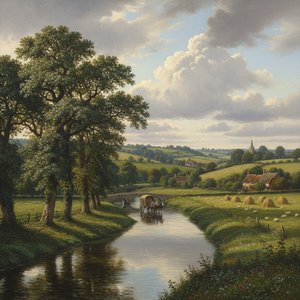
A classical landscape (William Linton)
William Linton (1791–1876) vytvořil dílo A classical landscape.

 Náhled v interiéru

 Ručně malovaná olejná reprodukce
 Sdílet
 Sdílet
 Informační list


 Stáhnout
 Podobné položky
 Rentgenové snímky
 Slideshow
 Otázky a odpovědi

 Statistiky
A classical landscape v kostce
- Název díla
- A classical landscape
- Autor
- William Linton (1791–1876)
- Rok narození umělce
- Liverpool, United Kingdom
- Motiv
- landscape
Vysokorozlišené fotografie díla A classical landscape
William Linton, A classical landscape. Veřejná doména
Odpovědi na otázky k dílu A classical landscape
Co zachycuje dílo „A classical landscape“ od William Linton?
Témata obsažená v díle „A classical landscape“ od William Linton zahrnují landscape. Tato témata společně shrnují obsah celého uměleckého díla.
Je dílo „A classical landscape“ volné z autorských práv?
Dílo „A classical landscape“ od William Linton spadá do v rámci volného užití – autorská práva vypršela. Tento stav určuje pravidla pro reprodukci obrazu tohoto díla.
Kdo vytvořil "A classical landscape"?
Dílo "A classical landscape" vytvořil/a William Linton. Informace na této stránce popisují originální dílo umělce William Linton.
Jak lze vysvětlit situaci s autorskými právy u díla „A classical landscape“ od William Linton?
Autorskoprávní status díla „A classical landscape“ – v rámci volného užití – autorská práva vypršela – vyplývá ze smrti umělce v roce 1876.
O umělci, William Linton

1791–1876, United Kingdom
William Linton
The Romantic Visionary of Classical Landscape William Linton, born in the maritime atmosphere of Liverpool in 1791, emerged as a pivotal figure in British landscape painting during the Victorian era—a period defined by a profound fascination with both scientific observation and idealized beauty. His artistic journey began not with the grand gestures of a master, but through the humble and disciplined practice of copying the works of legends like Claude Lorrain and Richard Wilson. These early encounters were transformative, instilling in Linton a deep-seated appreciation for the interplay of natural light and the sweeping grandeur of panoramic compositions. This foundational period shaped his distinctive style, allowing him to weave classical sensibilities into the fabric of 19th-century Romanticism.
Také od autora William Linton
 Self-portrait1813
 Louise-Amélie Panet1815
 Indian Dance at Amherstburg1825
 View Of Edinburgh; And View Of Stirling
Eseje k tématu A classical landscape
 British Landscapes: The Enduring Spirit of the Countryside in Art and Interior DesignExplore the mastery of British landscape art from Constable to Cartlidge. Discover timeless beauty for your home today.
 John Constable: Nature, Light & the Romantic Vision of Rural EnglandExplore the life & art of John Constable, the Romantic painter who revolutionized landscape with emotive scenes of rural England. Discover …
 Atmospheric Vistas: A Study of Notable Landscape CompositionsExplore a masterclass on atmospheric landscapes from Patinir to Monet. Discover the evolution of light and texture in art history.