Romanticism
Study, a man's face (Thomas Cole)
Thomas Cole (1801–1848) vytvořil dílo Study, a man's face. Patří k hnutí Romanticism.

 Náhled v interiéru

 Ručně malovaná olejná reprodukce
 Sdílet
 Sdílet
 Informační list


 Stáhnout
 Podobné položky
 Rentgenové snímky
 Slideshow
 Otázky a odpovědi

 Statistiky
Study, a man's face v kostce
- Název díla
- Study, a man's face
- Autor
- Thomas Cole (1801–1848)
- Rok narození umělce
- Bolton, Spojené království
- Pohyb
- Romanticism
- Motiv
- portrait, study, sketch, male face, pencil drawing, monochromatic
Co przedstawuje dílo Study, a man's face?
A Glimpse into Character: Thomas Cole's "Study, a Man's Face"
This evocative pencil sketch by Thomas Cole offers an intimate study of an older gentleman, capturing a moment of quiet contemplation. More than just a portrait, it’s a window into the artist’s process and a testament to his keen observational skills. Executed with remarkable economy of line, this work provides a fascinating insight into the mind of one of America's most important landscape painters, revealing a sensitivity that extended beyond grand vistas to the subtle nuances of human expression. The subject, rendered in shades of gray and white against a cream-colored background, exudes an air of wisdom and experience, inviting viewers to ponder his life story.Style & Technique: A Preparatory Sketch
Cole’s “Study, a Man's Face” exemplifies the style of a preparatory sketch or study. It isn't intended as a finished artwork in itself but rather as an exploration of form and likeness before embarking on a larger composition. The technique is characterized by quick, gestural pencil strokes – hatching and cross-hatching are skillfully employed to create shading and suggest volume without resorting to elaborate blending. This direct approach lends the piece a sense of immediacy and authenticity; it feels like a captured moment, a fleeting observation brought to life with remarkable efficiency. The artist’s mastery lies in his ability to convey depth and character using only lines and subtle tonal variations. The materials used – simple pencil on paper – further emphasize the work's raw and unadorned nature.Historical Context & Cole's Artistic Journey
Created during a period of burgeoning American artistic identity, this study reflects Thomas Cole’s broader engagement with portraiture alongside his celebrated landscape paintings. Born in England and later immigrating to the United States, Cole became a pivotal figure in the Hudson River School movement, known for its romantic depictions of the American wilderness. While renowned for his grand allegorical landscapes like "The Course of Empire," this sketch reveals another facet of his artistic practice – a dedication to capturing individual character with precision and sensitivity. It provides valuable insight into how Cole approached portraiture, likely informing his larger works by establishing a foundation of detailed observation.Symbolism & Emotional Resonance
The aged appearance of the subject immediately suggests wisdom, experience, and perhaps even a touch of melancholy. The sketch-like style itself contributes to an emotional impact; it conveys a sense of immediacy and intimacy, as if we are privy to a private moment. The limited color palette reinforces this feeling of quiet contemplation, drawing attention to the interplay of light and shadow across the man’s face. While seemingly simple, the work evokes a profound sense of human dignity and invites viewers to connect with the subject on an emotional level, prompting reflection on the passage of time and the richness of lived experience.Vysokorozlišené fotografie díla Study, a man's face
Thomas Cole, Study, a man's face. Veřejná doména
Odpovědi na otázky k dílu Study, a man's face
Co zachycuje dílo "Study, a man's face"?
„Study, a man's face“ od Thomas Cole zobrazuje: portrait, study, sketch, male face, pencil drawing, monochromatic, head, older man.
Je dílo „Study, a man's face“ volné z autorských práv?
Co se týče autorských práv, dílo "Study, a man's face" spadá do v rámci volného užití – autorská práva vypršela.
Kdo vytvořil "Study, a man's face"?
Dílo "Study, a man's face" se připisuje autorovi Thomas Cole.
K kterému uměleckému směru patří „Study, a man's face“ od Thomas Cole?
Dílo „Study, a man's face“ od Thomas Cole patří k období směru Romanticism, který dílu dodává jeho stylistický kontext.
Do které období tvorby Thomas Cole patří dílo „Study, a man's face“?
„Study, a man's face“ představuje období Early Period umělce Thomas Cole.
Proč má dílo „Study, a man's face“ právě takový autorský status?
Dílo „Study, a man's face“ od Thomas Cole spadá do v rámci volného užití – autorská práva vypršela. Autorská práva se počítají od roku úmrtí autora; Thomas Cole zemřel(a) v roce 1848.
Jaké místo v tvorbě umělce Thomas Cole zaujímá dílo "Study, a man's face"?
V rámci tvorby umělce Thomas Cole se dílo „Study, a man's face“ řadí do stylu Romanticism a doplňuje tak motivy emphasis on observation & detail., likely influenced by academic drawing., preparatory study for larger works., demonstrates cole's drawing skills., illustrates his focus on realism., exploration of individual character., reflects early 19th-century portraiture..
Je dílo "Study, a man's face" typické pro to, co Thomas Cole obvykle vytvářel/a?
Mezi opakující se témata umělce Thomas Cole patří emphasis on observation & detail., likely influenced by academic drawing., preparatory study for larger works., demonstrates cole's drawing skills., illustrates his focus on realism., exploration of individual character., reflects early 19th-century portraiture.; dílo „Study, a man's face“ se zaměřuje na portrait, study, sketch, male face, pencil drawing, monochromatic, head, older man.
O umělci, Thomas Cole

1801–1848, Spojené království
Thomas Cole
Život a dílo Thomas Cole Thomas Cole se narodil 1. února 1801 v Bolton le Moors v hrabství Lancashire v Anglii, a jeho životní cesta se začala daleko od krajin, které mu později daly nesmrtelnost. V roce 1818 emigroval se svou rodinou do Spojených států za novým začátkem v zemi rozlehlých, nezkreslených a mapou neznámých území. V těch raných letech byl mužem mnoha řemesel; pracoval jako rytíř a později, od roku 1822, našel stabilní uplatnění jako portrétní malíř.
Také od autora Thomas Cole
 Oxbow
 Sen architekta1840
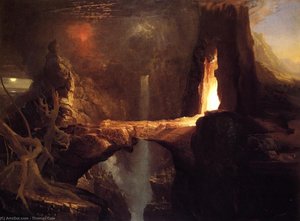 Odstranění. Měsíc a světlo1828
 Výhled na Florencii ze San Miniata1837
Eseje k tématu Study, a man's face
 The Soul of the Sketch: Unveiling the Raw Beauty and Creative Intimacy of Artist StudiesDiscover the profound intimacy of artist studies. Explore how raw sketches and preparatory works capture the true soul of Impressionism, fr…
 Defining the American Sublime: The History and Legacy of the Hudson River SchoolMaster the history of the American Sublime and the Hudson River School. Explore the legacy of Cole and Church now.
 Francis Bacon: Top 25 děl mistra expresionismu pro váš interiér | OriginalUniqueArt.comProzkoumejte top 25 děl Francis Bacona – mistra expresionismu. Objevíte jeho portréty, triptychy a emotivní malbu plnou temných barev. Repr…