Expressionism
Self-portrait (Paula Modersohn-Beckerová)
Paula Modersohn-Beckerová (1876–1907) vytvořil dílo Self-portrait. Patří k hnutí Expressionism. Je vyrobeno z Oil On Canvas.
- Oil On Canvas

 Náhled v interiéru

 Ručně malovaná olejná reprodukce
 Sdílet
 Sdílet
 Informační list


 Stáhnout
 Podobné položky
 Rentgenové snímky
 Slideshow
 Otázky a odpovědi

 Statistiky
Self-portrait v kostce
- Název díla
- Self-portrait
- Autor
- Paula Modersohn-Beckerová (1876–1907)
- Rok narození umělce
- Drážďany, Německo
- Technika
- Oil On Canvas
- Pohyb
- Expressionism
- Období
- Modern
- Motiv
- woman, brown hair, necklace, smiling, people, background
Co przedstawuje dílo Self-portrait?
Identification of the Self-portrait Artwork
The gaze of the artist meets us directly in Self-portrait, a work by the German Expressionist painter and draftswoman Paula Modersohn-Becker. This piece emerges from the vast body of work she produced throughout her active life, a period of intense creation that defined her presence in the art world. Within this painting, the subject turns her eyes toward the viewer, offering a direct encounter with her own likeness and a quiet, intense presence.
Paula Modersohn-Becker was born on 8 February 1876 in Dresden, Germany. Her creative spirit moved through many stages before she passed away on 30 November 1907 in Worpswede. This specific self-representation captures a moment of profound introspection, existing as a vital part of her ongoing exploration of identity and the human condition.
Visual Composition and Subject Matter
A woman with brown hair occupies the center of the frame, her gaze meeting the viewer with a direct and smiling expression. A necklace rests around her neck, catching the light as she holds her position. The scene feels lived-in and active, as if a momentary pause has been captured amidst a social gathering. In the background, two other figures add a sense of depth to the space. One person lingers on the left side of the composition, while another is positioned on the right, both appearing caught in their own private conversations or activities.
The arrangement of these figures creates a layered environment where the subject remains the clear focus despite the presence of others. The background figures do not compete for attention but instead provide a sense of atmosphere and context to her presence. This spatial depth allows the viewer to feel as though they are standing within the same room, witnessing a quiet, joyful moment of connection. The interaction between the subject and the viewer remains the heart of the image, anchored by her steady, smiling look.
Technical Details and Artistic Style
The oil on canvas breathes with a heavy, tactile presence. Thick applications of paint create a surface where impasto and textured tempera applications meet, giving the work a physical weight. Every stroke feels deliberate, as if the artist is carving her own likeness out of the pigment. The colors appear deep and saturated, building a sense of substance through their sheer density. One can sense the movement of the brush in the way the paint sits upon the surface, creating a landscape of ridges and valleys that catch the light.
A striking simplicity defines the forms within the frame. Rather than chasing the fine, delicate lines of academic tradition, the artist relies on bold brushwork to establish shape and volume. This approach strips away unnecessary detail, focusing instead on the essential weight of the figure. The simplified forms lend the portrait a monumental quality, making the subject feel grounded and permanent. There is a raw, directness in the way the paint is laid down, favoring the emotional truth of a shape over the precision of a line.
Related Works by the Artist
The artist's exploration of the self continues through other intimate encounters with her own image. In 1906, she presents herself in Self-Portrait on 6th Wedding Anniversary, a work that captures a specific moment of her life. This same year, she also creates Self-Portrait Nude with Amber Necklace, where the focus shifts toward the physical presence of the body. These pieces exist alongside her Self-Portrait with Two Flowers, which further develops her unique way of seeing.
Other compositions reveal her evolving language through different subjects and settings. The Self Portrait with Camellia Branch resides in the Museum Folkwang, Essen. Each of these works reflects her movement toward a more subjective and emotionally charged style, moving away from mere representation to find a deeper truth within the paint.
Vysokorozlišené fotografie díla Self-portrait
Paula Modersohn-Beckerová, Self-portrait. Veřejná doména
Odpovědi na otázky k dílu Self-portrait
V jaké technice je vytvořeno dílo „Self-portrait“ od Paula Modersohn-Beckerová?
Technikou díla „Self-portrait“ od Paula Modersohn-Beckerová je Oil On Canvas. Reprodukce mají za cíl věrně zachytit vzhled této techniky.
Co zachycuje dílo „Self-portrait“ od Paula Modersohn-Beckerová?
„Self-portrait“ od Paula Modersohn-Beckerová zobrazuje: woman, brown hair, necklace, smiling, people, background.
Je dílo „Self-portrait“ volné z autorských práv?
Co se týče autorských práv, dílo "Self-portrait" spadá do v rámci volného užití – autorská práva vypršela.
Kdo vytvořil "Self-portrait"?
Dílo "Self-portrait" vytvořil/a Paula Modersohn-Beckerová. Informace na této stránce popisují originální dílo umělce Paula Modersohn-Beckerová.
K jakému stylu patří „Self-portrait“?
Umělecký směr, ke kterému patří dílo „Self-portrait“ od Paula Modersohn-Beckerová, je Expressionism. Tato klasifikace toto dílo umísťuje mezi související umělce a další umělecká díla.
Patří dílo „Self-portrait“ od Paula Modersohn-Beckerová do volného užití, a proč?
Autorskoprávní status díla „Self-portrait“ – v rámci volného užití – autorská práva vypršela – vyplývá ze smrti umělce v roce 1907.
Jakým způsobem se dílo „Self-portrait“ zapojuje do témat a stylu umělce Paula Modersohn-Beckerová?
V rámci tvorby umělce Paula Modersohn-Beckerová se dílo „Self-portrait“ řadí do stylu Expressionism a doplňuje tak motivy cézanne, gauguin, van gogh, identity and femininity, self-exploration, pioneering expressionism.
Jaké je místo díla „Self-portrait“ mezi opakovanými tématy umělce Paula Modersohn-Beckerová?
„Self-portrait“ zachycuje woman, brown hair, necklace, smiling, people, background, zatímco v díle umělce Paula Modersohn-Beckerová se setkáváme s tématy jako cézanne, gauguin, van gogh, identity and femininity, self-exploration, pioneering expressionism. Porovnání těchto dvou aspektů odhaluje, jak toto dílo navazuje na obvyklá témata tohoto autora.
O umělci, Paula Modersohn-Beckerová

1876–1907, Německo
Paula Modersohn-Beckerová
Paula Modersohn-Becker: Průkopnice vnitřní vize Paula Modersohn-Becker, jméno rezonující tichou silou v dějinách raného moderního umění, byla umělkyně, která se odvážila hledat dovnitř. Narodila se Minna Hermine Paula Beckerová 8. února 1876 v Drážďanech a tragicky předčasně zemřela 30. listopadu 1907 ve Worpswede.
O umělci Paula Modersohn-Beckerová Významná díla umělce Paula Modersohn-Beckerová
Také od autora Paula Modersohn-Beckerová
 Portrait of a young woman with red hat1900
 Half-length portrait of an old farmer1903
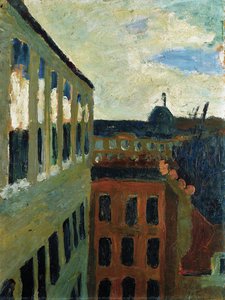 View from the studio window of the artist in Paris1900
 Still life with plant, lemon and orange1906
Eseje k tématu Self-portrait
 German artworks of the 1900sGerman Expressionism through the works of Franz Marc, Ernst Ludwig Kirchner, and August Macke. Find museum-quality reproductions on Origina…
 25 Key Paintings by Paula Modersohn-Becker: A Look at Her Most Important ArtworksExplore 25 key works by Paula Modersohn-Becker. Discover her unique Post-Impressionist style and explore the full collection on OriginalUni…
 The Luster of Vermeer: Examining the Artistry of Pearl and Light in Dutch Baroque PortraitureExplore the technical mastery of Vermeer's light and pigments in Dutch Baroque art. Discover the secrets of the Old Masters today.