Berlin Secession · 1900
Salome, Second Version (Lovis Corinth, 1900)
Lovis Corinth (1858–1925) vytvořil dílo Salome, Second Version. Pochází z roku 1900. Patří k hnutí Berlin Secession. Je vyrobeno z Acrylic On Canvas. Nachází se v Museum der bildenden Künste v Lipsk, Německo. Rozměry jsou 127 × 148 cm.
- 1900
- Acrylic On Canvas
- 127 × 148 cm
- Museum der bildenden Künste, Lipsk

 Náhled v interiéru

 Ručně malovaná olejná reprodukce
 Sdílet
 Sdílet
 Informační list pro studenty


 Stáhnout
 Podobné položky
 Rentgenové snímky
 Slideshow
 Otázky a odpovědi

 Statistiky
Salome, Second Version v kostce
- Název díla
- Salome, Second Version
- Autor
- Lovis Corinth (1858–1925)
- Rok narození umělce
- Gvardějsk, Rusko
- Datum vytvoření
- 1900
- Technika
- Acrylic On Canvas
- Rozměry
- 127 × 148 cm
- Kde jej vidět
- Museum der bildenden Künste, Lipsk, Německo
- Pohyb
- Berlin Secession
- Období
- 19th Century
- Motiv
- salome, herodias, dance, tragedy, execution, biblical
Co przedstawuje dílo Salome, Second Version?
A Descent into Shadow and Desire: Lovis Corinth’s ‘Salome, Second Version’
Lovis Corinth's “Salome, Second Version,” painted in 1900, isn’t merely a depiction of the biblical tale; it’s a visceral exploration of power, betrayal, and the unsettling allure of darkness. This arresting canvas, currently residing within the Museum der Bildenden Künste in Leipzig, immediately commands attention with its dramatic composition and intensely expressive palette. Corinth, a pivotal figure bridging Impressionism and Expressionism, masterfully eschews traditional romanticism, instead presenting a Salome far removed from the idealized figures of earlier portrayals. Instead of a passive object of desire, she emerges as a complex, almost defiant presence – a woman caught in the throes of her own ambition and haunted by the consequences of her actions.
The painting’s genesis lies within the turbulent artistic landscape of early 20th-century Berlin. Corinth, having moved there from Munich, found himself at the heart of a vibrant, often contentious, art scene. The Secession group, with its emphasis on freedom and innovation, provided a fertile ground for his evolving style. “Salome” reflects this period’s fascination with psychological depth and emotional intensity – a departure from the polished surfaces of academic painting. Corinth deliberately chose to revisit the legend, not as a straightforward narrative illustration, but as an opportunity to delve into the character's inner turmoil and the moral ambiguity at the heart of the story.
The Dance and its Discontents: Technique and Composition
Corinth’s technique is immediately striking. He employs a bold, almost frenetic brushstroke – thick impasto applied with visible energy – that imbues the canvas with a sense of movement and urgency. The colors are rich and saturated, dominated by deep reds, purples, and blacks, creating an atmosphere of dramatic intensity. The composition itself is carefully constructed to draw the viewer into the scene. Salome, positioned centrally, dominates the foreground, her body tilted forward in a pose that suggests both vulnerability and calculated seduction. The figures surrounding her – the servant bearing the head, the watchful woman with the fan, and the shadowy men – are rendered with varying degrees of detail, contributing to the painting’s overall sense of unease and disorientation.
- Brushwork: Thick, expressive strokes create a dynamic and unsettling effect.
- Color Palette: Dominated by deep reds, purples, and blacks, evoking drama and shadow.
- Composition: Salome is centrally positioned, drawing the viewer's eye and emphasizing her role as the focal point of the scene.
Symbolism and Interpretation: A Portrait of Moral Ambiguity
Beyond the literal depiction of the biblical story, “Salome” is laden with symbolic meaning. The dance itself represents a dangerous allure – a seductive invitation to transgression. The severed head on the platter isn’t simply a gruesome trophy; it's a potent symbol of ambition and the destructive consequences of unchecked desire. Corinth deliberately avoids offering a clear moral judgment, instead presenting a complex portrait of a woman driven by both her own desires and the manipulative influence of her mother. The inclusion of the fan-bearing woman, often interpreted as Herodias, adds another layer of intrigue, suggesting a conspiracy at play – a deliberate orchestration of events that leads to John the Baptist’s demise.
Furthermore, the painting can be viewed through the lens of the burgeoning feminist movement of the time. Salome's defiant gaze and her unapologetic embrace of her sexuality challenged traditional notions of female virtue and presented a powerful image of female agency – albeit one ultimately consumed by tragedy. Corinth’s decision to portray her as a figure of both beauty and menace reflects the complex and often contradictory attitudes towards women in early 20th-century society.
Emotional Resonance: A Timeless Exploration of Human Darkness
“Salome, Second Version” continues to resonate with viewers today because it taps into fundamental human emotions – desire, betrayal, guilt, and the haunting awareness of our own mortality. Corinth’s masterful use of color, composition, and symbolism creates a painting that is both visually arresting and psychologically profound. It's not a comfortable image; it confronts us with the darker aspects of human nature and reminds us that even in moments of apparent beauty and pleasure, there can be a lurking sense of unease and impending doom. Reproductions of this powerful work offer a glimpse into Corinth’s artistic genius and provide an opportunity to contemplate the timeless themes explored within its shadowed depths.
Ve kterém muzeu se nachází Salome, Second Version?
Museum der bildenden Künste
Lipsk, Německo
Dědictví vytesané časem: Duše uměleckého srdce Lipska V pulzujícím kulturním krajinném rámci Saského státu v Německu stojí instituce, která slouží mnohem více než jen jako pouhé úložiště mistrovských děl; je živým svědectvím lidské odolnosti a neochvějné síly kreativity. Museum der bildenden Künste (MdbK) v Lipsku v sobě uzavírá sedm století uměleckého úsilí a utkuje příběh, který sahá od pozdního středověku až po nejmodernější současné postupy. Založené v roce 1837 jako Lipské umělecké sdružení prošla cesta muzea hlubokou transformací, poznamenanou stíny destrukce i jasem znovuzrození.


Vysokorozlišené fotografie díla Salome, Second Version
Lovis Corinth, Salome, Second Version (1900), Museum der bildenden Künste. Veřejná doména
Odpovědi na otázky k dílu Salome, Second Version
Kde je dnes možné vidět dílo „Salome, Second Version“ od Lovis Corinth?
Originál díla „Salome, Second Version“ si můžete prohlédnout v instituci Museum der bildenden Künste, Lipsk, Německo.
V jakém roce bylo vytvořeno dílo „Salome, Second Version“ od Lovis Corinth?
Dílo „Salome, Second Version“ od Lovis Corinth vzniklo v roce 1900.
Jakou technikou je vytvořeno dílo "Salome, Second Version"?
Lovis Corinth pro dílo „Salome, Second Version“ použil/a techniku Acrylic On Canvas. Tato technika definuje materiální podstatu originálního díla.
Jaké jsou rozměry originálu „Salome, Second Version“?
Rozměry originálního díla „Salome, Second Version“ od Lovis Corinth jsou 127 x 148 cm.
Jaká témata se objevují v díle „Salome, Second Version“ od Lovis Corinth?
Témata obsažená v díle „Salome, Second Version“ od Lovis Corinth zahrnují salome, herodias, dance, tragedy, execution, biblical, figures. Tato témata společně shrnují obsah celého uměleckého díla.
Je dílo „Salome, Second Version“ volné z autorských práv?
Dílo „Salome, Second Version“ od Lovis Corinth spadá do v rámci volného užití – autorská práva vypršela. Tento stav určuje pravidla pro reprodukci obrazu tohoto díla.
Kdo je autorem díla "Salome, Second Version"?
Dílo "Salome, Second Version" se připisuje autorovi Lovis Corinth.
K kterému uměleckému směru patří „Salome, Second Version“ od Lovis Corinth?
Umělecký směr, ke kterému patří dílo „Salome, Second Version“ od Lovis Corinth, je Berlin Secession. Tato klasifikace toto dílo umísťuje mezi související umělce a další umělecká díla.
Do jaké fáze tvůrčího rozvoje Lovis Corinth patří dílo „Salome, Second Version“?
„Salome, Second Version“ představuje období Berlin Secession Era umělce Lovis Corinth.
O umělci, Lovis Corinth

1858–1925, Rusko
Lovis Corinth
A Life Forged in Paint: The World of Lovis Corinth Lovis Corinth, rozený jako Franz Heinrich Louis na 21. července 1858 v provincii Předprusko, byl umělec, který ztělesňoval turbulentní přechod od 19. do počátku 20. století ve světě umění.
Také od autora Lovis Corinth
 Ve strojovně1893
 Wilhelmine s koulem1915
 Portrait of the Painter Paul Eugène Gorge1908
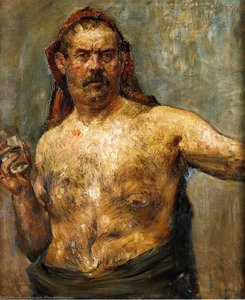 Self Portrait with a Glass1907
Eseje k tématu Salome, Second Version
 Lovis Corinth: Bridging Impressionism & Expressionism – A Study of Artistic EvolutionExplore the fascinating artistic journey of Lovis Corinth, a pivotal figure bridging Impressionism & Expressionism. Discover his evolution,…
 The Soul of the Brushstroke: Why Textured Impasto Defines the Magic of Impressionist MasterpiecesDiscover the tactile magic of Impressionism. Explore how the impasto technique breathes life into masterpieces through texture and light. E…
 Unveiling the Dreamer: The 25 Most Iconic Masterpieces by Gustave MoreauStep into the dreamlike world of Gustave Moreau. Explore 25 iconic Symbolist masterpieces, from mythic legends to opulent textures. Find in…