Northern Renaissance · 1512
Two Bishops (Saint Ulrich? and Saint Blasius) (Jacob Cornelisz van Oostsanen, 1512)
Jacob Cornelisz van Oostsanen (1472–1533) vytvořil dílo Two Bishops (Saint Ulrich? and Saint Blasius). Pochází z roku 1512. Patří k hnutí Northern Renaissance. Je vyrobeno z Black and White Photography. Nachází se v Kunstmuseum Basel v Basilej, Švýcarsko.
- 1512
- Black and White Photography
- Kunstmuseum Basel, Basilej

 Ručně malovaná olejná reprodukce
 Sdílet
 Sdílet
 Informační list


 Stáhnout
 Podobné položky
 Slideshow
 Otázky a odpovědi

 Statistiky
Two Bishops (Saint Ulrich? and Saint Blasius) v kostce
- Název díla
- Two Bishops (Saint Ulrich? and Saint Blasius)
- Autor
- Jacob Cornelisz van Oostsanen (1472–1533)
- Rok narození umělce
- Oostzaan, Nizozemsko
- Datum vytvoření
- 1512
- Technika
- Black and White Photography
- Kde jej vidět
- Kunstmuseum Basel, Basilej, Švýcarsko
- Pohyb
- Northern Renaissance
- Období
- Renaissance
- Motiv
- people, figures, wool, textiles, indoor setting, fabric
Co przedstawuje dílo Two Bishops (Saint Ulrich? and Saint Blasius)?
The Artist and His Artistic Context
Jacob Cornelisz van Oostsanen lived through a season of profound change. Born in Oostzaan, Netherlands, in 1472, he watched the old world of the Middle Ages begin to dissolve into the new light of the Renaissance. His hands, trained in the precision of a woodcut designer or perhaps a goldsmith, moved between these two eras. In "Two Bishops (Saint Ulrich? and Saint Blasius)", created about 1512, the artist captures a moment of transition. He was a man of the North, a painter and designer who bridged the gap between the heavy traditions of the past and the emerging spirit of a new age.
The brushwork of Jacob Cornelisz van Oostsanen carries the weight of two distinct lineages. He absorbed the luminous color palettes and the elongated, graceful proportions of Geertgen tot Sint Jans. Yet, he also looked toward the sharp, disciplined lines of Albrecht Dürer. This duality allowed him to navigate the shifting tides of Amsterdam's artistic landscape. He was a craftsman of the transition, holding the steady grip of Gothic tradition while reaching for the clarity of the Renaissance. His life, which ended in 1533, remains etched in the wood and pigment of his era.
The Artistic Style and Technique
The brushwork moves with a newfound freedom, shedding the rigid formalism of earlier traditions. Instead of stiff, unyielding lines, the paint flows in a looser technique. This approach allows for a sense of movement within the composition. Luminous color harmonies settle over the figures, catching the light in a way that feels both soft and intentional. The proportions are simplified, stripping away unnecessary complexity to focus on the essential form of the subjects.
Light and shadow define the presence of the two figures. These stylistic innovations reflect a shift toward a more contemporary way of seeing. The artist uses these visual tools to create a direct connection with the viewer. For the Catholic patrons of the time, such works functioned as clear, visual representations of faith. The imagery is grounded in established iconography, yet it breathes with a modern sensibility. Every stroke serves the purpose of making the sacred tangible through light and color.
The Versatile Oeuvre of Jacob Cornelisz
The artist’s output spans a vast range of media, comprising approximately 200 woodcuts and 27 paintings. His prints are defined by meticulous detail, adhering to the strict conventions of the North Netherlandish tradition. In the growing urban center of Amsterdam, his workshop functioned as a hub for experimentation. He moved through the city's expanding streets, establishing a presence that mirrored the rapid growth of the town itself.
His hands navigated the sharp precision of the woodcut and the fluid application of paint. This duality allowed him to capture both the fine lines of a graphic design and the luminous depth of a canvas. He worked during a period of significant transition, bridging the gap between the old ways and new perspectives. His studio was a place of constant motion and shifting styles.
The breadth of his production reflects a life spent mastering different tools. Whether carving into wood or layering pigment, the focus remained on narrative clarity. His work remains a record of a craftsman navigating a changing landscape.
Ve kterém muzeu se nachází Two Bishops (Saint Ulrich? and Saint Blasius)?
Kunstmuseum Basel
Basilej, Švýcarsko
Původy a historie Kunstmuseum Basel Kořeny historie Kunstmuseum Basel sahají hluboko do minulosti až k převzetí slavného Amerbachova kabinetu. Tato sbírka, která se stala samotným základním kamenem instituce, byla zakoupena městem Basilej a univerzitou v Basileji v roce 1671. Právě rozhodnutí zpřístupnit tato díla široké veřejnosti vybudovalo tento museum jako první veřejnou uměleckou sbírku svého druhu.


Vysokorozlišené fotografie díla Two Bishops (Saint Ulrich? and Saint Blasius)

Jacob Cornelisz van Oostsanen, Two Bishops (Saint Ulrich? and Saint Blasius) (1512), Kunstmuseum Basel. Veřejná doména
Odpovědi na otázky k dílu Two Bishops (Saint Ulrich? and Saint Blasius)
Kde mohu vidět originál díla „Two Bishops (Saint Ulrich? and Saint Blasius)“ od Jacob Cornelisz van Oostsanen?
Originál díla „Two Bishops (Saint Ulrich? and Saint Blasius)“ od Jacob Cornelisz van Oostsanen je uložen v instituci Kunstmuseum Basel, Basilej, Švýcarsko. Reprodukce však umožňuje toto dílo vystavit i ve vašem domově.
V jakém roce bylo vytvořeno dílo „Two Bishops (Saint Ulrich? and Saint Blasius)“ od Jacob Cornelisz van Oostsanen?
Dílo „Two Bishops (Saint Ulrich? and Saint Blasius)“ od Jacob Cornelisz van Oostsanen vzniklo v roce 1512.
V jaké technice je vytvořeno dílo „Two Bishops (Saint Ulrich? and Saint Blasius)“ od Jacob Cornelisz van Oostsanen?
„Two Bishops (Saint Ulrich? and Saint Blasius)“ je dílo vytvořené v technice Black and White Photography.
Jaká témata se objevují v díle „Two Bishops (Saint Ulrich? and Saint Blasius)“ od Jacob Cornelisz van Oostsanen?
Motivy díla „Two Bishops (Saint Ulrich? and Saint Blasius)“ jsou people, figures, wool, textiles, indoor setting, fabric, clothing.
Patří „Two Bishops (Saint Ulrich? and Saint Blasius)“ od Jacob Cornelisz van Oostsanen do volného tisku?
Stav autorských práv pro dílo „Two Bishops (Saint Ulrich? and Saint Blasius)“ od Jacob Cornelisz van Oostsanen: toto dílo spadá do v rámci volného užití – autorská práva vypršela. To určuje, zda lze volně vytvářet reprodukce tohoto obrazu.
K kterému umělci je dílo "Two Bishops (Saint Ulrich? and Saint Blasius)" připisováno?
Dílo "Two Bishops (Saint Ulrich? and Saint Blasius)" se připisuje autorovi Jacob Cornelisz van Oostsanen.
K kterému uměleckému směru patří „Two Bishops (Saint Ulrich? and Saint Blasius)“ od Jacob Cornelisz van Oostsanen?
Umělecký směr, ke kterému patří dílo „Two Bishops (Saint Ulrich? and Saint Blasius)“ od Jacob Cornelisz van Oostsanen, je Northern Renaissance. Tato klasifikace toto dílo umísťuje mezi související umělce a další umělecká díla.
Do které éry tvorby Jacob Cornelisz van Oostsanen spadá dílo "Two Bishops (Saint Ulrich? and Saint Blasius)"?
V rámci kariéry umělce Jacob Cornelisz van Oostsanen spadá dílo „Two Bishops (Saint Ulrich? and Saint Blasius)“ do období Mature Period. Tato fáze umožňuje jeho srovnání s dalšími díly tohoto umělce.
Kolik let bylo Jacob Cornelisz van Oostsanen, když v roce 1512 vytvořil(a) dílo „Two Bishops (Saint Ulrich? and Saint Blasius)“?
Jacob Cornelisz van Oostsanen bylo 40 let, když v roce 1512 vytvořilo dílo „Two Bishops (Saint Ulrich? and Saint Blasius)“. Věk je vypočítán z roku narození umělce, 1472.
O umělci, Jacob Cornelisz van Oostsanen
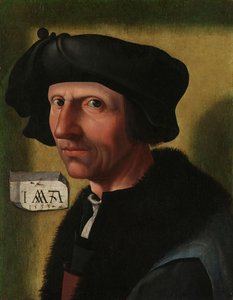
1472–1533, Nizozemsko
Jacob Cornelisz van Oostsanen
Jacob Cornelisz van Oostsanen: Most mezi gotikou a renesancí v Amsterdamu Jacob Cornelisz van Oostsanen (cca 1470 – 1533) představuje klíčovou postavu severonizozemského umění, která pojala poslední období přechodu od středověkých tradic k rozkvétajícímu renesančnímu duchu v pulzujícím Amsterdamu. Přestože jsou biografické detaily vzácné – a vědci se musí spoléhat především na Karel van Manderovo dílo Schilder-boeck a archivní záznamy – badatelé s velkou pečlivostí zrekonstruovali jeho život i uměleckou dráhu. Odhalili tak příběh řemeslníka, jehož kořeny byly hluboce zakořeněny v gotické tradici Haarlemu, ale který byl zároveň hluboce ovlivněn inovacemi přicházejícími z Florencie a Norimberka. Raný život a rodina: Jacob Cornelisz se narodil kolem roku 1470 v Oostzaanu v Severním Holandsku jako součást rodiny zasvěcené malířství – jeho bratři, Cornelis Buys I a II, byli rovněž uznávanými umělci.
O umělci Jacob Cornelisz van Oostsanen Významná díla umělce Jacob Cornelisz van Oostsanen
Také od autora Jacob Cornelisz van Oostsanen
 Donor Portraits of the Korsgen Elbertzen - van der Schelling Family (right part)1509
 Hieronymus altarpiece1511
 The donors Korsgen Elbertzen, his sons Dirck and Albert on left half, with female donors on the right1509
 Virgin and child with angel musicians1510

Eseje k tématu Two Bishops (Saint Ulrich? and Saint Blasius)
 25 Masterpieces by Pieter Bruegel the Elder: The Ultimate Guide to a Northern Renaissance LegendExplore 25 iconic Northern Renaissance masterpieces by Bruegel the Elder. Discover museum-quality art on OriginalUniqueArt.com.
 Masterpieces of the Dutch Soul: Top 25 Must-See Artworks in Amsterdam's RijksmuseumEmbark on a journey through the Dutch Golden Age. From Rembrandt's drama to Vermeer's light, explore 25 iconic Rijksmuseum masterpieces and…
 The Two Johns: Distinguishing the Iconography of Saint John the Baptist and the Evangelist in Western ArtMaster the subtle iconography of Saint John the Baptist and the Evangelist. Explore these Renaissance masters with our expert guide.