Neoclassicism
A Muse (Jan Vanderlyn)
Jan Vanderlyn (1775–1852) vytvořil dílo A Muse. Patří k hnutí Neoclassicism. Je vyrobeno z Drawing.
- Drawing

 Náhled v interiéru

 Ručně malovaná olejná reprodukce
 Sdílet
 Sdílet
 Informační list


 Stáhnout
 Podobné položky
 Rentgenové snímky
 Slideshow
 Otázky a odpovědi

 Statistiky
A Muse v kostce
- Název díla
- A Muse
- Autor
- Jan Vanderlyn (1775–1852)
- Rok narození umělce
- Kingston, Spojené státy americké
- Technika
- Drawing
- Pohyb
- Neoclassicism
- Období
- 19th Century
- Motiv
- woman, dress, bird, flying, black and white
Co przedstawuje dílo A Muse?
Identification of the Artwork and Artist
A Muse is an artwork by John Vanderlyn. The artist, born in Kingston, United States, in 1775, sought a path through the academies of Europe to define a new American aesthetic. His hand moved between the precision of portraiture and the grand scale of historical scenes, always anchored by a sense of classical order.
Vanderlyn lived a life of significant movement, traveling from the studios of Philadelphia to the refined atmosphere of Paris. He eventually returned to his roots, passing away in Kingston, New York, on September 23, 1852. His work remains a quiet record of an era when American art first began to look toward the structured beauty of the old world.
Visual Composition and Subject Matter
A black and white drawing captures a woman suspended in mid-air. She wears a flowing dress that ripples around her form. Her arms are outstretched, reaching into the empty space as if caught in a moment of flight. She possesses the likeness of a goddess or a muse, drifting through a void of pale paper. Near the top left corner, a single bird occupies the composition, a small presence against the expanse.
The surface of the work is marked by several numbers scattered throughout the image. These digits appear as precise notations, perhaps measurements or proportions used to guide the hand. They sit amidst the lines of the figure, grounding the ethereal movement in the logic of study. The paper carries an old-fashioned quality, its texture suggesting a relic of a previous era. A quiet stillness remains in the wake of her flight.
Vysokorozlišené fotografie díla A Muse
Jan Vanderlyn, A Muse. Veřejná doména
Odpovědi na otázky k dílu A Muse
Jakou technikou je vytvořeno dílo "A Muse"?
Jan Vanderlyn pro dílo „A Muse“ použil/a techniku Drawing. Tato technika definuje materiální podstatu originálního díla.
Co zachycuje dílo „A Muse“ od Jan Vanderlyn?
„A Muse“ od Jan Vanderlyn zobrazuje: woman, dress, bird, flying, black and white.
Patří „A Muse“ od Jan Vanderlyn do volného tisku?
Stav autorských práv pro dílo „A Muse“ od Jan Vanderlyn: toto dílo spadá do v rámci volného užití – autorská práva vypršela. To určuje, zda lze volně vytvářet reprodukce tohoto obrazu.
K kterému umělci je dílo "A Muse" připisováno?
Autorem díla „A Muse“ je Jan Vanderlyn. Práce je v katalogu uvedena pod jménem Jan Vanderlyn.
K kterému uměleckému směru patří „A Muse“ od Jan Vanderlyn?
Umělecký směr, ke kterému patří dílo „A Muse“ od Jan Vanderlyn, je Neoclassicism. Tato klasifikace toto dílo umísťuje mezi související umělce a další umělecká díla.
Patří dílo „A Muse“ od Jan Vanderlyn do volného užití, a proč?
Dílo „A Muse“ od Jan Vanderlyn spadá do volného užívání (v rámci volného užití – autorská práva vypršela). Autorské právo vyprší po určité době od úmrtí umělce, ke kterému došlo v roce 1852.
Jakým způsobem se dílo „A Muse“ zapojuje do témat a stylu umělce Jan Vanderlyn?
V rámci tvorby umělce Jan Vanderlyn se dílo „A Muse“ řadí do stylu Neoclassicism a doplňuje tak motivy neoclassicism, parisian training, classical forms, historical painting, idealized beauty.
Jakým způsobem se motiv díla „A Muse“ vztahuje k obvyklým tématům umělce Jan Vanderlyn?
Mezi opakující se témata umělce Jan Vanderlyn patří neoclassicism, parisian training, classical forms, historical painting, idealized beauty; dílo „A Muse“ se zaměřuje na woman, dress, bird, flying, black and white.
O umělci, Jan Vanderlyn

1775–1852, Spojené státy americké
Jan Vanderlyn
A Pioneer Bridging Worlds: The Life and Art of John Vanderlyn John Vanderlyn, born in Kingston upon Thames, United Kingdom, on October 15, 1775, occupies a unique position in the narrative of American art. He wasn’t merely a painter; he was a cultural bridge, forging a path for American artists to embrace European training—specifically, the burgeoning Neoclassical style emanating from Paris—rather than defaulting to the established artistic centers of London. His story is one of ambition, talent, and ultimately, a poignant struggle against financial hardship, yet his contributions remain significant in shaping the early landscape of American painting. Vanderlyn’s lineage itself hinted at an artistic destiny; he was the grandson of Pieter Vanderlyn, a respected colonial portraitist, inheriting not just a name but also a foundational understanding of form and representation.
Také od autora Jan Vanderlyn
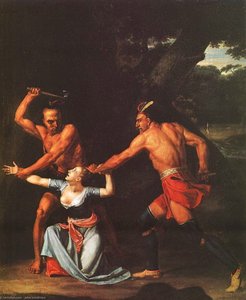 The Death of Jane McCrea1804
 Oliver Wolcott, Jr. (1760-1833), B.A. 1778, LL.D. 18191820
 Roger Strong (1762–1836)1802
 Theodosia Burr (Mrs. Joseph Alston, 1783-1813)1802
Eseje k tématu A Muse
 Dreams on Canvas: Understanding Automatist and Veristic SurrealismMaster the differences between Automatist and Veristic Surrealism. Explore the works of Dali and Miro to decode the dreamscape today.
 Art Nouveau vs. Art Deco: How to Distinguish These Two Iconic StylesMaster the differences between Art Nouveau and Art Deco with our expert guide. Learn to identify these iconic styles today.
 American neoclassical paintersAmerican Neoclassical painters like Gilbert Stuart, John Singleton Copley, and Benjamin West. Shop museum-quality art reproductions on Orig…