Expressionism
Sinagoga (Max Beckmann)
Max Beckmann (1884–1950) vytvořil dílo Sinagoga. Patří k hnutí Expressionism. Je vyrobeno z Oil On Canvas. Nachází se v Städel Museum v Frankfurt nad Mohanem, Německo.
- Oil On Canvas
- Städel Museum, Frankfurt nad Mohanem

 Náhled v interiéru

 Ručně malovaná olejná reprodukce
 Sdílet
 Sdílet
 Průvodce


 Stáhnout
 Podobné položky
 Rentgenové snímky
 Slideshow
 Otázky a odpovědi

 Statistiky
Sinagoga: základní údaje
- Název díla
- Sinagoga
- Autor
- Max Beckmann (1884–1950)
- Rok narození umělce
- Lipsko, Německo
- Technika
- Oil On Canvas
- Kde jej vidět
- Städel Museum, Frankfurt nad Mohanem, Německo
- Pohyb
- Expressionism
- Období
- Modern
- Motiv
- synagogue, buildings, dog, figures, red, orange
Co przedstawuje dílo Sinagoga?
A Fractured Urban Vision
The city breathes with a heavy, unsettling rhythm in Sinagoga. Buildings lean inward, their sharp, angular forms slicing through a sky that feels thick with tension. There is no steady horizon here; instead, the architecture twists and tilts, defying the logic of gravity and space. A central pathway pulls the eye into a depth that feels strangely shallow, as if the world is being compressed into a claustrophobic dream. The warmth of the palette—deep reds, burnt oranges, and earthy browns—does not offer comfort. Instead, it radiates a feverish heat, a sense of simmering anxiety that clings to every surface. A dog occupies the foreground, a silent witness to this distorted landscape, while small, distant figures move through the shadows of the towering structures, appearing insignificant against the weight of the stone and geometry.
The Language of Distortion
The artist employs a visual language that rejects the comfort of realism to reach for a deeper, more subjective truth. The composition is a complex web of intersecting planes and heavy outlines that push the viewer into an uncomfortable proximity with the scene. Through a masterful application of oil paint, the surfaces possess a palpable weight, where thick, gestural strokes meet smoother, blended areas to create a sense of layered history.
- The use of multiple vanishing points creates a disorienting, non-linear perspective.
- Sharp, diagonal lines introduce a constant sense of instability and movement.
- Geometric shapes like rectangles and triangles are rearranged to emphasize a fractured reality.
- A muted, somber quality in the color transitions suggests a mood of profound introspection.
The Weight of Existence
In this work, the urban environment becomes a stage for the human condition. The presence of the Synagogue suggests a landscape shaped by identity and the heavy shadows of social reality. The distortion of the buildings feels less like a stylistic choice and more like a reflection of a fractured world, where the very foundations of society seem to tilt and buckle. This is the essence of Expressionism, where the external world is bent and broken to mirror an internal state of alienation and unease. The scene does not offer a window into a place, but rather a mirror to a feeling of profound displacement, leaving the viewer to navigate a space where nothing is quite as it seems.
Ve kterém muzeu se nachází Sinagoga?
Städel Museum
Frankfurt nad Mohanem, Německo
Původy a historie Städel Museum Kořeny Städel Museum sahají až k osobní sbírce Johanna Friedricha Städela, frankfurtského bankéře a významného mecenáše umění. Instituce byla založena jako občanská nadace v roce 1815 a formálně byla oficiálně otevřena v roce 1817. Städelovým záměrem bylo zachovat své majetky a zpřístupnit umění, které si během svých cest a obchodních aktivit vybudoval, široké veřejnosti.


Sinagoga ve vysokém rozlišení
Max Beckmann, Sinagoga, Städel Museum. Veřejná doména
Digitální expert porovnává barvy s původním obrazem a retušuje soubor tak, aby věrně odpovídal tahům štětcem umělce.
Koupit obraz ve vysokém rozlišeníDotazy k Sinagoga
Existují díla podobná jako "Sinagoga"?
Další díla podobná dílu „Sinagoga“ od Max Beckmann najdete na stránce Podobná díla.
Jakým způsobem se dílo „Sinagoga“ zapojuje do témat a stylu umělce Max Beckmann?
V rámci tvorby umělce Max Beckmann se dílo „Sinagoga“ řadí do stylu Expressionism a doplňuje tak motivy rembrandt and rubens, old masters, cézanne and van gogh, northern european artists, bosch and bruegel.
Z jaké země pochází dílo Expressionism s názvem "Sinagoga"?
Dílo „Sinagoga“ propojuje směr Expressionism s Německo prostřednictvím rodného města svého tvůrce.
Jsou barvy v díle „Sinagoga“ od Max Beckmann syté, nebo tlumené?
Nasycení barevné palety díla "Sinagoga" je na úrovni Clear Color Presence.
Jak harmonické jsou barvy díla „Sinagoga“ od Max Beckmann?
Barvy díla „Sinagoga“ od Max Beckmann vykazují Strong Color Unity harmonii. Harmonie popisuje vzájemný vztah barev k sobě navzájem.
O jaký typ uměleckého díla se jedná u „Sinagoga“ od Max Beckmann?
V katalogu je dílo „Sinagoga“ od Max Beckmann zařazeno do kategorie WallArt, která usnadňuje vyhledávání podobných děl.
Mohu využít rozšířenou realitu k tomu, abych si prohlédl(a) „Sinagoga“ od Max Beckmann ve své místnosti?
Stránka Náhled v rozšířené realitě pro dílo „Sinagoga“ od Max Beckmann využívá rozšířenou realitu k tomu, abyste si toto umělecké dílo mohli pomocí kompatibilního zařízení prohlédnout přímo ve svém vlastním prostoru.
Pod jakými dalšími jmény nebo pseudony je Max Beckmann známý/á?
Mezi další jména, pod kterými je znám(a) Max Beckmann, tvůrce díla „Sinagoga“, patří i Max Carl Friedrich Beckmann, Max Beckman.
Mohu si prohlédnout rentgenový snímek díla „Sinagoga“ od Max Beckmann?
Dílo „Sinagoga“ lze prohlížet vrstvu po vrstvě na stránce Rentgenové snímky, která funguje jako interaktivní prohlížeč inspirovaný světelnou lavicí restaurátora a nabízí jedenáct optických nálezů obrazu.
O umělci, Max Beckmann

1884–1950, Německo
Max Beckmann
The Life and Art of Max Beckmann Max Beckmann was a man of many disciplines, working as a painter, draftsman, printmaker, sculptor, and writer. He entered the world on February 12, 1884, in Leipzig, Saxony. He grew up in an upper-middle-class family as the youngest of three children. His early years were shaped by the quiet stability of his home until 1894, when his father, Carl Beckmann, a grain merchant, passed away.
Také od autora Max Beckmann
 Noc1919
 Velká scéna utrpení1906
 Železný most (Výhled na Frankfurt)1922
 Kolumbina1950
Eseje k tématu Sinagoga
 Max Beckmann: Navigating Trauma & Modernity Through a Distorted LensExplore the powerful world of Max Beckmann's art – a journey through trauma, modernity & distortion. Discover his key works, influences, an…
 From Concept to Canvas: Exploring Triadic Interpretations of Artistic Inspiration – Realism, Abstraction, and Poetic ImaginationExplore the art world with OriginalUniqueArt! Discover museum-quality reproductions, custom paintings from photos & expert advice. Elevate …
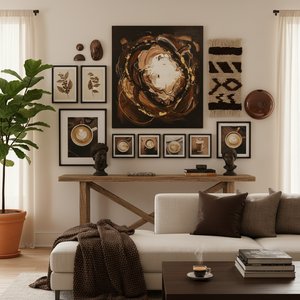 Top 10 slavných obrazů v odstínech espressa: Umění a inspirace pro váš domovObjevte top 10 slavných obrazů v hlubokých odstínech espressa! Prozkoumejte příběhy Rembrandta, Van Gogha a dalších mistrů. Inspirace pro v…