Art Nouveau Art Nouveau
(41) (Alfons Mucha)
Alfons Mucha (1860–1939) vytvořil dílo (41). Patří k hnutí Art Nouveau Art Nouveau. Je vyrobeno z Acrylic On Canvas.
- Acrylic On Canvas

 Náhled v interiéru

 Ručně malovaná olejná reprodukce
 Sdílet
 Sdílet
 Průvodce


 Stáhnout
 Podobné položky
 Rentgenové snímky
 Slideshow
 Otázky a odpovědi

 Statistiky
(41): základní údaje
- Název díla
- (41)
- Autor
- Alfons Mucha (1860–1939)
- Rok narození umělce
- Ivančice, Česko
- Technika
- Acrylic On Canvas
- Motiv
- woman, hair, dress, baby, floral, organic
Co przedstawuje dílo (41)?
Alphonse Mucha: The Enchanting Symbolism of Art Nouveau
Alphonse Maria Mucha stands as one of the most recognizable figures of Art Nouveau, an artistic movement that flourished between 1890 and 1910 across Europe. Born in Brno, Czech Republic, in 1860, Mucha rejected the rigid academic traditions of his time, forging a path toward a uniquely expressive style that captivated audiences and continues to inspire artists today.
Much’s artistic vision centered around capturing ethereal beauty—primarily through idealized depictions of women—often presented in flowing robes adorned with intricate floral motifs. Influenced by Impressionism and Symbolism, he skillfully blended these influences into his distinctive Art Nouveau aesthetic. Unlike the prevailing stylistic trends of his era, Mucha prioritized organic forms and graceful curves, mirroring the natural world’s rhythms and conveying a sense of movement.
His breakthrough came with collaborations on decorative posters for Parisian theaters and exhibitions. These commissions demanded meticulous attention to detail—particularly in the rendering of textures and colors—resulting in stunning visual experiences that cemented Mucha's reputation as a master craftsman. He employed techniques such as cloisonné enamel, gilding, and lithography to achieve unparalleled luminosity and vibrancy, pushing the boundaries of printmaking.
The Slavonic Uprising: A Fusion of Tradition and Innovation
Perhaps Mucha’s most ambitious project was “The Slavonic Uprising,” a monumental mural commissioned for Prague’s National Theatre. This artwork exemplifies Mucha's ability to synthesize disparate elements into a cohesive narrative—combining traditional Czech folklore with the dynamism of Art Nouveau principles.
The mural depicts a stylized battle scene, featuring figures draped in flowing robes reminiscent of Slavic princesses and warriors. Mucha skillfully utilized bold colors and sweeping lines to convey the urgency and grandeur of the uprising, capturing both its heroic spirit and its underlying melancholy. The intricate floral ornamentation—particularly around the central figures—underscores the movement’s preoccupation with nature and symbolizes resilience amidst adversity.
Symbolism Rooted in Myth and Folklore
Throughout Mucha's oeuvre, symbolism played a crucial role in conveying deeper meanings beyond mere visual representation. Recurring motifs—such as lilies, roses, and peacocks—carried associations rooted in Slavic mythology and Christian iconography. These symbols served to elevate the artwork’s emotional impact, inviting viewers to contemplate themes of heroism, sacrifice, and spiritual transcendence.
Consider “La Ribambelle des Gobelins,” a collaborative project with Piero Dorazio that explored the concept of collective creativity. Mucha's contribution—a stylized depiction of women—embodied the movement’s belief in the transformative power of art to inspire social change and celebrate human beauty.
A Legacy Enduring Through Reproduction
Today, Alphonse Mucha’s artwork continues to resonate with audiences worldwide. High-quality reproductions offer a captivating glimpse into his artistic genius—allowing collectors and interior designers alike to experience the enchantment of Art Nouveau firsthand. His enduring influence testifies to the power of visionary art to transcend time and inspire generations of artists.
(41) ve vysokém rozlišení
Alfons Mucha, (41). Veřejná doména
Digitální expert porovnává barvy s původním obrazem a retušuje soubor tak, aby věrně odpovídal tahům štětcem umělce.
Koupit obraz ve vysokém rozlišeníDotazy k (41)
V jaké technice je vytvořeno dílo „(41)“ od Alfons Mucha?
Technikou díla „(41)“ od Alfons Mucha je Acrylic On Canvas. Reprodukce mají za cíl věrně zachytit vzhled této techniky.
Co zachycuje dílo „(41)“ od Alfons Mucha?
„(41)“ od Alfons Mucha zobrazuje: woman, hair, dress, baby, floral, organic, flowing lines, symmetry.
Je dílo „(41)“ volné z autorských práv?
Stav autorských práv pro dílo „(41)“ od Alfons Mucha: toto dílo spadá do v rámci volného užití – autorská práva vypršela. To určuje, zda lze volně vytvářet reprodukce tohoto obrazu.
Kdo vytvořil "(41)"?
Autorem díla „(41)“ je Alfons Mucha. Práce je v katalogu uvedena pod jménem Alfons Mucha.
K jakému stylu patří „(41)“?
„(41)“ je dílo z období Art Nouveau Art Nouveau. Tento směr představuje uměleckou tradici, jejíž je dílo součástí.
Do které období tvorby Alfons Mucha patří dílo „(41)“?
„(41)“ představuje období Mature Period umělce Alfons Mucha.
Proč má dílo „(41)“ právě takový autorský status?
Dílo „(41)“ od Alfons Mucha spadá do v rámci volného užití – autorská práva vypršela. Autorská práva se počítají od roku úmrtí autora; Alfons Mucha zemřel(a) v roce 1939.
Jakým způsobem se dílo „(41)“ vpisuje do celkové tvorby umělce Alfons Mucha?
„(41)“ patří k dílu Alfons Mucha v rámci směru Art Nouveau Art Nouveau, jehož typická témata zahrnují renoir, moreau, czech motifs, modern art nouveau, idealized femininity.
Jakým způsobem se motiv díla „(41)“ vztahuje k obvyklým tématům umělce Alfons Mucha?
„(41)“ zachycuje woman, hair, dress, baby, floral, organic, flowing lines, symmetry, zatímco v díle umělce Alfons Mucha se setkáváme s tématy jako renoir, moreau, czech motifs, modern art nouveau, idealized femininity. Porovnání těchto dvou aspektů odhaluje, jak toto dílo navazuje na obvyklá témata tohoto autora.
O umělci, Alfons Mucha

1860–1939, Česko
Alfons Mucha
Úvod Alphonse Maria Mucha, jméno, které se stalo synonymem pro Art Nouveau, byl český malíř, grafik a designér, jehož dílo proniká do srdcí lidí po celém světě. Narodil se v malebné Ivančici na Moravě, v roce 1860, a od dětství projevoval mimořádný talent pro umění. Jeho cesta k slávě byla plná překvapení, spolupráce s legendární herečkou Sarah Bernhardt a ambiciózních projektů, které definovaly estetiku konce 19. století.
Také od autora Alfons Mucha
 The Moon
 Nude
 The Apotheosis of the Slavs1926
 Stained-Glass Window in St. Vitus Cathedral
Eseje k tématu (41)
 Resilience and Heritage: A Curated Journey Through the Soul of Ukrainian Art HistoryExplore the profound legacy of Ukrainian art from Baroque grandeur to Repin's realism. Discover this rich cultural journey now.
 Za hranicemi tisku: Luxusní interiéry a umění ručně malovaných reprodukcí – Textura, hloubka a prestiž.Objevte svět luxusních interiérů s ručně malovanými reprodukcemi obrazů. Kvalita, textura a hloubka pro prestižní prostory. Personalizace n…
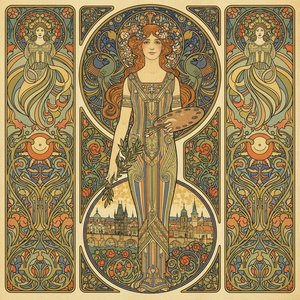 Alphonse Mucha: A Comprehensive Exploration of Art Nouveau's Master of Decorative SymbolismExplore the life & art of Alphonse Mucha, master of Art Nouveau! Discover his iconic posters, stunning illustrations, and the monumental Sl…