Portrét Johann Georg Platzer

62 nejslavnějších obrazů autora Johann Georg Platzer, výběr z galerie

Aktualizováno listopad 2026 · seřazeno podle našeho skóre popularity (vyhledávání, návštěvy a objednávky u každého díla) · 62 děl umělce Johann Georg Platzer v našem katalogu

Stručně řečeno

Z všech originálů, které Johann Georg Platzer zanechal, je nejslavnější The Assumption of Mary (1735), který se nachází ve sbírce Staatliche Kunsthalle Karlsruhe, Karlsruhe. Hned za ním následují Bacchic Revels (1740) a Nymphs and Satyrs Drinking (1740). Náš katalog obsahuje 62 děl umělce Johann Georg Platzer; galerie si zachovala 62 děl, která obdivuje celý svět, přičemž každé je znázorněno s datem vzniku, názevem muzea a jeho příběhem.

1704 – 1761, Eppan Baroque Nejvíce děl: Minneapolis Institute of Art

10 nejlepších obrazů umělce Johann Georg Platzer: výběr galerie

1
The Assumption of Mary (1735) od Johann Georg Platzer

The Assumption of Mary

1735 · Oil On Canvas · Staatliche Kunsthalle Karlsruhe, Karlsruhe

A vertical composition directs the gaze from the terrestrial realm toward the divine heavens. At the base, apostles gather around an open tomb, their faces marked by awe and devotion. Above them, the Virgin Mary ascends amidst a host of angels, her form enveloped in a blue mantle. The movement is upward and fluid, driven by swirling cloud formations and the sweeping gestures of the figures. Light emanates from the…

2
Bacchic Revels (1740) od Johann Georg Platzer

Bacchic Revels

1740 · Oil · Art Institute of Chicago, Chicago

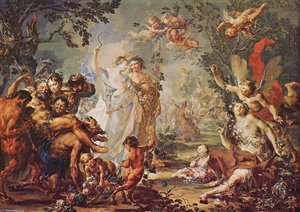
The air feels thick with the scent of damp earth and the echoes of distant music. In this monochrome world, a celebration unfolds amidst a lush, wooded landscape where the boundaries between the human and the divine blur. Figures move with a fluid, swirling energy, their bodies entwined in a rhythmic chaos that defies stillness. Drapery flows like water around muscular limbs, catching a soft light that descends from the…

3
Nymphs and Satyrs Drinking (1740) od Johann Georg Platzer

Nymphs and Satyrs Drinking

1740 · Oil On Copper · Art Institute of Chicago, Chicago

In this mythological painting, titled Nymphs and Satyrs Drinking, we encounter a scene of classical indulgence. The work was executed by the Austrian artist Johann Georg Platzer, who lived from 1704 to 1761. It is a composition that captures a moment of revelry, focusing on the figures of nymphs and satyrs as they gather together. The piece dates to about 1740, a period when the artist was refining his approach…

4
Artist's atelier with Hungarian patrons (1720) od Johann Georg Platzer

Artist's atelier with Hungarian patrons

1720 · Oil · Národní muzeum ve Varšavě, Varšava

The studio is a cavern of amber and deep shadow. A central golden urn anchors the composition, its metallic sheen catching a light that seems to emerge from a hidden window. Around this pillar of light, the space is crowded with the tools of creation and the weight of history. Marble busts stare from the gloom, their cold surfaces contrasting with the heavy, tactile folds of velvet drapery. The air…

5
Social Scene (1732) od Johann Georg Platzer

Social Scene

In "Social Scene" by Johann Georg Platzer, a monochrome reproduction of an 18th-century work, the eye meets a crowded, theatrical arrangement. The space is shallow, packed with multiple groups of figures gathered in a formal garden. To the left, the scene is anchored by the heavy, geometric stability of classical architecture, featuring an arched doorway and a pedestal supporting a sculptural figure. On the right, the rigid lines of stone…

6
Card Player (Ace is Trump) (1730) od Johann Georg Platzer

Card Player (Ace is Trump)

1730 · Oil

The scene unfolds in Card Player (Ace is Trump), a work that captures a fleeting moment of social tension. Johann Georg Platzer, the hand behind this composition, invites us into a crowded, intimate interior where the stakes of a game hang in the air. This painting, dating to about 1730, finds its creator in the midst of a flourishing career. Born in 1704 in Eppan an der Weinstraße, the artist…

7
Making avances after the meal (1725) od Johann Georg Platzer

Making avances after the meal

1725 · Oil On Canvas

In this 1725 oil on canvas, four figures are positioned around a table in a tightly grouped composition. The scene depicts a moment of leisure following a meal, characterized by the presence of musical instruments and refreshments. A figure holds a wine glass, while others are situated near a violin, a tambourine, and sheet music. The lighting is directional, casting soft shadows across the faces of the subjects and highlighting…

8
The Bath of Diana (1730) od Johann Georg Platzer

The Bath of Diana

1730 · Oil · Minneapolis Institute of Art, Minneapolis

The Bath of Diana is a Rococo-style mythological scene from 1730 that depicts a group of nymphs bathing within a forest setting. The composition is dense and dynamic, utilizing a pyramidal arrangement of figures that leads the eye across a landscape of rocky outcrops and verdant foliage. The subject matter portrays Diana and her nymphs in a moment of leisure, evoking themes of purity, nature, and classical mythology.

9
Latona Turning the Lycian Peasants into Frogs (1730) od Johann Georg Platzer

Latona Turning the Lycian Peasants into Frogs

1730 · Minneapolis Institute of Art, Minneapolis

This Rococo-style oil painting depicts a dynamic mythological scene where Latona transforms Lycian peasants into frogs. The composition is complex and asymmetrical, utilizing a swirling arrangement of figures that directs the eye from the left foreground toward a luminous central figure on the right. The subject matter is evidenced by the transition of human limbs into amphibian forms and the presence of actual frogs in the foreground water.

Výběr umělce Johann Georg Platzer pokračuje, od 11 do 62

11David Meeting Abigail (1727) od Johann Georg PlatzerDavid Meeting Abigail1727 · Národní galerie Praha 12Garden-party (1729) od Johann Georg PlatzerGarden-party1729 13Rebecca at the Fountain (1735) od Johann Georg PlatzerRebecca at the Fountain1735 14Samson's Revenge (1735) od Johann Georg PlatzerSamson's Revenge1735 15The Rape of the Sabine women (1744) od Johann Georg PlatzerThe Rape of the Sabine women1744 · Moravská galerie v Brně 16The Marriage Feast at Cana (1743) od Johann Georg PlatzerThe Marriage Feast at Cana1743 17Ill-matched couple. (1737) od Johann Georg PlatzerIll-matched couple.1737 · Národní muzeum ve Varšavě 18Merry company in the park. (1740) od Johann Georg PlatzerMerry company in the park.1740 · Národní muzeum ve Varšavě 19Merry Company on a Patio (1735) od Johann Georg PlatzerMerry Company on a Patio1735 · Gemäldegalerie 20The abduction of Helena (1750) od Johann Georg PlatzerThe abduction of Helena1750 · Moravská galerie v Brně 21sketch for allegoric plafond-picture (1750) od Johann Georg Platzersketch for allegoric plafond-picture1750 22Antony And Cleopatra At The Battle Of Actium od Johann Georg PlatzerAntony And Cleopatra At The Battle Of Actium 23The Death Of Cleopatra od Johann Georg PlatzerThe Death Of Cleopatra 24Das Atelier Des Malers od Johann Georg PlatzerDas Atelier Des MalersClevelandské muzeum umění 25Allegorie Der Vier Jahreszeiten od Johann Georg PlatzerAllegorie Der Vier Jahreszeiten 26Dancing Scene With Palace Interior od Johann Georg PlatzerDancing Scene With Palace Interior 27Rescue of Alexander the Great od Johann Georg PlatzerRescue of Alexander the GreatStaatliche Kunsthalle Karlsruhe 28Alexander the Great Cuts the Gordian Knot od Johann Georg PlatzerAlexander the Great Cuts the Gordian KnotStaatliche Kunsthalle Karlsruhe 29Musical Company in the Salon od Johann Georg PlatzerMusical Company in the SalonNárodní galerie Praha 30Concerto od Johann Georg PlatzerConcerto 31Sommer od Johann Georg PlatzerSommerMinneapolis Institute of Art 32Winter od Johann Georg PlatzerWinter 33Autumn od Johann Georg PlatzerAutumn 34Abraham and the Three Angels od Johann Georg PlatzerAbraham and the Three AngelsSzépművészeti Múzeum 35the miraculous draught of fishes od Johann Georg Platzerthe miraculous draught of fishes 36Orientalisches Fest od Johann Georg PlatzerOrientalisches Fest 37An Allegory Of Misrule od Johann Georg PlatzerAn Allegory Of MisruleBirmingham Museum and Art Gallery 38Allegory Of Five Senses od Johann Georg PlatzerAllegory Of Five Senses 39The Judgement Of Paris od Johann Georg PlatzerThe Judgement Of Paris 40Salome Dancing Before Herod od Johann Georg PlatzerSalome Dancing Before Herod 41The Concert od Johann Georg PlatzerThe Concert 42Winter od Johann Georg PlatzerWinterMinneapolis Institute of Art 43The Abduction Of Helen od Johann Georg PlatzerThe Abduction Of HelenWallace Collection 44Kinder Beim Unterricht Im Freien od Johann Georg PlatzerKinder Beim Unterricht Im Freien 45Das Gastmal Der Kleopatra od Johann Georg PlatzerDas Gastmal Der Kleopatra 46The Concert od Johann Georg PlatzerThe ConcertNárodní muzeum ve Varšavě 47Saint John The Baptist Preaching In The Wilderness od Johann Georg PlatzerSaint John The Baptist Preaching In The Wilderness 48Alexander And The Queen Of The Amazons, Thalestris od Johann Georg PlatzerAlexander And The Queen Of The Amazons, Thalestris 49Frühling od Johann Georg PlatzerFrühlingMinneapolis Institute of Art 50Orientalisches Fest od Johann Georg PlatzerOrientalisches Fest 51Alexander And The Family Of Darius od Johann Georg PlatzerAlexander And The Family Of Darius 52Kinder Beim Unterricht Im Freien od Johann Georg PlatzerKinder Beim Unterricht Im Freien 53Herbst od Johann Georg PlatzerHerbstMinneapolis Institute of Art 54Die Hochzeit Zu Kana od Johann Georg PlatzerDie Hochzeit Zu Kana 55St. Michael In Eppan With Croesus And Solon od Johann Georg PlatzerSt. Michael In Eppan With Croesus And Solon 56Fountain Scene In Front Of A Palace od Johann Georg PlatzerFountain Scene In Front Of A Palace 57Marriage Of Aphrodite And Hephaestus od Johann Georg PlatzerMarriage Of Aphrodite And Hephaestus 58Das Gastmal Der Kleopatra od Johann Georg PlatzerDas Gastmal Der Kleopatra 59Das Gastmal Der Kleopatra od Johann Georg PlatzerDas Gastmal Der Kleopatra 60Summer od Johann Georg PlatzerSummer 61Spring od Johann Georg PlatzerSpring 62Miraculous Catch of Fish od Johann Georg PlatzerMiraculous Catch of FishResidenzgalerie

Slavná díla Johann Georg Platzer podle jednotlivých období

Motivy, které zaujaly Johann Georg Platzer

Čtyři témata, která se v těchto originálech nejčastěji objevují, z nichž každé má svůj nejlepší příklad.

Muzea, v nichž jsou vystavena originálna umělce Johann Georg Platzer

8 muzea, v nichž je umístěno nejvíce obrazů z této stránky.

Muzeum Město Díla autora Johann Georg Platzer Obrazy z tohoto seznamu
Minneapolis Institute of Art, MinneapolisMinneapolis Institute of Art Minneapolis 6 The Bath of Diana, Latona Turning the Lycian Peasants into Frogs, Sommer
Národní muzeum ve Varšavě, VaršavaNárodní muzeum ve Varšavě Varšava 4 Artist's atelier with Hungarian patrons, Ill-matched couple., Merry company in the park.
Staatliche Kunsthalle Karlsruhe, KarlsruheStaatliche Kunsthalle Karlsruhe Karlsruhe 3 The Assumption of Mary, Rescue of Alexander the Great, Alexander the Great Cuts the Gordian Knot
Art Institute of Chicago, ChicagoArt Institute of Chicago Chicago 2 Bacchic Revels, Nymphs and Satyrs Drinking
Národní galerie Praha, PrahaNárodní galerie Praha Praha 2 David Meeting Abigail, Musical Company in the Salon
Moravská galerie v Brně, BrnoMoravská galerie v Brně Brno 2 The Rape of the Sabine women, The abduction of Helena
Bavarské státní sbírky malby, MnichovBavarské státní sbírky malby Mnichov 1 Social Scene
Art Gallery of New South Wales, SydneyArt Gallery of New South Wales Sydney 1 The Sculptor's Studio

Johann Georg Platzer dekáda po dekádě: originální díla, která definují každou z nich

Díla podle dekád

Vyberte si dekádu a prohlédněte si originál, který ji definuje.

Otázky sběratelů o obrazech umělce Johann Georg Platzer

Kterým dílem je Johann Georg Platzer nejznámější?Odhalit odpověď

The Assumption of Mary (1735), Staatliche Kunsthalle Karlsruhe, Karlsruhe. Následují Bacchic Revels (1740) a Nymphs and Satyrs Drinking (1740).

Kolik let bylo Johann Georg Platzer, když bylo vytvořeno dílo The Assumption of Mary?Odhalit odpověď

31 let: dílo The Assumption of Mary pochází z roku 1735 a Johann Georg Platzer se narodil/a v roce 1704.

Kterých deset nejslavnějších obrazů má Johann Georg Platzer?Odhalit odpověď

The Assumption of Mary, Bacchic Revels, Nymphs and Satyrs Drinking, Artist's atelier with Hungarian patrons, Social Scene, Card Player (Ace is Trump), Making avances after the meal, The Bath of Diana, Latona Turning the Lycian Peasants into Frogs a The Sculptor's Studio. Hodnocení výše uvádí rok a muzeum pro každé z nich.

Kolik obrazů zanechal(a) Johann Georg Platzer?Odhalit odpověď

Náš katalog obsahuje 62 děl umělce Johann Georg Platzer z let 1720 až 1750.

Ve kterých muzeích jsou vystavena díla mistrovská umělce Johann Georg Platzer?Odhalit odpověď

Většinou v Minneapolis Institute of Art (Minneapolis), Národní muzeum ve Varšavě (Varšava) a Staatliche Kunsthalle Karlsruhe (Karlsruhe). V tabulce muzeí výše jsou vypsány všechny.

V jakých letech namaloval Johann Georg Platzer svá nejznámější díla?Odhalit odpověď

V období 1730s: 10 z celkem 62 děl na této stránce vzniklo právě tehdy, z toho The Assumption of Mary z nich.

Jaká jsou první a poslední slavná originální díla umělce Johann Georg Platzer?Odhalit odpověď

Na této stránce je nejstarší dílo z Artist's atelier with Hungarian patrons (1720) a nejnovější z The abduction of Helena (1750).

Jaká témata si Johann Georg Platzer vybíral nejčastěji?Odhalit odpověď

People (14), Drapery (12) a Figures (10) napříč 62 díly na této stránce.

Kterou techniku používal(a) Johann Georg Platzer nejčastěji?Odhalit odpověď

Oil, u 13 z 62 děl na této stránce.

K kterému uměleckému směru patří Johann Georg Platzer?Odhalit odpověď

Baroque a Rococo, podle originálů na této stránce.

Která díla umělce Johann Georg Platzer jsou vystavena v Minneapolis Institute of Art?Odhalit odpověď

The Bath of Diana, Latona Turning the Lycian Peasants into Frogs a Sommer: muzeum Minneapolis Institute of Art, Minneapolis má v obsluze 6 děl z této stránky.

Johann Georg Platzer: život a dílo

Život ponořený do rokokové nádhery

Johann Georg Platzer, narozený v idylické tyrolské vesnici Eppan v roce 1704, se vyvinul v klíčovou postavu rakouského rokokového malířství. Jeho život se odehrával na pozadí proměňujícího se uměleckého vkusu a aristokratické patronáže, což z něj učinilo mistra zachycování jak bohatství, tak i intimních okamžiků eighteenth století. Pocházející z rodiny hluboce zakořeněné v umělecké tradici – jeho strýc, Jakob Christoff Platzer, sloužil jako dvorský malíř – byl mladý Johann Georg ponořen do světa, kde tahy štětcem a pigmenty nebyly pouze nástroji, ale prostředky k krásě a společenskému statusu. Jeho počáteční výcvik v rodinné dílně poskytl pevné základy, které později rozšiřoval skrze zkušenosti a studia, což nakonec definovalo jeho jedinečný umělecký hlas. Ačkoliv konkrétní vlivy zůstávají nejasné, Platzerovo dílo odhaluje pochopení benátské barevné palety a kompoziscních technik, spojených se stylistickými trendy převládajícími v jižním Německu během období rokoka. On prostě jen neopakoval existující styly; on je syntetizoval do něčeho zcela vlastního – živoucí výraz rakouské citlivosti.

Od dvorských zakázek k mytologickým příběhům

Platzerova umělecká cesta začala u učení pod svým strýcem v Passau, což byla formativní zkušenost, která ho vystavila nárokům a očekáváním dvorského patronátu. Tato raná zkušenost hluboce ovlivnila jak jeho témata, tak i styl. Rychle si získal uznání pro svou schopnost zobrazovat scény plné detailů, elegance a hmatatelného pocitu aristokratického života. Platzerův talent však nebyl omezen pouze na vykreslování života šlechty. Exceloval také v oživování klasické mytologie a historických událostí na plátně. Díla jako Das Gastmal Der Kleopatra (Kleopatřin hostin) demonstrují jeho smysl pro dramatické vyprávění, zatímco jeho ztvárnění mytologických příběhů – například Svatba Afrodity a Hefestos – odhalují mistrovství v alegorické reprezentaci. Jeho časté zkoumání témat, jako jsou Čtyři roční období, dále prokazuje jeho všestrannost a intelektuální hloubku. Kromě velkolepných historických či mýtických scén se Platzer stal známý také svými „conversation pieces“ – živými portréty aristokratických setkání a sociálních interakcí, které nabízely intimní pohledy do každodenního života elit.

Mistr detailu a zářivého barvení

Typické znaky Platzerova stylu jsou okamžitě rozpoznatelné: pečlivá kompozice, živá barevná paleta, dynamické postavy a silný narativní zaměření. Disponoval neobyčejnou schopností vytvářet scény s intricatemi detaily, zejména v architektonických prostředích a návrzích kostýmů. Každý prvek v jeho malbách – od záhybů látky až po ornamentiku budov – je vykreslen s nesmírnou přesností. Tato pozornost k detailu není pouze dekorativní; slouží k tomu, aby diváka vtáhl do světa, který vytváří, díky čemuž se každá scéna působí překvapivě skutečně a hmatatelně. Stejně důležitá je i mistrovské použití barvy. Používal bohatou a zářivou paletu typickou pro estetiku rokoka, upřednostňující pastelové odstíny, jemné světelné odlesky a subtilní gradace, které vytvářejí atmosféru elegance a vytříbenosti. Jeho postavy málokdy zůstávají statické; jsou zobrazeny v graciózních pózách, které vyjadřují pohyb, emoci a pocit vitality. Tato dynamická kvalita dále posiluje narativní sílu jeho děl a vtahuje diváka do rozvíjejícího se dramatu či intimního okamžiku.

Odkaz a trvalý vliv

Během své kariéry vytvořil Platzer rozsáhlé dílo, které i dnes oklamuje publikum. Obrazy jako Fountain Scene in front of a Palace a Dancing Scene with Palace Interior jsou příklady jeho schopnosti zachytit bohatství a eleganci aristokratického života, zatímco Allegory Čtyř ročních období demonstruje jeho dovednost v alegorické reprezentaci. Galerie Joanneum Alte Galerie v Grazu v Rakousku uchovává největší sbírku Platzerových malbas, která slouží jako nepostradatelný zdroj pro vědce i milovníky umění. Johann Georg Platzer představuje významnou postavu rakouského rokokového malířství. Jeho dílo poskytuje cenný vhled do uměleckého vkusu a společenských zvyků aristokratické společnosti 18. století. Ačkoliv možná není tak mezinárodně proslulý jako někteří jeho contemporary, jeho přínos k regionální historii umění je zásadní. Pomohl nastolit odlišnou stylistickou identitu v rakouském malířství této éry tím, že spojil italské vlivy s místními tradicemi. V Eppanu pokračoval v práci až do své smrti v roce 1761 a zanechal po sobě odkaz živých a pečlivě vytvořených obrazů, které i o několik století později rezonují s diváky – jako svědectví o nesmrtelném působení rokokové nádhery.