Безвременно ехо: Изследване на вечното наследство на Пантеона
Влизането в Пантеона не е просто престъпване прага на една сграда; това е потапяне във времето, разговор с призраците на империите и с човешката изобретателност. Този римски храм, днес почитана църква, стои като единствено постижение — свидетелство за архитектурни амбиции, инженерно майсторство и дълбока връзка с космоса. Повече от самото си внушително мащабно изражение, именно усещането за Пантеона завладява: начинът, по който светлината танцуване през окулуса, хвърляйки променливи шарки върху мраморния под; финият шепот на историята, резониращ в неговите древни стени; и самата смелост на неговия дизайн — дръзък експеримент в бетонната конструкция, който продължава да вдъхва трепет столетия по-късно. Историята на Пантеона е неразривно свързана със самия Рим, еволюирала от посвещаване на всички богове до символ на християнската вяра и, в крайна сметка, скъпоценна забележителност за цялото човечество.
- Архитектурно чудо: Построен от император Хадриано около 126 г. сл. Хр., Пантеонът остава ненадминат пример за римската бетонна технология и имперски амбиции. Неговите мащаби — огромно кръгово пространство, доминирано от колосален купол — са били революционни за времето си, разширявайки границите на това, което се е смятало за възможно в строителството.
- Символичният окулус: В сърцето на тази величествена структура се намира окулусът — единственото незастъпено отвор в върха на купола. Повече от просто архитектурна характеристика, той служи като директна връзка с небесата, позволявайки на естествената светлина да нахлува в интериора и създавайки динамична игра на осветление, която се променя през целия ден. Този умишлен детайл отразява първоначалната цел на Пантеона като храм, посветен на всички богове — святилище „pan theon“ — подчертавайки връзката между земната власт и божествената благодат.
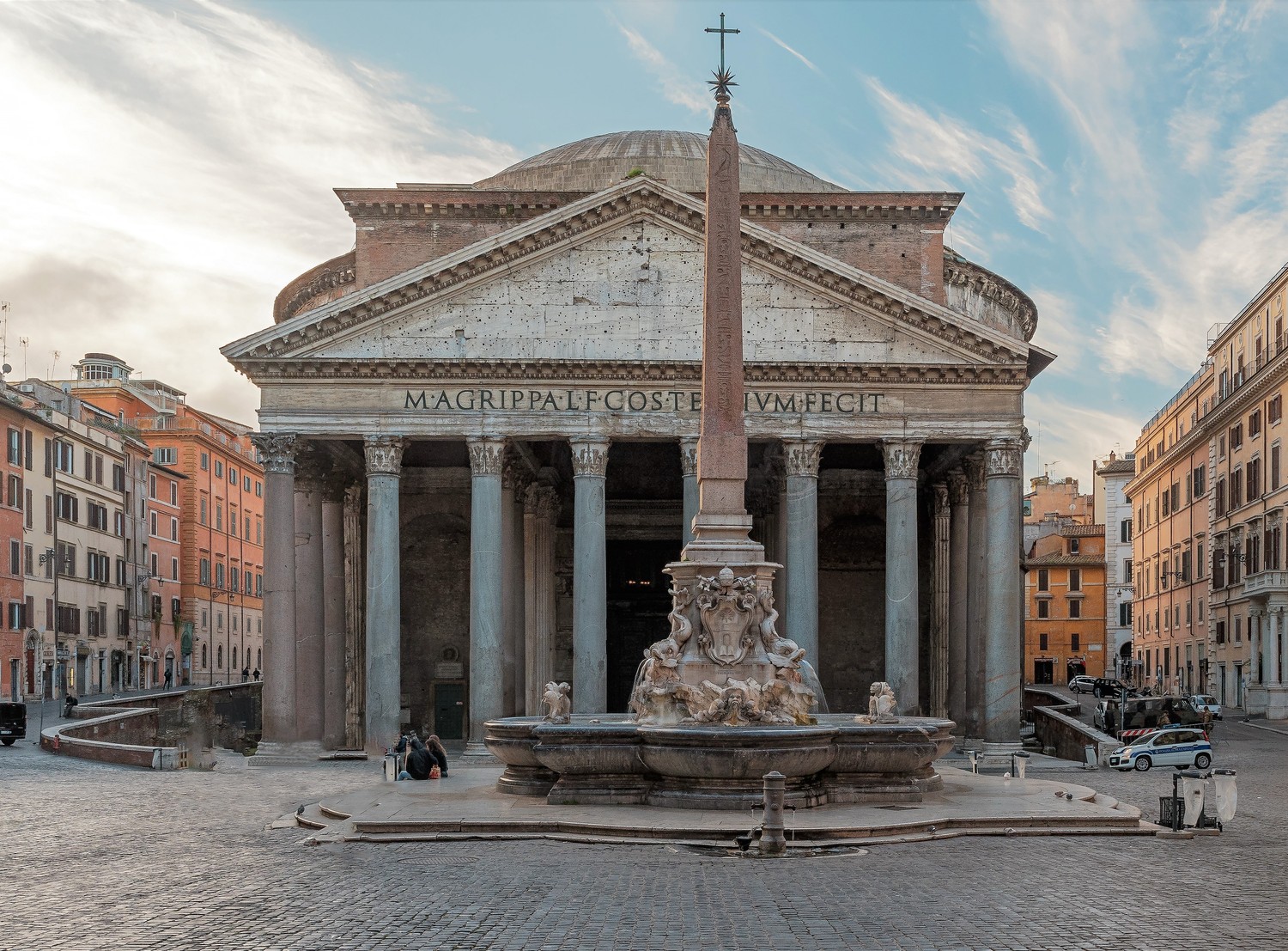
- Монументални колони: Шестнадесет внушителни коринтски колони, донесени от Египет, обрамват грандиозния портик на Пантеона. Тези колосални монолита не само осигуряват структурна опора, но и символизират господството на Рим над обширни територии и представляват изключително майсторство. Забележете фините вариации в тяхната текстура — те носят белезите на своето трудно пътуване до Рим, служейки като осезаеми напомняния за огромното усилие, необходимо за пренасянето им през континенти.
Пътешествие през времето: От храм към църква
Историята на Пантеона е богата тъкан, изтъкана чрез религиозни промени и архитектурна адаптация. Първоначално замислен като храм, посветен на всички богове — святилище „pan theon“ — от Марк Агрипа по времето на Август, той по-късно е престроен от император Хадриано около 126 г. сл. Хр. след опустошителен пожар. Тази трансформация бележи значителна промяна в неговата цел, преминавайки от място за языческо поклонение към християнска базилика през VII век. Освящаването му като църква се оказва решаващо за оцеляването му; докато безброй римски структури са поддадени на разпадане и са били използвани за строителни материали, продължаващата употреба на Пантеона като свещено място гарантира неговата запазеност през векове на вълнения. През Средновековието и Ренесанса той служи като място за погребение на забележителни личности — включително видни италиански монарси като Виторио Емануеле II и Умберто I. Самите гробници са забележителни примери за погребално изкуство, отразяващи еволюиращите художествени стилове на всяка епоха.
- Наследството на Рафаел: В Пантеона се намира гробницата на Рафаел, един от най-великите художници на Ренесанса. Този сложен монумент е пример за възраждането на класическите идеали в свещеното пространство, демонстрирайки майсторска смесица от римски и италиански художествени традиции.
- Кралско място за покой: Присъствието на кралски гробници — включително тези на Виторио Емануеле II и Умберто I — добавя пластове историческа значимост към разказа за Пантеона, отразявайки неговата роля като символ на римската приемственост и имперско величие.
Изкуството на светлината и пространството
Архитектурният блясък на Пантеона е вкоренен в революционното римско инженерство. Куполът, строително постижение, ненадминато за времето си, почива върху масивен бетонна пръстен — материал, толкова напреднал, че остава забележително издръжлив дори след близо две хилядолетия. Забележете кесонния таван, сложна система от преплитащи се панели, които не само разпределят огромната тежест на купола, но и създават илюзия за безкрайно пространство. Тези кесони не са просто декоративни; те представляват изтънчено разбиране на геометрията и структурната механика. Използването на египетски гранитни колони — шестнадесет внушителни монолита, транспортирани на огромни разстояния — допълнително подчертава имперския обхват на Рим и неговото майсторство в логистиката. Но може би най-поразително е самият окулус, просто кръгло отвор в върха на купола. Това не е пропуск; това е умишлен дизайнерски елемент — директна покана за свързване с божественото, позволяваща на естествената светлина да настъпи в интериора и да трансформира пространството през целия ден.
-
<
- Структурна иновация: Куполът на Пантеона е свидетелство за римската бетонна технология — материал, който е позволил безпрецедентни разстояния и височини.
- Геометрична хармония: Кесонният таван е пример за римското майсторство в геометрията, създавайки илюзия за пространство и разпределяйки тежестта равномерно по целия купол.
Жива забележителност: Изложби и съвременна вдъхновеност
Днес Пантеонът седи като една от най-посещаваните забележителности на Рим, привличайки милиони посетители всяка година. Той продължава да бъде жизненоважно пространство — място за молитва, точка за събиране на местни жители и туристи, и неизчерпаен източник на вдъхновение за архитекти и художници през поколенията. Музеят редовно организира временни изложби, изследващи римското изкуство, архитектура и история, предлагайки по-дълбоки прозрения за значението на Пантеона в по-широк контекст на римската цивилизация. Неговото влияние може да се види в безброй сгради по целия свят — от неокласически църкви до модерни граждански структури — свидетелство за неговия безвременен дизайн и дълбоко въздействие върху архитектурната история. Посещението на Пантеона е нещо повече от просто разглеждане на забележителности; това е шанс да се свържете с наследство, което надхвърля времето — наследство на иновациите, артистизма и вечния човешки дух.
- Обект на световното културно наследство на ЮНЕСКО: Признат за своята изключителна универсална стойност като шедьовър на човешката изобретателност и архитектурно постижение.
- < Текущи изследвания и опазване: Пантеонът е обект на текущи изследвания и усилия за съхранение, гарантиращи, че този забележителен паметник ще продължи да вдъхва вдъхновение и да образова бъдещите поколения.