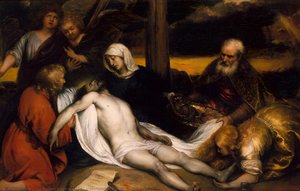
Jan Andrea Lievens: A Shadowed Master of the Dutch Golden Age
Jan Andrea Lievens, a name often whispered alongside that of Rembrandt van Rijn, stands as one of the most intriguing and tragically overlooked figures of the Dutch Golden Age. Born in Leiden on October 24th, 1607, his life was marked by both prodigious talent and persistent obscurity – a paradox that continues to fascinate art historians today. Lievens’ journey reflects not only the artistic currents of his time but also the complex dynamics of collaboration, rivalry, and the shifting tides of recognition within the Dutch art world.Early Years and Artistic Training
Lievens' early life was steeped in craftsmanship. His father, Lieven Hendricksz, was a skilled embroiderer – a profession that instilled in young Jan an appreciation for detail, texture, and meticulous execution. Around the age of ten, he began his formal artistic training under Joris van Schooten, a respected Leiden artist known for his portraits and landscapes. This initial foundation proved crucial, but it was his subsequent apprenticeship with Pieter Lastman in Amsterdam that truly shaped his developing style. Lastman, a master of dramatic composition and theatrical lighting, exposed Lievens to the conventions of history painting – a genre increasingly popular during this period. The influence of Lastman’s bold brushstrokes and dynamic figures is evident throughout Lievens' oeuvre, particularly in his early works.A Collaborative Partnership with Rembrandt
Lievens’ career took a dramatic turn when he entered into a collaborative partnership with Rembrandt van Rijn in 1626. This association, lasting approximately five years, proved to be both fruitful and fraught with challenges. The two artists shared a studio in Leiden, exchanging ideas, techniques, and even models. They produced over twenty paintings, drawings, and etchings together – a remarkable testament to their mutual respect and artistic synergy. However, the collaboration was also intensely competitive, fueled by the ambition of both men. The exact attribution of these works remains a subject of ongoing debate among scholars, highlighting the difficulties in disentangling the individual contributions of two artists working so closely. Rembrandt’s influence on Lievens is particularly noticeable in his later works, characterized by a heightened sense of drama and an exploration of psychological depth.A Journey Beyond Leiden: Antwerp, London, and The Hague
Following their departure from Leiden, both Lievens and Rembrandt embarked on separate artistic journeys. Lievens relocated to Antwerp, where he quickly established himself as a sought-after portraitist, attracting commissions from royalty, city officials, and wealthy merchants. He also spent time in London, serving briefly as court painter for King James I, and later settled in The Hague, becoming a prominent figure in the city’s artistic scene. During this period, Lievens developed his own distinctive style – characterized by a dramatic use of light and shadow, a fascination with exotic subjects (particularly Oriental themes), and a remarkable ability to capture the nuances of human expression.Notable Works and Lasting Legacy
Lievens' artistic output is remarkably diverse, encompassing portraits, genre scenes, landscapes, and religious compositions. Some of his most celebrated works include “Head of an Old Man,” a poignant study of aging and vulnerability; “Bearded Man with a Beret,” a striking portrait that captures the sitter’s personality with remarkable detail; and "Boy in a Cape and Turban," a captivating depiction of Prince Rupert of the Palatinate. His work is showcased in prestigious museums such as the Mauritshuis in The Hague and the Kremer Collection, ensuring his legacy continues to be appreciated by art lovers worldwide. Despite the challenges he faced – including the persistent shadow cast by Rembrandt’s fame – Jan Andrea Lievens remains a significant contributor to the Dutch Golden Age, a testament to the power of talent, ambition, and artistic vision.Въпроси и отговори
В коя историческа епоха е творил Ян Левенс?
Ян Левенс е творил в периода на Ранномодерна епоха. Този период определя историческия контекст на творчеството на художника.
Колко произведения на Ян Левенс са налични за разглеждане?
Можете да разгледате 142 произведения творби на Ян Левенс на страницата Всички произведения.
Мога ли да разгледам творбите на Ян Левенс чрез ключови думи?
Страницата По ключови думи на Ян Левенс групира произведенията на художника по техните ключови думи.