Isadore Weiner: A Pioneer of Color Lithography and Urban Vision
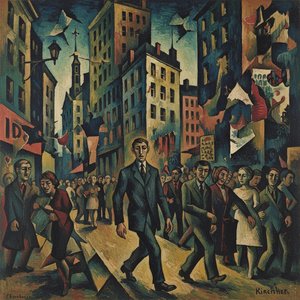
Isadore Weiner (1910 – 1964) stands as a significant figure in American Expressionist art, particularly recognized for his groundbreaking contributions to color lithography and his evocative depictions of Chicago’s cityscape. Born in Chicago, Illinois, Weiner embarked on an artistic journey fueled by a deep engagement with the social realities of his time—a period marked by profound shifts in urban life and burgeoning interest in exploring psychological landscapes through visual mediums. His formative years were spent honing his skills at the Art Institute of Chicago, where he absorbed influences from European avant-garde movements like Cubism and Surrealism, shaping his distinctive artistic style.
Early Influences: Weiner’s exposure to European art traditions instilled in him a meticulous attention to detail and an experimental spirit—qualities that would prove crucial to his subsequent artistic endeavors. The stylistic explorations of Picasso and Matisse resonated deeply within him, prompting him to adopt innovative techniques and perspectives that distinguished his work from conventional representations.
The Illinois WPA Graphics Program: A pivotal moment arrived during the Great Depression when Weiner joined the Illinois Workers’ Relief Administration (WPA) graphics program. This collaborative effort provided him with invaluable experience in tackling large-scale projects aimed at documenting and celebrating American life, solidifying his reputation as a socially conscious artist. He skillfully utilized color lithography to convey the hardships faced by ordinary citizens during this era—a testament to his artistic empathy and commitment to social commentary.
Teaching and Artistic Development: Weiner’s dedication extended beyond artistic creation; he served as an instructor at Hull House, Chicago's renowned settlement house founded by Jane Addams. Through teaching, he nurtured the talents of aspiring artists and disseminated progressive ideas about art’s role in addressing social issues—a conviction that underpinned his entire artistic philosophy. He championed the importance of observation and emotional expression as essential components of artistic practice, shaping the sensibilities of generations of students.
Weiner’s artistic output is characterized by a masterful command of color lithography—a technique he championed as one of the foremost practitioners of its time. Unlike traditional monochrome prints, Weiner skillfully utilized two stone plates to achieve vibrant hues and textural nuance—capturing the dynamism of urban environments with remarkable precision. His prints often depict scenes of industrial Chicago, portraying laborers, factories, and architectural grandeur with a blend of realism and expressive abstraction. Notable works include “Riverfront,” a striking 1948 lithograph showcasing the gritty beauty of Chicago’s waterfront industry—a piece celebrated for its textured charcoal technique and masterful tonal range. The Smithsonian Institution holds this artwork as part of their collection.
Throughout his career, Weiner consistently sought to convey profound emotional resonance alongside visual accuracy—a hallmark of Expressionist art. His prints serve as powerful testimonies to the anxieties and aspirations of the mid-20th century, capturing both the grandeur and hardship inherent in American urban life. Isadore Weiner’s legacy resides not only in his technical virtuosity but also in his unwavering commitment to artistic integrity and social responsibility—qualities that continue to inspire artists today. His work remains a testament to the transformative potential of art as a medium for confronting complex realities and fostering empathy for diverse human experiences.