Пулса на бунтаря: Животът и наследството на Густав Курбе
Роден в тихото френско село Орнан през 1819 г., Жан Дезир Густав Курбе се появява като непокорна сила срещу установените художествени норми на своето време. Неговата история не е просто разказ за боя и платно; това е повествование, преплетено с нишки от социален коментар, политически убеждения и непоколебима отдаденост на изобразяването на света точно така, както го вижда – без идеализация, суров и дълбоко реален. Израствайки в сравнително заможно буржоазно семейство, Курбе получава подкрепа от майка си да следва своите художествелен наклонности – грижа, която в крайна сметка ще подхрани революция в света на изкуството. Неговото формално обучение започва в Екол де Боз Ар в Париж през 1839 г., но той бързо започва да се бори с академичните конвенции и преобладаващия там романтичен идеализъм. Въпреки че признава влияния като тези на Ожен Делакроа и Теодор Жерико, Курбе проправя свой собствен път – такъв, който поставя наблюдението пред въображението и истината пред традицията.Раждането на реализма: Предизвикателство към художествените конвенции
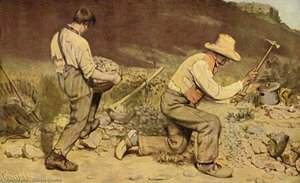
Художественото развитие на Курбе е белязано от умишленото отхвърляне на преобладаващите естетически стандарти. Той не се интересува от митологични разкази или героични алегории; неговият поглед е прикован към ежедневието на обикновените хора, особено тези, заети с труд и селски живот. Тази ангажираност с изобразяването на света без украса – това, което по-къто ще стане известно като Реализъм – първоначално се среща с пренебрежение и подигравка от страна на критиците, свикнали с по-изгладени и идеализирани репрезентации. Ранните му творби изследват пейзажи и портрети, но скоро се преместват към сцени от живота на работническия клас, представени в монументален мащаб, традиционно запазен за исторически или религиозни картини. Този съзнателен избор не е бил само стилистичен; той е било заявяване за вроденото достойнство и важност на тези често пренебрегвани субекти. Копачите на камъни, завършена през 1849 г., но трагично унищожена по време на Втората световна война, е пример за този подход – сурово изображение на двама работници, изтощени от тежкия труд. Тази картина, заедно с други като Погребение в Орнан (1850), предизвика самата дефиниция за това какво представлява „достойна“ тема за високото изкуство.Големи творби и художествена философия
Погребение в Орнан, колосално платно, изобразяващо провинциално погребение, предизвиква бунт, когато е експонирана през 1850-51 г. Неговият огромен размер – обикновено запазен за грандиозни исторически картини – в съчетание с неговия непоколебим реализъм и липса на емоционална идеализация, шокира публиката. Курбе не изобразява скръбниците като благородни или прекалено разстроени фигури; той ги представя като обикновени хора, чиито лица са белязани от смесица от тъга, скука и смирение. Тази честност е революционна. Неговата художествена философия се простира отщо много отвъд самата тема и обхваща техниката. Той предпочита директен стил „импасто“ – нанасяне на дебел слой боя върху платното – който подчертава материалността на самото средство. Ателието на художника (1855), алегорична творба, отразяваща неговите художествени вярвания и ангажираност със съвременните социални проблеми, допълнително затвърждава репутацията му на провокативен и независим творец. Участието му в „Салона на отхвърлените“ през 1863 г. – изложка на творби, отхвърлени от официалния Салон – затвърждава статута му на бунтовник и защитник на художествената свобода. Дори пейзажи като Глед към гората Фонтенбло (1855) са изпълнени с чувство за реализъм, улавяйки естествената красота на гората, без да я романтизират.Наследство и историческа значимост
Влиянието на Густав Курбе върху следващите художествени движения е неоспоримо. Въпреки че черпи вдъхновение от по-ранни майстори като Караваджо за техния драматичен реализъм и използване на светлина и сянка, неговото въздействие надхвърля простото имитиране. Той повлия на импресионистите и постъмпресионистите, освобождавайки ги от ограниченията на традиционното представяне и насърчавайки ги да изследват нови начини за виждане и изобразяване на света. Неговият акцент върху социалния коментар проправя път за по-късните ангажирани художници, които използват творбите си като платформа за политически активизъм. Курбе не е бил просто художник; той е бил гласен защитник на художествената свобода и политическата промяна, активно участвайки в бурните събития на своето време, включително Парижската комуна през 1871 г. – участие, което води до период на изгнание в Швейцария. Той умира през 1877 г., оставяйки след себе си творческо наследство, което продължава да вдъхновява и провокира публиката и днес.- Пионер на реализма
- Предизвика академичните конвенции
- Оказа влияние върху импресионизма и постъмпресионизма
- Защитник на художествената свобода
Въпроси и отговори
С какви псевдоними или алтернативни имена е известен Жуст Курбе?
Жуст Курбе се появява и под алтернативните имена Густав Курбе, Жан Дезир Густав Курбе.
Има ли преглед на всички теми, които Жуст Курбе е изобразявал?
Атлас по теми на Жуст Курбе е страница, която класифицира творбите на художника според техните сюжети.
В коя историческа епоха е творил Жуст Курбе?
Жуст Курбе е творил в периода на XIX век. Този период определя историческия контекст на творчеството на художника.